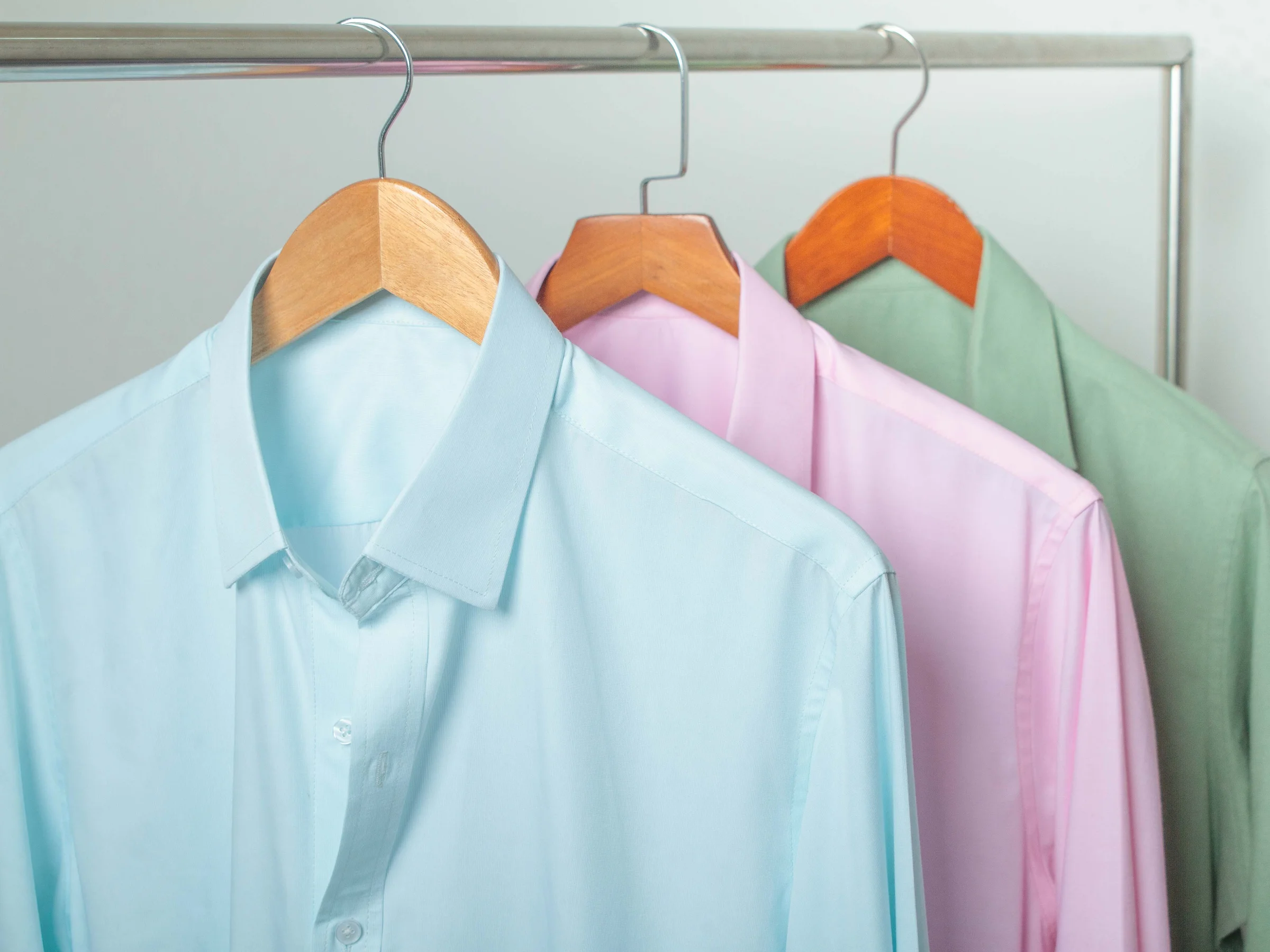
If you've spent any time in central Vietnam during the warmer months, you'll understand why what you wear matters more here than almost anywhere else. The heat is real and constant, and the humidity amplifies it. You learn quickly that the right fabric against your skin is the difference between feeling sharp all day and arriving at dinner looking like you swam there. A well-made custom shirt — the right cloth, the right cut, finished with care — is one of the most practical things you can bring home from Hội An.
I've had shirts made at Be Li Tailor that I've worn almost weekly for three years without the fabric dulling, the collar losing its shape, or the buttons coming loose. I've also made the mistake, early on, of choosing the wrong cloth and rushing the fitting. So this guide is based on real experience rather than theory — the three steps that actually determine whether a custom summer shirt is something you'll treasure or something you'll quietly set aside after six months.
Why a Custom Summer Shirt Is Worth Making in Hoi An
There's a straightforward economic argument: a custom shirt made at a good Hội An tailor costs between $50 and $120 depending on the fabric, and the quality of construction is comparable to what you'd pay $200–400 for at a shirtmaker in London or Sydney. But the economic case, while real, isn't really the point. The point is that you get to specify everything — cloth, collar, cuffs, fit, finish — and end up with something that works for your body and your life specifically.
Off-the-rack shirts are designed around a hypothetical average. If you have a longer torso, or broader shoulders, or a narrower chest than the pattern assumes, you're always adjusting: tucking too much fabric into your trousers, or swimming in the shoulders, or pulling across the chest when you raise your arms. A custom shirt is built around your actual measurements, so none of those compromises apply. For summer wear especially — where lightweight fabrics move more than heavier ones and the fit is exposed rather than hidden under a jacket — the difference is obvious.
The process at Be Li Tailor takes two to three days from first fitting to collection, which fits comfortably into most travel itineraries. You come in, choose your cloth, discuss the details, get measured, and return for a fitting the next day. Adjustments are made and the shirt is finished. Most people find the process straightforward — it's less involved than buying a car and considerably more satisfying.
Step 1: Choosing the Right Fabric for Heat and Humidity
The fabric decision is the most important one you'll make, and it pays to approach it with some knowledge rather than relying entirely on gut feeling. In hot and humid conditions, the key properties you're looking for are breathability, moisture management, and weight. Natural fibres win here almost universally — linen, cotton, and their blends all outperform polyester and synthetic blends in tropical conditions, despite the marketing claims of high-tech sportswear fabrics.
Linen is the classic warm-weather fabric and for good reason. It absorbs moisture and releases it quickly, so you feel dry even when sweating. The weave is open and allows air circulation. It wrinkles easily — this is simply a property of linen, not a defect — but a well-cut linen shirt in a slightly heavier weight will wrinkle less than a very light one, and a small amount of wrinkling is increasingly accepted as part of the aesthetic. For casual shirts, linen is hard to beat. For anything more formal, a linen-cotton blend offers the breathability of linen with a slightly smoother surface and a bit more crease resistance.
For shirts that need to look smart and hold their structure through a full day — office wear, travel shirts, shirts that will be tucked in and worn with trousers — a high-quality poplin or twill cotton is often the better choice. Look for a thread count of at least 100s (sometimes written as 100/2), which indicates finer, longer fibres that feel softer, look more refined, and last longer than cheaper cotton. Egyptian and Sea Island cottons are the luxury end of this spectrum; a shirt made from 100s or 120s two-ply poplin will feel extraordinary against the skin and hold its appearance through a long day better than most fabrics at any price point.
Bring photographs of what you want to wear the shirt with. Holding fabric swatches against images of your trousers or jacket makes colour and texture choices much easier than trying to judge in the abstract. Our team is happy to advise, but seeing the whole picture — literally — makes the consultation faster and the result more likely to be exactly right.
Step 2: Getting the Fit Right — Collar, Chest, Sleeve, and Hem
A shirt fit has more variables than most people realise, and each of them matters independently. The collar is the most visible element — it frames the face and determines how the shirt looks when worn either open or closed, with or without a tie. A well-fitted collar should have a finger's width of ease when buttoned, sit flat against the neck without gaping or riding up, and the collar points should lay flat rather than curling. If you have strong preferences about collar style — spread, semi-spread, button-down, cutaway — this is the moment to specify them.
Chest fit is about the balance between comfort and cleanliness. Too tight and you'll see pulling across the chest when you move; too loose and the fabric billows unattractively. The standard is roughly two inches of ease across the chest — enough to move freely without the shirt pulling, not so much that it looks shapeless. If you're having a shirt made for a specific activity — something you'll wear untucked and casually versus something for sitting at a desk — the ideal ease differs slightly, and it's worth mentioning this to your tailor.
Sleeve length is frequently the dimension that off-the-rack shirts get most wrong, because sleeve length interacts with shoulder width in ways that are difficult to adjust after manufacture. A custom shirt can be cut with the precise sleeve length that places your shirt cuff exactly where you want it — typically showing a centimetre or so below a jacket sleeve, or falling just to the wrist bone for a casual shirt. Cuff style matters too: a single-button barrel cuff is appropriate for most casual and business-casual shirts; a two-button barrel cuff sits slightly smarter; French cuffs are strictly formal and require cufflinks.
The hem shape determines how the shirt works both tucked and untucked. A curved shirt tail hem is designed to be tucked in and will look odd untucked; a straight hem can be worn either way. If you want a shirt that functions well untucked — for casual summer wear or resort use — specify a straight or only slightly curved hem, and ask for the shirt body to be cut a little shorter than a traditional dress shirt length.
Step 3: The Details That Elevate a Shirt from Good to Perfect
Once you've got the fabric and fit settled, the finishing details are where a custom shirt earns its distinction from a good mass-market shirt. These are the things you notice when you put it on and the things other people register without quite knowing why the shirt looks better than most.
Collar interlining — the layer inside the collar that gives it structure — should be specified as removable if you want the shirt to be washable at home without the collar distorting. A fused interlining is permanent and doesn't require an iron to maintain its shape, but it will harden over time and can separate from the outer fabric after repeated washing. A removable interlining collar stays clean and can be replaced if it starts to wear. Ask which your tailor uses and whether you can choose.
Button quality matters more than most people think. The buttons on our shirts are either mother-of-pearl or high-grade resin, and they're sewn on with a thread shank — a small loop of thread between the button and the fabric that prevents the button from pulling tight and distorting the placket when the shirt is worn. Cheap shirts have their buttons sewn flat to the fabric, which is why they pull and gap. The difference is a small one in production terms but visible in every wearing.
Pattern matching is the final detail that separates a genuinely well-made shirt from one that was merely cut to measurements. On a striped or checked fabric, the stripes should match at the side seams, across the button placket, and at the collar join. This requires more fabric and more time to cut accurately, but the result is a shirt that looks intentional rather than assembled. At Be Li Tailor, we match patterns as standard on all custom shirts — it's one of those details that clients with an eye for construction notice immediately.
What Be Li Tailor's Custom Shirts Feel Like to Wear
I'm aware this risks sounding promotional, but the honest answer is that they feel noticeably different from anything I've found on a rack. The specific difference is one of completeness — every part of the shirt doing what it should, without compromise. The collar sits flat without forcing. The shoulders fall exactly where mine do. The chest has ease without billowing. When I lift my arms, nothing pulls. When I sit, nothing rides up. These are the accumulation of the three steps described above, and they compound each other.
The linen shirts in particular have become a kind of answer to every hot-weather dressing problem I used to have. I wore one recently through a full day of meetings and a dinner in the evening, in temperatures that would have had a synthetic shirt clinging unpleasantly by mid-morning. By evening the shirt had wrinkled naturally but without looking dishevelled — linen has a quality that means its wrinkles look relaxed rather than neglected. Several people asked where I'd bought it. The honest answer is that it wasn't bought at all.
How to Order Your Shirt Remotely If You Can't Visit in Person
Not everyone passing through Hội An has a full week — sometimes it's an overnight stop, or a half-day on the way between cities. And some people discover Be Li Tailor after they've already returned home. For both situations, we offer a remote ordering service that, while not quite as seamless as being there in person, produces good results for clients who can provide accurate measurements and clear references.
The process begins with a measurement guide we send over email or WhatsApp. We ask for a set of body measurements — neck, chest, waist, hip, sleeve, and a few others depending on what's being made — plus photographs in a well-fitted shirt you already own so we can see your proportions and note any fitting preferences. Reference images of collar styles, cuff styles, and similar details help us understand what you're aiming for. We then discuss fabric options and send swatches by post if needed before cutting.
For most clients with clear references and accurate measurements, the first remote shirt is very good and a second order — with any refinements noted — is excellent. We keep all measurements and pattern records on file, which means booking a follow-up order is straightforward and subsequent shirts get progressively more accurate. If you're thinking about ordering remotely before a trip, or want to continue working with us after you've left, getting in touch early makes the whole process smoother.
Order Your Summer Shirt
Be Li Tailor is at 635 Hai Bà Trưng, Hội An, open daily 8am–9pm. A custom shirt takes 2–3 days and the process is simpler than you think. Book a shirt appointment — or if you can't visit in person, contact us about our remote ordering service.