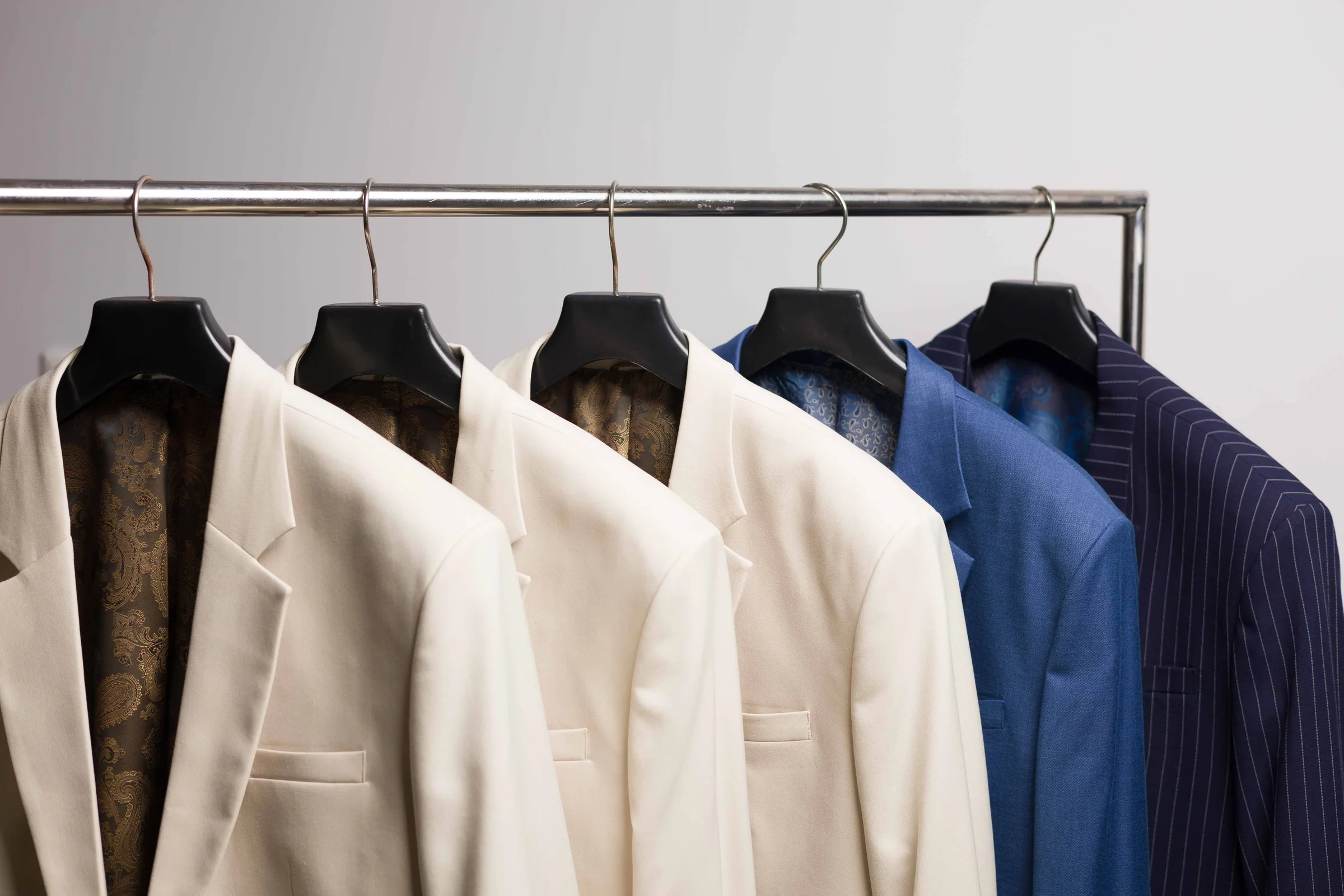
The question I'm asked most often by people who are planning a trip to Hoi An is some version of this: "Is it actually good quality, or is it just cheap?" I understand the scepticism. We've all had the experience of buying something that seemed like extraordinary value and discovering later that the value was achieved through compromises we couldn't see at the time. Clothes fall apart. Seams open. Fabric pills. What seemed like a bargain turns out to have been priced correctly.
My honest answer, after multiple visits to Hoi An and more custom garments than I want to count, is that the quality is genuinely good — but that it varies considerably between studios, and that the visitor's behaviour significantly affects the outcome. This is not a simple story of universal quality or universal mediocrity. It's a story about understanding what you're commissioning, who you're commissioning from, and what choices you're making along the way.
The Question Everyone Asks: Can Cheap Mean Quality in Hoi An?
The prices in Hoi An appear low to most Western visitors because they're being measured against Western labour costs. A custom suit in London might cost USD $1,500 to $3,000 from a respected tailor. The same garment in Hoi An might cost $250 to $400. The fabric cost is broadly similar — the cloth comes from the same international mills. The difference is entirely in the labour cost, which reflects the economic realities of Vietnam rather than a compromise in the quality of the work.
That distinction matters. When a garment is cheap because the labour is cheap, the quality of the making is not necessarily compromised at all. The tailor is simply paid at the local rate rather than the London rate, and the garment costs accordingly. Hoi An's best studios produce work that, set against comparable garments from Western tailors, holds up completely. The construction techniques, the fabric quality, the finishing — these can all be excellent. The price reflects where you are, not what you're getting.
The risk enters when the low prices are achieved through fabric substitution, rushed construction, or skipped fittings rather than through the natural advantage of local labour costs. Those savings come directly out of the garment's quality, and they're not always visible until the garment has been worn a few times.
What Determines the Quality of a Custom Garment
Quality in a custom garment comes down to three main variables: the fabric, the construction, and the fitting. All three need to be right for the garment to be right. A beautifully cut suit in inferior fabric will still look and feel inferior after six months. A superior fabric poorly fitted will never look as good as it should. A well-fitted garment in good fabric with shortcuts in construction may look fine initially and deteriorate quickly.
Fabric quality is the most visible variable and the easiest to assess. Touch the fabric — it should feel substantial and consistent. Check the weave for evenness. Ask where the fabric is sourced. Reputable studios in Hoi An typically source from mills in Italy, the UK, Japan, and China. The provenance matters but it's not everything — a good Chinese mill fabric can outperform a poor Italian mill fabric easily. The relevant question is whether the fabric is appropriate for the garment's purpose and whether the studio can tell you specifics about its composition and weight.
Construction is harder to assess before the garment is made, which is why the studio's track record and transparency matter so much. In jackets and suits, the key construction variable is the chest piece. A fused interfacing — where the structure is glued to the fabric using heat — produces a stiffer, more uniform chest that tends to bubble and separate with dry cleaning over time. A canvassed chest — where the interfacing is sewn to the fabric and allowed to float — is softer, adapts to the body over time, and wears far better across years of use. Ask specifically which construction a studio uses for their suits. A studio that can't answer that question clearly is not a studio you want making your suit.
Where Affordable Studios Cut Corners (and Where They Don't)
The corners most commonly cut by studios that compete primarily on price are: fabric quality (substituting a lower-grade cloth while describing it in general terms), lining quality (using a thin acetate lining instead of a proper bemberg or silk lining), construction shortcuts (fused rather than canvassed, machine-stitched buttonholes rather than hand-finished), and the fitting process (taking measurements without running a proper fitting, or skipping a fitting entirely for simpler garments that would benefit from one).
What even modest studios generally don't cut corners on is basic construction skill. The cutting and sewing skills in Hoi An's tailoring community are genuinely high — even studios that compromise on fabric and construction details will usually produce a garment that is well-sewn in the fundamentals. The seams will be straight, the proportions will be broadly correct, the pressing will be clean. These are baseline skills that the culture of tailoring here maintains across most studios.
This means that the quality differences between Hoi An studios are most apparent in the details rather than the fundamentals — the canvas versus fuse question, the lining choice, the finishing of the buttonholes, the quality of the buttons themselves. These details accumulate into the difference between a garment you'll wear for three years and one you'll wear for ten.
How Be Li Tailor Maintains Quality at Accessible Prices
The approach at Be Li Tailor begins with fabric sourcing. The studio works with established fabric suppliers and can source from international mills when specific fabric requirements demand it. The fabric range in the studio spans entry-level cottons and polyester blends suitable for casual or budget commissions through to quality Italian and British wools for serious suiting. The key is transparency — the team will tell you exactly what you're looking at and what the trade-offs are.
On construction, Be Li Tailor's approach to suits and jackets uses proper canvas chest construction rather than fused interfacing for quality commissions. The studio also runs a genuine fitting process — not a courtesy fitting, but a working one where the tailor identifies issues, marks corrections, and addresses them before final delivery. This takes time, which is why the studio asks for five to seven days for suits rather than promising overnight delivery.
The business model that makes this sustainable is a combination of volume — a reputation built over fifteen years brings consistent work — and a commitment to not competing on the lowest possible price. The studios that race to offer the cheapest possible suits invariably achieve that price through the compromises described above. Be Li Tailor operates at a price point that allows proper construction without being the most expensive option in the ancient town.
The Garments I Ordered and How They've Held Up
The most honest test of quality is longevity, and I've now had enough time with garments commissioned in Hoi An to give a real account. My grey wool-linen suit, commissioned three years ago, has been dry-cleaned several times, worn in conditions ranging from European autumn to tropical Southeast Asia, and still looks and fits as it did when I collected it. The canvas chest has moulded gently to my body and shows no signs of delamination. The lining is intact. The fabric has a slight patina of wear that suits it well.
A set of cotton dress shirts from the same visit are still in regular rotation. The collar construction has held its shape — no softening or distortion at the points, no fraying at the collar stands. Two of the three still have their original buttons. A linen blazer I commissioned a year later has been worn almost weekly through warm months and shows no structural deterioration. The buttons are hand-stitched and none have come loose.
The baseline conclusion: garments made properly — right fabric, right construction, proper fitting — hold up. Garments rushed or made at the lowest possible price point do not. The difference is not a mystery. It's the difference between choosing quality inputs and cutting corners to compete on headline price.
What Affordable Custom Clothing in Hoi An Actually Delivers
At its best, affordable custom clothing in Hoi An delivers something genuinely remarkable: garments that fit your body precisely, made from quality fabrics, with construction that will last, at prices that make the whole undertaking accessible rather than exceptional. A suit at $300 to $400, shirts at $80 to $120, tailored trousers at $80 to $100 — these prices represent a real opportunity to build a wardrobe of properly fitted custom clothing that, in any other context, would cost several times as much.
The catch is that accessing this value requires some homework on your part. Knowing what questions to ask, being clear about what you want, allowing adequate time, and engaging genuinely with the fitting process are all prerequisites for the outcome you're hoping for. The quality is there if you approach it correctly. If you rush it or treat it as a market transaction rather than a craft commission, you may get what you pay for in the least satisfying sense of that phrase.
If you want to understand more about what's achievable and what it costs before you arrive, get in touch with the Be Li Tailor team directly. We're happy to give an honest assessment of what's possible in your timeline and budget — without overselling or underdelivering.
Find Out What's Possible at Your Budget
Be Li Tailor is at 635 Hai Bà Trưng, Hội An, open daily 8am–9pm. Quality and affordability are not mutually exclusive here — but it helps to talk through what you're looking for before you arrive. Get in touch or book a consultation and we'll be straight with you about what we can make and what it costs.