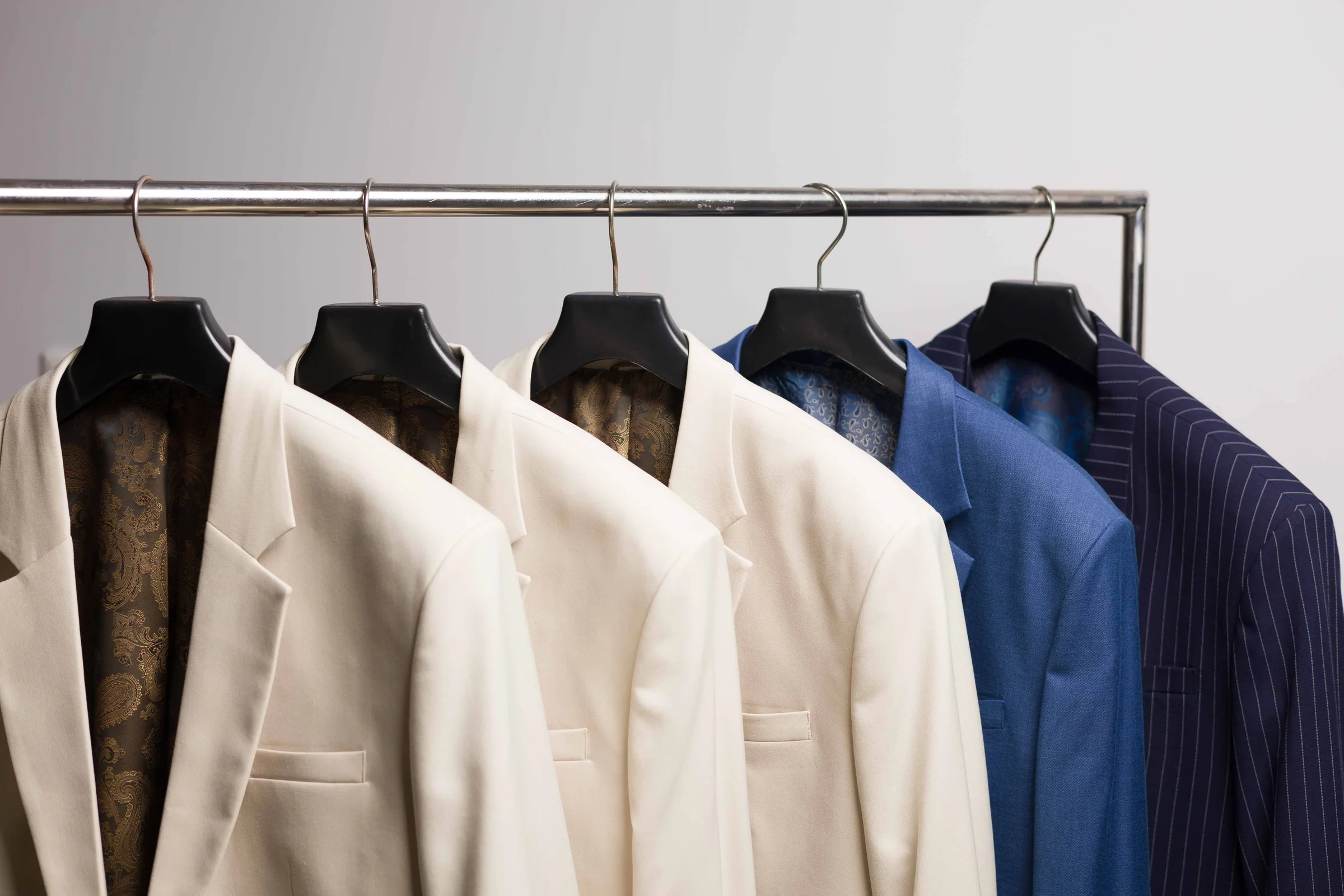
Every few weeks, someone arrives at our studio having done the rounds of Hội An's tailoring quarter with a list on their phone and a confused look on their face. They've had quotes ranging from $80 to $400 for what they understood to be the same thing — a two-piece suit — and they can't work out why the difference is so large, or which price represents genuine value and which represents either a bargain or a con.
The answer is that those quotes are almost certainly not for the same thing. And until you understand what's actually being offered at each price point, you can't make a rational decision about where your money goes furthest. This is my honest attempt to explain the value landscape in Hội An tailoring — what the price differences mean, what you can realistically expect at various budgets, and where the sweet spot tends to be.
Why "Best Value" Is the Wrong Way to Shop in Hoi An
The framing of "best value" implies a single best answer — a right choice that everyone should make regardless of their circumstances. That's not how Hội An tailoring works. Value here depends entirely on what you're buying, what you need it for, how long you want it to last, and what skills you can bring to the evaluation process. A $120 suit might be extraordinary value for one person and a waste of money for another, depending on the fabric, construction, and use case.
The "best value" question also tends to collapse important distinctions. A shirt and a suit are very different propositions. A linen shirt for beach holidays and a wool suit for board meetings involve different materials, different construction methods, different timelines, and different expectations of longevity. Treating them as the same type of purchase and optimising for price alone is a recipe for being disappointed by at least one of them.
What most people actually mean when they ask about value is something like this: "I want to avoid being ripped off, and I want to come home with something I'm genuinely proud of." That's a much more useful question, because it focuses on the relationship between price, quality, and outcome rather than the number alone.
The Relationship Between Price and Quality in Hoi An Tailoring
There is a real relationship between price and quality in Hội An, but it's not linear and it doesn't start from zero. Below a certain threshold — roughly $80–90 for a suit — the fabric and construction compromises necessary to hit that price point mean you're unlikely to be happy with what you receive in six months. The cloth will be a budget polyester-blend, the lining will be cheap and prone to tearing, the interlining will be fused rather than canvassed, and the hand-finishing will be minimal or absent. The suit will look acceptable immediately but won't hold its shape or structure with wear.
Between $150 and $350 is where the most interesting territory lies for a two-piece suit in a good wool fabric. This range includes a wide spectrum of quality, but the best work at the upper end of this bracket — a full-canvas construction in a mid-weight wool from a reputable mill, with properly finished seams and hand-stitched buttonholes — is genuinely exceptional in global terms. You'd pay three to five times this amount for equivalent quality in most Western tailoring markets.
Above $400 and into the $500–1,000 range for a suit, you're paying for premium imported cloths — Italian or English wool from mills like Loro Piana, Scabal, or Holland & Sherry — and for the additional time that hand-finishing at the highest level requires. Whether that premium is worth it depends on whether you can use and appreciate the difference. For a suit that will be worn regularly for ten or more years and needs to work in professional settings where people will notice quality, it probably is. For a summer holiday suit or a garment you'll wear twice a year, it probably isn't.
What You Should Expect to Pay for Genuine Value
Based on real experience commissioning and observing commissions across the range, here are honest benchmarks for what genuine value looks like at each major price point in Hội An tailoring.
Shirts: $50–80 for a custom cotton or linen shirt in a good single-colour fabric with careful construction. At $80–120 you're into better cloth, possibly a two-ply poplin or a superior linen, with more detailed finishing. Above $120 for a shirt you're typically paying for imported European cloth or particularly intricate design features.
Trousers: $70–130 for a well-cut pair in a good wool or cotton. The fit is where most of the value lives with trousers — a custom pair that fits perfectly is worth considerably more than a pair that fits roughly, regardless of the fabric quality.
Two-piece suits: $200–350 for a genuinely well-made suit in a solid wool fabric with proper canvas construction. Below this, compromises are being made; above this, you're paying for premium cloth and additional hand-finishing that's worth having if you know you'll use the suit seriously.
Dresses and womenswear: $80–200 for a custom dress depending on complexity, fabric, and construction. Simple linen dresses can be excellent value at the lower end; structured occasion wear with significant fabric and construction complexity warrants the upper end.
The Services That Offer the Best Return on Investment
If I had to identify the single category of tailoring in Hội An that offers the most disproportionate value — where the gap between what you pay and what you'd pay elsewhere is largest — I would say it's custom shirts. The price differential between a well-made custom shirt in Hội An and an equivalent shirt from a quality shirtmaker in Europe or North America is enormous, the construction process is well understood and consistent, and the result is something you'll wear for years.
Linen resort wear is another category where Hội An delivers exceptional value. Linen trousers, linen shirts, linen blazers — items that would be expensive in Western boutiques but that feel almost like basics in a Vietnamese context because linen is so appropriate to the local climate. The same is true of lightweight tropical-weight suits in mohair blends or open-weave wools: fabrics that are considered specialist and expensive at home are simply practical garments here.
For complex or special occasion garments — wedding suits, formal evening wear, structured dresses for significant events — the value case is different. These are garments where quality of construction and fit matters enormously because they'll be scrutinised in photographs and remembered for decades. The price gap with equivalent work at home is still significant, but the main reason to make them in Hội An is access to skilled construction at a price that makes real quality achievable for people who couldn't otherwise afford it.
What Sets Be Li Tailor Apart on Value
I'm obviously not a neutral observer here, but I can explain honestly what we believe differentiates our value proposition. The most important thing is consistency: the person who measured you is the same person — or the same team — that cuts and sews your garment. In some of the higher-volume tourist-oriented tailors, measurement and cutting and finishing pass through multiple hands with coordination loss at each stage. We're a smaller, more focused studio, which means accountability and consistency are easier to maintain.
The second thing is fabric sourcing. Our men's suits use cloth from suppliers we've worked with for years and know well — Vietnamese fabrics where appropriate, imported cloths for premium work. We don't substitute materials after they've been agreed, and we'll tell you honestly when a fabric is wrong for what you're trying to achieve. Some clients arrive wanting to use a particular cloth that won't perform well in their climate or lifestyle, and it's more valuable — and more honest — to explain that than to simply cut what's asked for.
Third is the after-service. Every garment we make comes with our commitment to adjust it if something isn't right — during your visit, after you return home, or on a future trip. That commitment only has value if we intend to honour it, and we do. The measure of a good tailor isn't just the first fitting: it's the relationship over time. Reach out to us with any concern about something we've made and we'll address it.
How to Get the Most From Your Tailoring Budget
A few practical principles that consistently lead to better outcomes. First: arrive with clear references. Photographs of things you like — from magazines, Instagram, or your own wardrobe — communicate more quickly and more accurately than descriptions. Show us what you mean rather than telling us. Second: build in enough time. A rushed commission produces worse results than one with adequate time for a fitting and adjustment. If you can visit for at least five days, you have enough time for a suit; three days works well for shirts and simpler garments.
Third: resist the temptation to maximise quantity. One excellent suit is worth more than three mediocre ones. Decide what you genuinely need, invest properly in those items, and leave room for the work to be done well. Fourth: be honest about the purpose of the garment. A suit you'll wear twice a year at formal events has different requirements from one you'll wear weekly for work. The tailor who understands what you actually need can make better recommendations than one who's trying to sell you the most expensive option.
Finally: the initial conversation matters. A tailor who listens carefully, asks questions, and offers honest advice about what's achievable at your budget is almost always going to deliver better results than one who simply agrees with everything and quotes the lowest price. What sounds best in that first meeting isn't always what you want to walk out of Hội An with a week later.
Talk Value With Us Before You Decide
Be Li Tailor is at 635 Hai Bà Trưng, Hội An, open daily 8am–9pm. We're happy to talk through what's achievable at any budget — there's no minimum spend and no pressure. Get in touch before your visit or book an appointment when you're ready.