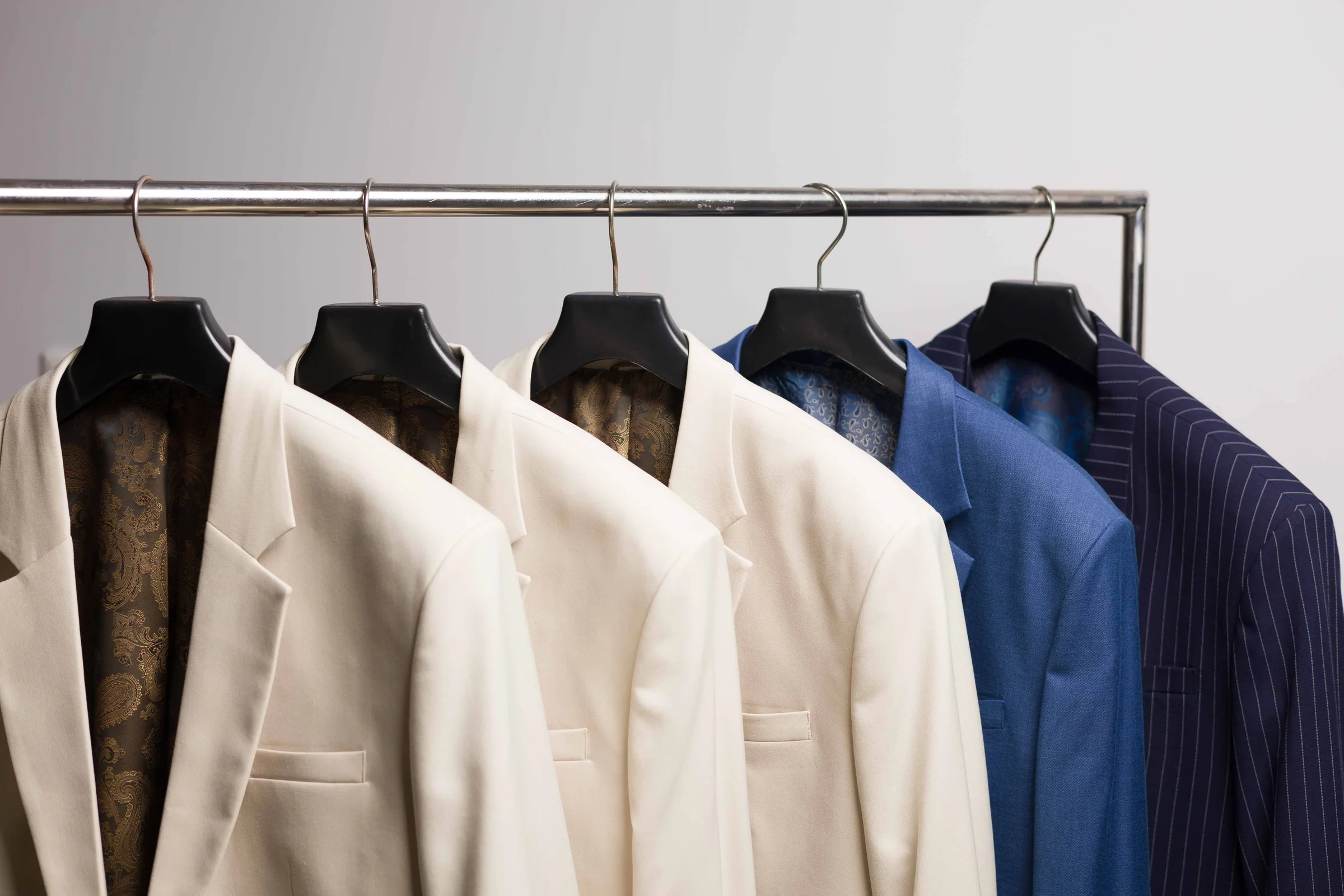
The word "affordable" carries different meanings for different travellers. For some people, anything under $500 for a suit feels like a steal. For others, $200 feels like a significant stretch. What I want to do in this guide is make the concept of affordable bespoke clothing concrete and actionable — not just "Hội An is cheap" but rather a practical breakdown of what you can realistically commission at different budgets, what quality you can reasonably expect, and how to plan a tailoring visit that gives you the best possible return on whatever you spend.
Hội An is genuinely one of the most accessible places in the world to experience bespoke clothing. That accessibility is real, and it isn't just about price: it's about the concentration of skilled tailors, the availability of quality fabrics, and the culture of the town, which has been built around tailoring for generations. But accessibility doesn't mean that everything is equal or that you can ignore quality at any price point. Used intelligently, this is one of the most rewarding things you can do in Vietnam. Used naively, it can be disappointing.
What Affordable Bespoke Clothing Actually Looks Like in Hoi An
Affordable bespoke in Hội An doesn't look like fast fashion with your measurements taken. At its best, it looks like garments that would command four or five times the price in a quality tailor in Melbourne, London, or New York — made in the same traditions, from comparable or identical materials, by craftspeople with decades of experience. The difference is labour cost and overheads. Vietnamese tailors are skilled, but the cost of living and running a business in Hội An is a fraction of what it is in a Western city. That saving passes, in large part, to the client.
What affordable bespoke does not look like is garments made quickly with cheap materials by unskilled workers. That version of Hội An tailoring exists too — it's the bottom of the market, and the work is generally not worth having at any price. The difference between a $90 suit and a $220 suit in Hội An is not a minor quality difference; it's usually the difference between a garment that holds up for years and one that starts to look wrong within months. Affordable in this context means genuinely good work at prices that are extraordinary by global standards — not rock-bottom prices that reflect rock-bottom quality.
A well-constructed custom suit at Be Li Tailor starts at around $200–250 for a two-piece in a solid mid-weight wool, and that represents exceptional value by any comparison I'm aware of. A linen or cotton shirt ranges from $55 to $90 depending on cloth. Custom trousers start around $80. These prices are not the cheapest in Hội An — there are cheaper options — but they reflect construction quality that genuinely justifies the cost.
How to Set a Budget That Gets You Quality Garments
The most useful approach is to decide what you want to bring home and work backwards from there. Start by listing the garments you actually need rather than those you're theoretically interested in. It's easy to arrive in Hội An with a vague plan to "get some stuff made" and leave with a large number of mediocre items. It's much better to arrive with a clear list of three or four genuinely needed garments and invest properly in each one.
Once you have your list, research realistic price ranges for each item. The benchmarks are roughly as follows: shirts $55–90, trousers $80–130, blazers $120–200, two-piece suits $200–350, three-piece suits $250–420, dresses $80–200 depending on complexity. These are ranges for work we'd be happy to stand behind — not the cheapest available, not the most expensive. Within these ranges, the upper end typically reflects a better fabric or more complex construction rather than the same work at a higher margin.
Build in a small contingency for accessories or extras that you'll likely want once you're in the studio and looking at fabrics. A matching pocket square or a custom belt alongside a suit adds relatively little to the total but significantly improves the overall result. Planning for this means you're not stretching an already tight budget when the moment comes.
The Best Garments to Commission for Value
Some categories of custom clothing offer better value in Hội An than others — not because the work is better in those categories, but because the price differential with home-country equivalents is largest. Shirts are probably the single best-value category: a custom shirt at $65–80 made to your exact measurements in a quality fabric, with proper construction, is something that would cost $180–300 from a comparable shirtmaker in Europe or North America. The gap is extraordinary.
Linen clothing is another outstanding category. Linen trousers, linen blazers, linen dresses — these are items that Vietnamese tailors have been making for generations and that are ideally suited to the local climate and craftsmanship traditions. The fabric itself is widely available and well understood, the construction is clean and appropriate, and the prices are modest. A pair of perfectly fitted linen trousers in a weight appropriate for your climate, made to your exact measurements, costs around $80–100. The equivalent from a specialist linen brand at home would typically be $200 or more, and wouldn't fit as well.
For women's bespoke clothing, the value case is even stronger in some respects. A custom dress made to your exact measurements — including accommodating asymmetry in shoulder height, hip-to-waist ratio differences from standard sizing, height adjustments — solves fitting problems that off-the-rack clothing can never address. A well-designed occasion dress from a good Hội An tailor at $120–180 simply doesn't have an equivalent in Western retail at anything close to that price. The combination of fabric, fit, and individual design is something that would cost $600–1,200 or more from a comparable dressmaker at home.
What to Look For in a Value-for-Money Tailor Studio
There are a few practical indicators that separate tailors who offer genuine value from those who offer low prices without delivering quality. The first is the consultation itself: does the tailor ask questions about how and where you'll wear the garment, or do they simply write down your measurements and move on? A tailor who understands your use case can make better recommendations and is more likely to produce something that genuinely works for your life.
The second indicator is fabric transparency. Ask to see the fabric book rather than being shown a curated selection. Ask where the fabrics are from and what the composition is. A studio that sources thoughtfully and can speak knowledgeably about its materials is a studio that cares about the end product. Vague answers about fabric origin or composition are a yellow flag.
Third: look at the work. Most studios have samples or can show you garments in progress. Look at the seam finishing inside a jacket — are the seams pressed flat and finished cleanly, or are they raw and rough? Look at the buttonholes on a sample jacket — are they hand-stitched with even tension, or machine-cut with fraying at the edges? These details reveal the standard of construction more reliably than any price point or online review.
Finally: a realistic timeline. A suit that takes five to seven days to complete properly cannot be made in two days without cutting corners somewhere. If a studio is promising a full suit in 24 hours, something in the process is being rushed, and rushed tailoring almost never produces results worth keeping.
How Be Li Tailor Balances Affordability and Craftsmanship
The honest answer to how we balance these things is that we make deliberate choices about where the compromises are and are not made. We don't source the cheapest fabrics available — we source fabrics that perform well for their intended purpose and that will look good and last well. We don't rush fittings or skip the toile process for complex garments. We don't sub-contract work to lower-skilled workshops to hit a price point.
What we do control carefully is waste and efficiency. Our patterns are cut with care to minimise cloth waste. Our studio is set up for the work we do rather than for maximising throughput. We take on commissions we're confident we can execute well rather than agreeing to everything and averaging out the quality. These choices allow us to offer prices that are genuinely competitive without compromising on the standard of the work.
We're also transparent about where the limits of our pricing are. If a client wants something that requires a more expensive fabric or a construction technique that takes significantly longer, we explain that and price it honestly rather than producing a cheaper approximation. If a client's budget doesn't stretch to what they're hoping for, we'll tell them what's possible at their budget and let them make an informed decision. There are no unpleasant surprises at collection.
Your Action Plan for a High-Value Tailoring Visit
The tailoring visits that produce the best outcomes follow a similar pattern. They start with preparation: the client has researched what they want, has reference images ready, has a realistic sense of prices, and has allowed enough time in their itinerary for the work to be done properly. They then spend the first consultation listening as much as talking — the tailor's advice about fabric and construction is valuable, and clients who engage with it rather than ignoring it tend to get better results.
The fitting is taken seriously. When you try on a toile or a basted first fitting, pay attention to how it moves, not just how it looks standing still. Sit down. Raise your arms. Turn around. Communicate precisely what you want adjusted rather than approving something that's almost right. A good tailor will accommodate detailed feedback at the fitting stage; it's the appropriate moment for it.
Finally, collect with a critical eye rather than a polite one. It's human nature to want to be positive when you collect a garment that someone has worked hard on, but if something isn't right, the time to raise it is before you leave Hội An, not after you get home. A good tailor wants to know if the work isn't right. We'd rather spend an extra hour getting it perfect than send someone home with something they'll stop wearing in six months.
Plan Your High-Value Tailoring Visit
Be Li Tailor is at 635 Hai Bà Trưng, Hội An, open daily 8am–9pm. Use this guide to arrive prepared — and book your first appointment in advance so we can give you the time you need. Questions before you come? We're easy to reach.