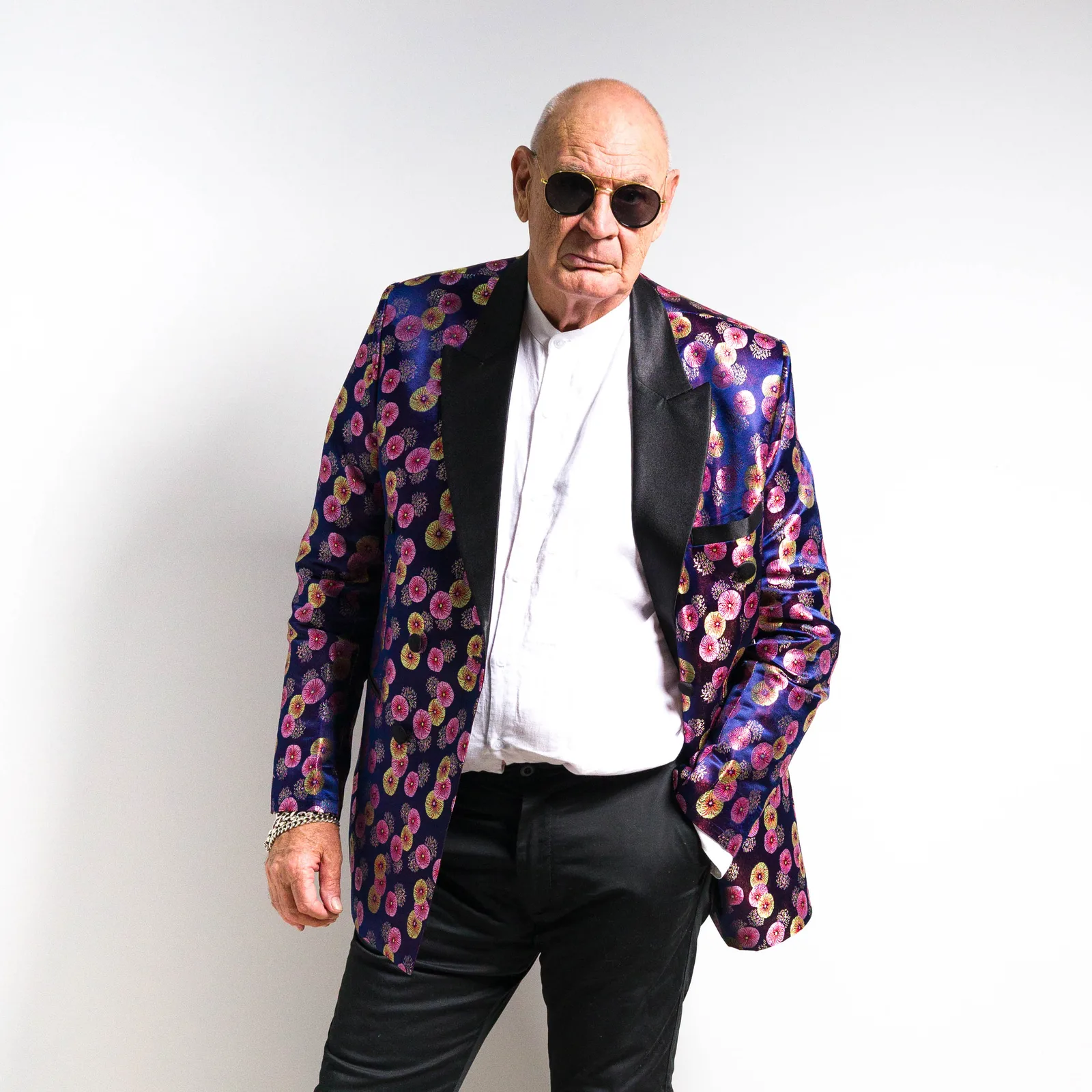
There is a particular feeling that arrives when you put on a suit that has been made for your body and no one else's. It's not the feeling of looking good in a mirror, though that happens too. It's a physical sensation — the jacket sits on your shoulders rather than fighting them, the trousers break cleanly at the shoe rather than pooling or riding up, the waist suppression follows your actual waist rather than a statistical approximation of it. You stand differently. You move differently. And that physical change translates almost immediately into something psychological.
I've worn suits most of my working life. I wore off-the-rack suits for years, then made-to-measure suits that were a step up, and eventually found my way to bespoke tailoring in Hoi An. The difference between a bespoke suit and even a good made-to-measure garment is not subtle. It's the difference between clothes that fit you and clothes that were made for you — and that difference has a measurable effect on how you carry yourself through a room.
Why Fit Is the Single Most Important Factor in a Suit
Men's suiting has evolved through centuries of refinement toward a single goal: creating a garment that makes the human body look its best while moving naturally and comfortably through the world. Every element of a well-constructed suit — the shoulder line, the chest suppression, the seat allowance, the trouser break — is designed to flatter proportion and allow movement. When all those elements are calibrated to your specific body, the suit fulfils its purpose entirely. When any of them are wrong, the whole garment looks wrong, even if the fabric is beautiful and the construction is excellent.
Fit is particularly unforgiving in structured clothing because the jacket has a defined shape. A shirt that doesn't fit well can be tucked in and forgotten about. A suit jacket broadcasts its fit to everyone who looks at you. Shoulder seams that overhang the shoulder, excess fabric pulling across the back, a collar that gaps away from the shirt — all of these are immediately visible, and they communicate carelessness rather than intention, regardless of how much you paid.
How Off-the-Rack Suits Undermine Confidence Without You Realising
Most men who wear suits regularly have learned to live with the compromises of off-the-rack fit without fully articulating what those compromises cost them. The jacket is too long in the body for your proportions, so you compensate by standing slightly straighter in a way that feels effortful rather than natural. The chest is cut for a man who is broader than you, so there's excess fabric that creates a soft, undefined line where there should be a clean edge. The trouser rise is too short for your frame, creating a constant low-level awareness of discomfort whenever you sit.
None of these things are catastrophic on their own. But together they produce a suit that you are always slightly conscious of — always adjusting, always aware of. And that low-level physical self-consciousness is the opposite of confidence. Confidence, in clothing, comes from not thinking about your clothes at all. It comes from putting the suit on and forgetting it's there, because it's working with your body rather than against it.
The full range of bespoke menswear options at Be Li Tailor — suits, jackets, trousers, and shirts — are all built on this principle. The measurement process exists specifically to eliminate those compromises.
What a Properly Fitted Suit Actually Feels Like
When I collected my first properly fitted suit from Be Li Tailor, the sensation was genuinely unfamiliar. The jacket closed cleanly across the chest without pulling at the button. The shoulders felt like they were sitting on my actual shoulders — not forward of them, not back, not wider than them. When I raised my arms, there was ease built into the construction that allowed the movement without the jacket riding up. The trousers sat at my natural waist with enough seat allowance that sitting down didn't feel like a risk assessment.
What struck me most was the absence of something: the constant minor adjustments I'd always made when wearing a suit. The pull at the collar. The tug at the hem. The shift of the shoulders when I moved my arms. A properly fitted suit doesn't need adjusting because it's already where it should be. That absence of effort is what people mean when they say a garment is comfortable — not that it's soft or loose, but that it requires nothing from you.
The Psychological Effect of Wearing Something Made for You
The confidence effect of a well-fitted suit is partly physical and partly something else that's harder to name. When you're wearing something that was made specifically for your body, after a consultation where someone took precise measurements and asked careful questions about how you want to move and what you'll be doing in the garment, you're wearing an object that acknowledges you as an individual. That sounds abstract, but it lands concretely. Off-the-rack clothing is made for a statistical average. Bespoke clothing is made for you. The psychological distance between those two things is larger than it seems.
There's also the fact that commissioning a bespoke suit requires you to think about yourself carefully. What kind of cut do you prefer? What occasions will you wear it for? What silhouette makes you feel most like yourself? Answering those questions — and having them reflected back in the finished garment — produces a sense of intentionality that generic clothing simply cannot replicate. You didn't pick a suit off a rail. You designed one. That matters.
What Be Li Tailor Measures and Why Every Point Matters
The measurement session at Be Li Tailor covers more points than most people expect. For a suit jacket, we take measurements at the neck, shoulder width, chest (at multiple heights), waist, seat, back length, sleeve length from both the shoulder and the wrist, and the back rise. For trousers, we measure the waist, seat, thigh, knee, calf, inseam, and outseam, as well as the rise both front and back. That's typically twenty or more individual measurements before we've discussed any style details.
Each of these measurements serves a specific function. The difference between the chest and waist measurements determines the degree of suppression — the amount the jacket curves inward at the waist to follow the body's natural line. The back rise determines how high the trousers sit at the back, which affects both comfort when sitting and the visual line at the seat. Sleeve pitch — the angle at which the sleeve is set into the armhole — determines whether the jacket hangs cleanly on the shoulder or twists forward or back when your arm is at rest. None of these measurements are captured in a standard off-the-rack garment. All of them matter.
Once you've experienced this level of attention to your specific dimensions, booking a fitting feels less like an appointment and more like a conversation that results in something genuinely yours.
The Confidence You'll Carry Long After You Leave Hoi An
The suit will outlast your trip to Vietnam. That's the other thing worth saying. A properly constructed bespoke suit — with a canvas or half-canvas chest piece rather than a fused interfacing, with quality lining and hand-finished buttonholes — will last for years, even decades, with appropriate care. The suit I commissioned during my first visit to Be Li Tailor has been to job interviews, weddings, and business dinners over three years. It still fits. The canvas has moulded gently to my chest. The fabric, a 120-gram wool-linen blend, has worn beautifully.
The confidence a well-fitted suit gives you doesn't diminish the way the novelty of a new purchase does. It's structural. It comes from the fact that every time you put it on, it fits the same way, drapes the same way, requires nothing from you. That's not a feeling you get from ready-to-wear, no matter how much you spend. It's specific to garments built for your body, by hands that understood what they were doing.
Commission the Suit That Fits
Be Li Tailor is at 635 Hai Bà Trưng, Hội An Ancient Town, open daily 8am–9pm. The measurement process takes about twenty minutes and the result is a suit that fits your body — not an average of several thousand others. Book a fitting or ask us anything before you decide.