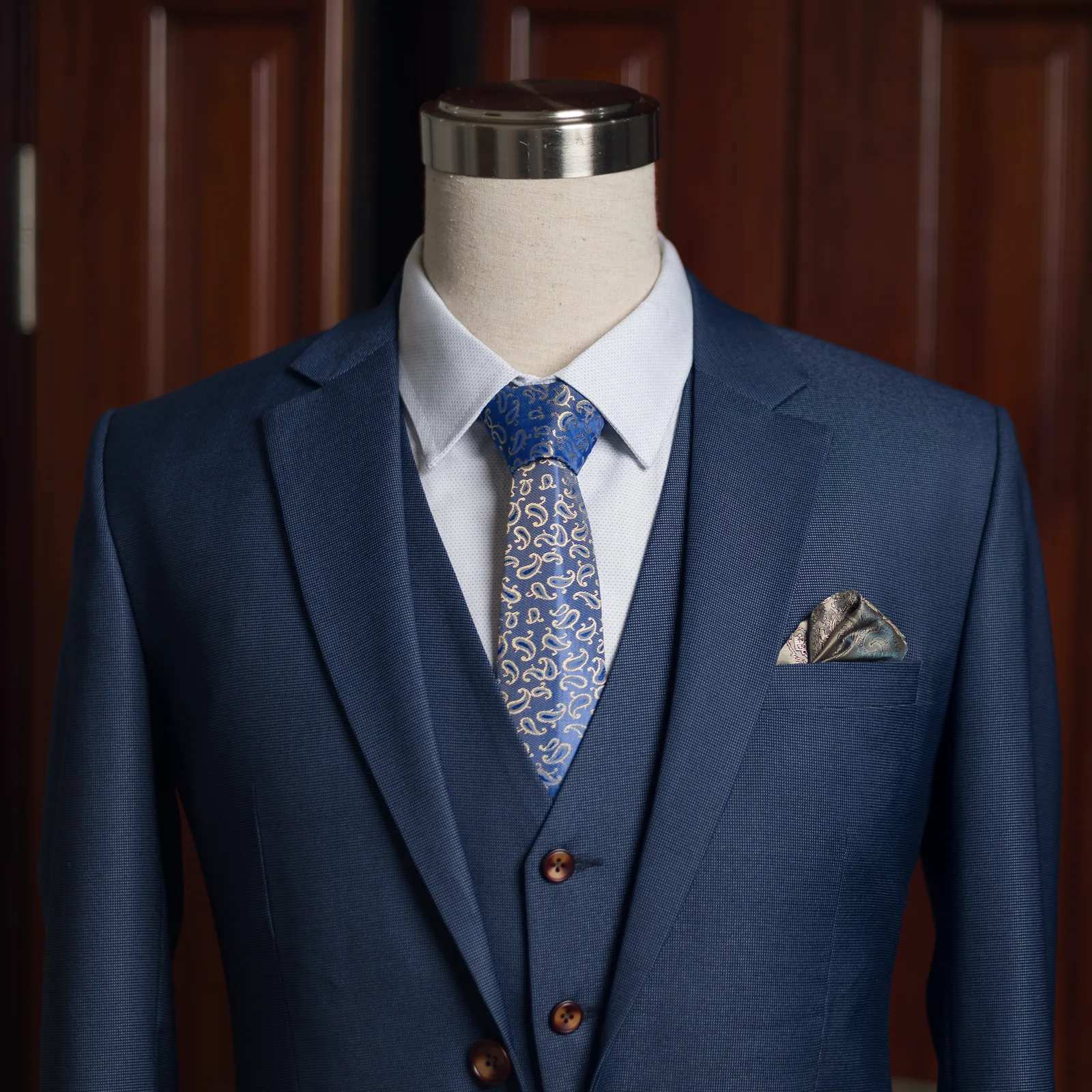
If you're considering commissioning a custom suit in Hoi An for the first time, the most useful thing I can do is tell you exactly what happens at each stage — not in the promotional way that makes everything sound effortless, but in the practical way that helps you prepare for each step, ask the right questions, and end up with something genuinely excellent. The process is not complicated, but it requires your engagement at key moments. Understanding those moments in advance makes a significant difference to the outcome.
I've commissioned suits in Hoi An across multiple visits and have made most of the common mistakes at least once. I've rushed a suit that needed more time, arrived without clear reference images, failed to flag a fit issue at the fitting because I wasn't sure whether I was imagining it, and once collected a finished garment at the airport without checking it thoroughly. I've also done it right — allowed adequate time, communicated clearly, engaged fully with the fitting process — and the results from those commissions are some of the best-fitting garments I own. The difference between the two experiences is almost entirely attributable to preparation and process.
Before You Arrive: What to Think About in Advance
The most productive consultation starts before you walk into the studio. Spend time looking at suits — images of suits you like and suits you'd like to avoid — and identify the specific elements that attract or repel you. The shoulder shape is one of the most important: a Neapolitan softened shoulder has a very different effect from a structured English shoulder, and neither of these is right or wrong, but you should have a preference. The lapel width and shape, the jacket length, the button stance (how high the button closes), the vent style (single, double, or ventless), and the trouser silhouette (slim, straight, or relaxed) are all variables worth thinking about before you sit down with a tailor.
Bring reference images — actual photographs of suits you admire, either saved to your phone or printed. These give the tailor something concrete to work from and prevent the miscommunication that can arise from relying purely on verbal description. "A slim suit" means different things to different people. An image of the suit you have in mind does not.
Think about the suit's intended use. A suit for a tropical destination wedding needs different construction and fabric than one for a Northern European winter. A suit worn primarily in air-conditioned offices needs different considerations than one worn outdoors. The more clearly you can articulate the occasions and climates the suit will serve, the better the tailor can advise on fabric weight and construction details.
The Consultation: Fabric, Style, and Fit Discussion
The consultation at a serious studio like Be Li Tailor begins with fabric. You'll be shown a range of fabric swatches — typically organized by weight, composition, and weave — and asked to select in the context of your intended use. For the full bespoke suit process, the studio maintains a range that spans lightweight tropical wools (around 120 to 150 grams per metre), mid-weight year-round wools (180 to 220 grams), and heavier winter-weight options for customers who need something substantial. Wool-linen and wool-silk blends are also available and are particularly popular for suits intended to be worn in warm climates.
After fabric, the style discussion covers all the design variables mentioned above: silhouette, shoulder type, lapel details, pocket style (flapped, jetted, or patch), button choice, lining colour, and trouser details. A good tailor will offer guidance rather than just executing preferences — they'll tell you if a combination you're considering tends to work well or tends to look awkward, and why. That honest input is part of what you're paying for. A tailor who simply agrees with everything you say is not giving you the full value of their expertise.
The style discussion should conclude with a clear brief that both you and the tailor can reference. Some studios will sketch the agreed design; others keep detailed notes. Either way, you should feel confident that the style decisions have been clearly understood before measurements begin.
Taking Measurements: What a Good Tailor Checks
A thorough measurement session for a suit takes around twenty to twenty-five minutes. The tailor will measure your body at a large number of points, asking you to stand naturally — not stiffly — and will often measure the same point two or three times to confirm accuracy. For the jacket, measurements typically include: neck, shoulder width, chest at multiple heights, waist, seat, back length, sleeve length from shoulder and from cuff, back rise, and collar height. For trousers: waist, seat, high hip, low hip, thigh, knee, calf, inseam, outseam, and rise front and back.
Beyond the raw measurements, a skilled tailor will also assess your posture and build for characteristics that measurements don't fully capture: whether one shoulder is slightly lower than the other, whether you have a forward head posture that affects collar position, whether you carry your weight in front or back in a way that affects the jacket balance. These observations go into the pattern alongside the numerical measurements and are part of what distinguishes a bespoke garment from a made-to-measure one that simply applies size adjustments to a standard block.
One question worth asking at this stage: how will the pattern be constructed? A studio that creates a pattern block specifically from your measurements is doing true bespoke work. A studio that starts from a standard block and adjusts it to your measurements is doing made-to-measure. Both can produce excellent results, but they're different processes with different implications for how closely the first fitting will match your body.
The Fitting Process and What Adjustments Are Made
The first fitting, typically two to three days after the consultation, is where bespoke tailoring is won or lost. The garment will be presented in a partly-constructed, partly-basted state — enough to assess the fit clearly, but not so finished that adjustments are difficult to make. Put it on, button it, and stand naturally. Move around. Raise your arms. Sit down. The fit should be assessed in motion as well as at rest.
Common adjustments at the first fitting include: taking in or letting out the waist suppression, raising or lowering the button stance, adjusting the shoulder seam position, correcting the collar roll, lifting or lowering the trouser seat, and adjusting the break at the ankle. A good tailor will identify most of these issues themselves; your role is to flag anything you notice that they haven't — particularly how the garment feels when you move, since the tailor can see the garment on your body but can't feel it.
Don't hesitate to ask questions at the fitting. "Why does the jacket pull slightly across the back?" is a fair question. "Can the lapel be rolled a little softer?" is also fair. The fitting is a collaborative review, not a passive observation. The tailor has the expertise; you have the knowledge of your own body and preferences. Both inputs are necessary.
Timeline: How Long Does a Custom Suit Take in Hoi An?
A well-made custom suit in Hoi An requires a minimum of five days from first consultation to final collection, and ideally six to seven. This timeline accommodates: one day for pattern cutting after the consultation, two days for initial construction and basting, one fitting session, one to two days for fitting adjustments and completion of finishing, and a final review and collection. Rushing any of these stages produces a worse result. The canvas needs time to be properly laid. The collar canvas needs time to roll. Pressed seams need time to set.
Studios that promise a suit in two days are either cutting corners on construction — using fully fused interfacing rather than canvas, skipping the fitting — or are compromising on the quality of the hand finishing. For a casual suit in a simple cut with fused construction, a two-to-three-day turnaround is feasible. For a properly constructed bespoke suit with canvas chest and a real fitting process, five to seven days is the realistic minimum. If your schedule only allows three days, commission shirts and trousers and save the suit for a visit where you can do it properly.
Collecting Your Suit and What to Check Before You Leave
When you collect the finished suit, put it on fully — jacket and trousers — and spend a few minutes checking everything. Button the jacket and check that the front closes cleanly and the shoulders sit correctly. Check the sleeve length: the standard is for about one centimetre of shirt cuff to show below the jacket sleeve. Check the trouser break — it should fall where you agreed. Check the collar sit — the jacket collar should follow the shirt collar with about one centimetre of shirt collar visible above. Check all the buttons and ensure they're secure. Look at the inside of the garment and confirm the lining is properly attached at the hem.
If you notice anything that needs adjustment, say so. A reputable studio will address it without hesitation — either there and then if the fix is minor, or the same day if it requires work. Don't accept something that doesn't satisfy you under the pressure of an impending departure. If you're collecting close to a flight, plan to collect the day before, not the day of.
The process, done properly, produces something that will be in your wardrobe for years. Book your first consultation at Be Li Tailor well before your visit — the team at 635 Hai Ba Trung is ready to walk you through every stage from the first fabric selection to the final collection.
Start Your Custom Suit
Be Li Tailor is at 635 Hai Bà Trưng, Hội An, open daily 8am–9pm. The consultation is the important part — everything after flows from a clear brief and a good measurement. Book your consultation now or ask us anything before you arrive.