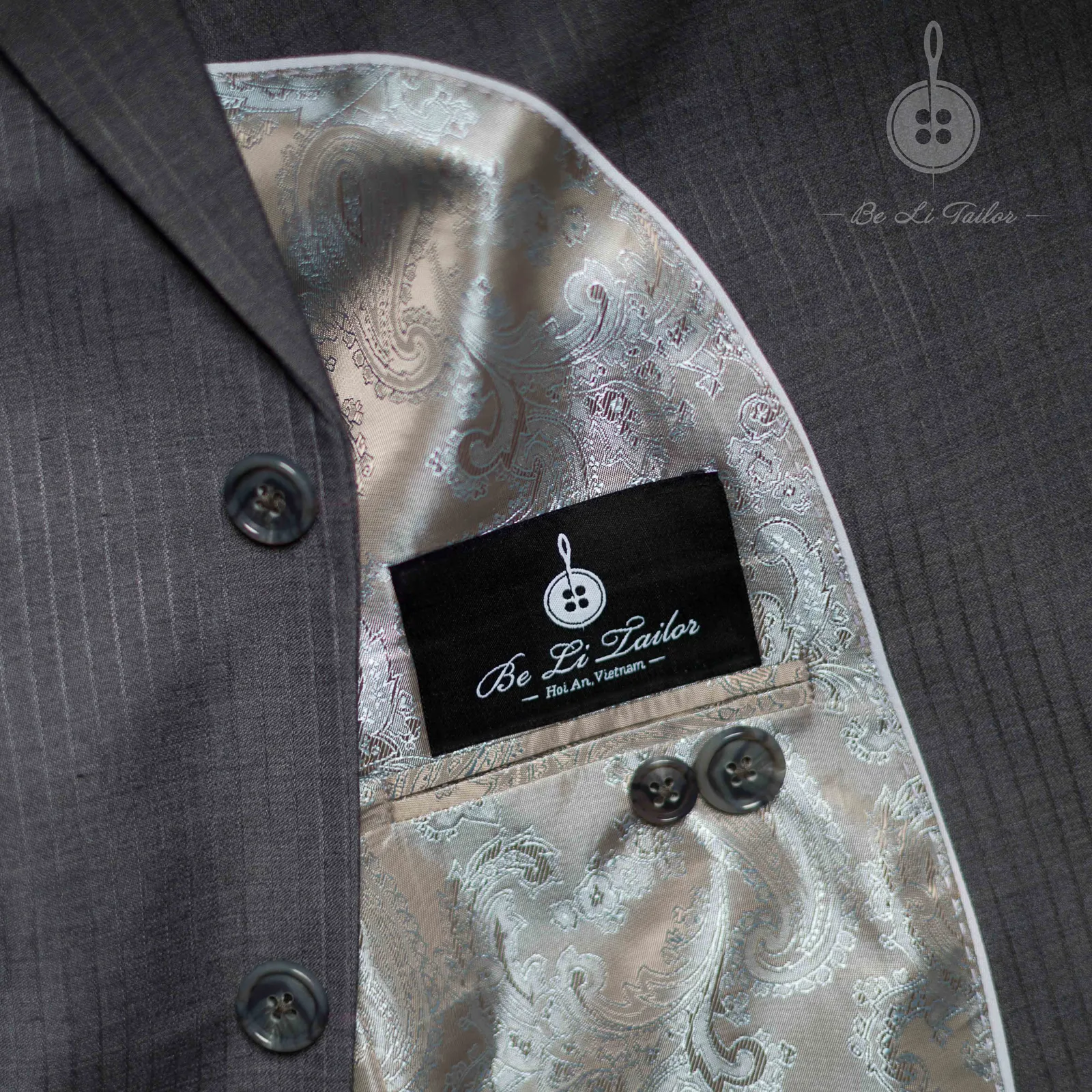
Nothing quite prepares you for your first time inside a Hoi An tailor studio. I had visited bespoke tailors in London and Hong Kong before my first trip to Vietnam, and I thought I had some idea of what to expect. I did not. The experience in Hoi An is categorically different — in pace, in warmth, in the relationship between client and maker — and understanding that difference before you arrive will help you get far more from it.
It's not simply that Hoi An has a lot of tailors. It's that tailoring here is a genuine cultural practice, not a niche luxury service. The ancient town has been a centre of textile trade since the seventeenth century, when Japanese, Chinese, and Vietnamese merchants converged at its port and established a commercial fabric culture that has never really stopped. The tailors working in Hoi An today are heirs to that tradition, and many of them grew up in studios where their parents and grandparents worked. That continuity is visible in how they approach the work.
What Makes Hoi An's Tailoring Culture Unlike Anywhere Else
In most Western cities, bespoke tailoring is positioned as a luxury — expensive, exclusive, and slightly intimidating. You book far in advance. You deal with formality and ceremony. You may feel self-conscious if you're not entirely sure what you want. Hoi An is none of that. The studios are open, accessible, and genuinely welcoming. You can walk into most of them off the street, spend an hour looking at fabric samples and talking through ideas, and leave without any pressure to commit to anything.
This accessibility doesn't mean the standards are lower. It means the culture around tailoring is different. In Vietnam, having clothes made is an ordinary thing — not a special occasion. The ease that comes from that cultural normalcy permeates the studio experience. The tailor is not performing expertise for your benefit. They are simply doing what they do every day, and you're invited to be part of it.
The other thing that distinguishes Hoi An's tailoring culture is the speed at which the industry has absorbed global influences. You can commission a Neapolitan-shouldered linen suit here with the same confidence as a classic British double-breasted. The tailors have spent decades working with customers from all over the world, absorbing their references, adapting their techniques, and developing a visual vocabulary that spans traditions. That range of influence, combined with deep local expertise in fabric and construction, produces something genuinely singular.
The Atmosphere Inside a Traditional Hoi An Tailor Studio
A well-established studio in Hoi An has a particular quality of light and sound. The front of the shop is typically devoted to fabric display — rolls of wool, silk, linen, and cotton stacked floor to ceiling in subdued colours. Further in, past the cutting tables, you can usually hear the mechanical rhythm of sewing machines. The smell is specific: clean fabric, chalk, a slight warmth from the irons. If it's a working studio rather than a showroom, there will be garments at various stages of completion hanging in the back — a jacket with basting stitches still visible, a dress on a dress form with pins marking the adjustments from that morning's fitting.
That visibility is one of the things I find most distinctive about the experience. You're not separated from the making. You can see the work happening, ask questions about it, and understand what stage your own garment is at. This transparency is practical as well as interesting — it means you can see what quality actually looks like, compare it to what you're being offered, and make informed decisions rather than trusting claims you have no way to verify.
From First Visit to Final Collection: The Full Experience
A typical bespoke commission in Hoi An moves through several distinct stages, and understanding them in advance makes each one more productive. The first visit is primarily about fabric and style. You'll look at swatches, discuss the garment you want, and the tailor will ask questions about occasion, preference, and how you want to feel in it. This conversation should take time. A tailor who rushes through it is not doing their job properly.
The measurement session usually follows the style discussion in the same visit, or is scheduled for the next day. For a suit, this takes around twenty minutes. For a simpler garment — a shirt or pair of trousers — perhaps half that. The tailor will take more measurements than you might expect and will ask you to stand naturally, not the way you think you should stand for a tailor. They're measuring how you actually hold yourself, not how a diagram says you should.
The first fitting, typically two to three days after the initial consultation, presents the garment in its basted or partly-constructed state. This is the most important stage of the process. Every adjustment made here improves the final garment. Don't be shy about what you notice — the tailor expects feedback, uses it, and would rather you mention the collar sitting slightly high on the right side than say nothing and receive a finished garment with that problem baked in. Final collection is typically one to two days after the fitting, once adjustments have been completed and finishing applied.
How Vietnamese Tailoring Tradition Shows Up in Every Detail
Vietnamese tailoring has distinct traditions that differ from European and East Asian approaches, and these show up in particular ways in Hoi An's work. The hand-finishing techniques common here — the way buttonholes are worked, the way lining is attached at the hem, the way collar canvas is laid — reflect decades of practice refined within a specific cultural context. The result is not better or worse than London or Hong Kong tailoring; it's different in ways that are genuinely interesting if you pay attention.
One area where Vietnamese tailoring tends to excel is in lightweight construction. The climate demands it, and the local expertise with silk, linen, and light wool blends is consequently very high. If you commission a tropical-weight suit or a summer dress in a delicate fabric, you are likely in better hands here than you would be at a Northern European tailor who rarely works with those materials. The knowledge of how light fabrics move, breathe, and behave at the seam is embedded in the craft tradition here in a way it simply isn't elsewhere.
The Human Side of Hoi An Tailoring: The People Behind the Craft
What lingers from any visit to a serious Hoi An studio is the human element. The tailors who work here have usually been at it for most of their lives. The senior cutter at a family studio may have been trained by their mother, who was trained by their grandmother. That continuity of knowledge — passed hand to hand through family rather than formalised in a training programme — produces a quality of attention and care that is hard to replicate in commercial fashion production.
Reading about Be Li Tailor's history and the family behind the studio gives a sense of what that continuity looks like in practice. The studio has been making clothes since 2009 and the people who work here grew up around tailoring. That context shapes everything — the way they approach a brief, the questions they ask, the care taken at each stage. You feel it in the first conversation, and you see it in the finished garment.
What to Expect on Your First Visit to Be Li Tailor
When you arrive at Be Li Tailor at 635 Hai Ba Trung, you'll find the studio open and unhurried. There's no pressure to decide quickly or commit to anything before you're ready. The team will show you the fabric range — which spans everything from lightweight linens and cottons suitable for the Vietnamese climate to heavier wools and wool blends for suits intended to be worn in cooler climates back home.
The consultation will cover what you want to make, when you need it, and what budget you're working with. Timeline is an honest conversation here, not a sales pitch — the team will tell you what's achievable in the time you have, and will occasionally suggest a simpler construction if the more complex option can't be done properly within your schedule. That honesty is one of the reasons people return. Suits typically take five to seven days for full construction with at least one fitting. Shirts and simpler garments can often be ready in three to four days. Wedding or formal wear with complex construction may need a week to ten days.
The best thing you can do before your first visit is bring reference images, be honest about your timeline and budget, and be prepared to engage with the process rather than simply placing an order. Bespoke tailoring is collaborative. The more you bring to it, the more you get out of it. Book an appointment before your arrival so we can set aside the time properly — walk-ins are welcome, but a booking means you'll have our full attention from the moment you arrive.
Come and Experience It
Be Li Tailor is at 635 Hai Bà Trưng, Hội An Ancient Town, open daily 8am–9pm. The studio has been in the same family since 2009. Book an appointment to see the work in progress, meet the tailors, and understand exactly what's being made for you.