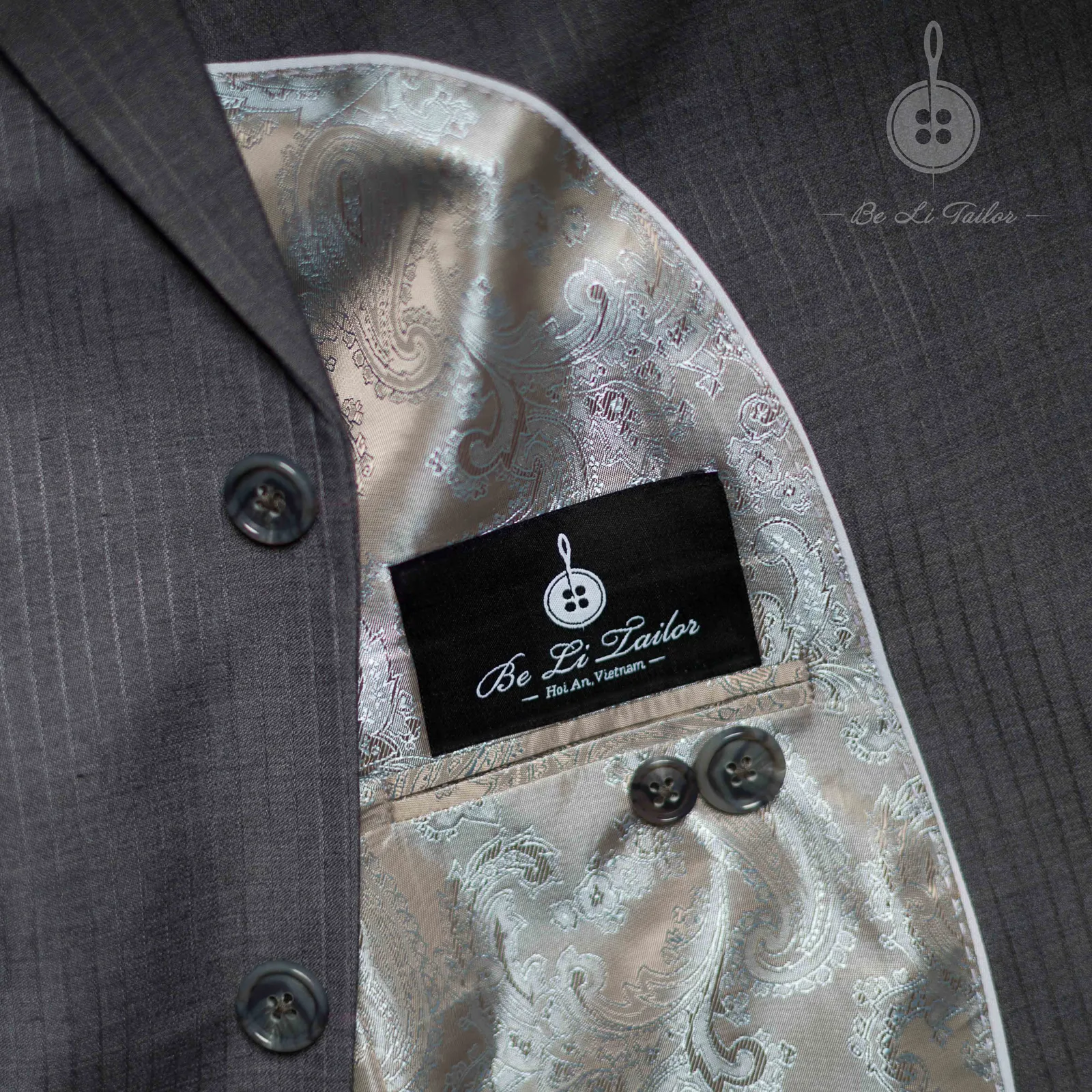
I came to Hoi An with moderate expectations. I had read enough travel accounts to know that quality varied enormously across the town's 400-plus tailor shops, and I had heard enough cautionary tales — jackets that fell apart at the seams, trousers that arrived nothing like the agreed measurements — to approach the whole enterprise with a degree of scepticism. What I found at the higher end of the Hoi An tailoring market genuinely surprised me. The craftsmanship was better than I had expected, the process was more rigorous than most accounts had suggested, and the finished garments held up in ways that garments from much more expensive Western tailors have sometimes failed to do.
This is the account of that experience. I am going to describe what high-quality tailoring actually means in technical terms, how I evaluated the work I received against those standards, and what I found when I compared the finished pieces to equivalents I had purchased or commissioned at home. I will also be honest about the one thing I would do differently if I were doing it again.
What "High Quality" Actually Means in a Tailored Garment
Quality in tailoring is not primarily about expense — it is about the accumulation of correct decisions made at each stage of construction. A garment can be made from expensive cloth and still be poorly constructed; conversely, a relatively modest fabric can be elevated significantly by skilled cutting and stitching. When I evaluate a tailored garment, I am looking at a specific set of indicators that experienced tailors and clothiers use to distinguish genuine quality from the appearance of it.
The first is fit — not just whether the garment is the right size, but whether it is the right shape for the wearer's body. A jacket that fits correctly sits flat across the upper back with no horizontal creases; the collar hugs the back of the neck without gapping; the shoulders end exactly at the shoulder joint with no overhang or shortfall; the chest lies flat without pulling or poaching. These are the visible signs of a pattern that has been drafted and adjusted correctly. They require either multiple fittings or extraordinary skill in taking measurements — ideally both.
The second indicator is the quality of the internal construction. This is invisible in the finished garment but determines how it moves and how it ages. A properly canvassed jacket has a horsehair chest piece that is hand-padded to create the roll of the lapel and the shape of the chest — when you press the lapel flat and release it, it should spring back naturally to its resting position. A fused jacket will not do this; the lapel will stay wherever it is pressed. The seam allowances should be generous — at least 2cm — so the garment can be altered if your weight changes. The lining should be cut with enough ease that it does not pull the jacket out of shape when you move.
The Construction Details That Distinguish a Fine Tailor
There are several construction details that I specifically look for when evaluating the work of an unfamiliar tailor. The first is the pick stitch on the lapel edge — a row of hand stitching running along the very edge of the lapel, approximately 3 to 4mm from the fold. This detail serves both a functional purpose (it stabilises the edge) and an aesthetic one (it adds a subtle texture that is a hallmark of handwork). It takes time to do properly and is one of the first details cut from a garment when a studio is under production pressure.
The second detail is the sleeve attachment. The sleeve of a well-made jacket is set with a slight fullness at the shoulder — called "roping" — that allows the arm to move forward without dragging the jacket body. A machine-set sleeve with no fullness will pull across the upper back every time you reach forward. A hand-set sleeve with proper ease will not. This is one of the most demanding operations in jacket construction and is a reliable indicator of how much time and skill has been invested in the build.
Third, I look at the button holes. Hand-worked button holes on the cuffs and jacket front are a luxury detail that requires significant skill and time. They are recognisable by a slight irregularity in the stitching — each button hole is subtly unique rather than identical — and by the way the thread is twisted rather than just looped. Many good studios produce machine button holes, which is entirely acceptable; the key is that they are neat, cleanly cut, and properly keyholed at the end for ease of use.
How Be Li Tailor's Craftsmanship Held Up Under Scrutiny
I commissioned two garments at Be Li Tailor during my first visit: a two-piece suit in a mid-weight charcoal wool, and a linen dress shirt. The suit was made with half canvas construction at my request — a horsehair canvas through the chest and lapels, with a fused skirt. The shirt was fully structured with a medium-stiff collar interlining and barrel cuffs.
The suit construction passed every test I applied. The lapels had a natural, even roll with visible pick stitching along the edge. The sleeve heads were set with a small amount of roping that allowed full movement without any pull across the back. The collar sat flat against my neck at the back without gapping, which is particularly telling — collar gap is one of the most common fit failures in jacket making and usually indicates either a measurement error or a pattern that has not been properly adjusted for the wearer's posture. The seam allowances inside were a generous 2.5cm, well finished, and clean.
The shirt was similarly well executed. The collar points were reinforced with proper collar stays, the placket was straight and cleanly pressed, and the back had a box pleat that was properly aligned with the yoke seam. The button holes on the cuffs were hand-worked — unusually so for a shirt in this price range — and the overall finish was crisp without being stiff. I have worn that shirt regularly for more than a year now and it has held its shape through repeated washing and ironing without any deterioration in the collar or cuffs.
Comparing the Finished Garment to European Standards
I own tailored garments from a number of sources — a Neapolitan suit from a small workshop in Naples, a made-to-measure jacket from a mid-range London tailor, and several pieces from a respected Hong Kong tailor who has visiting trunk shows in my city. Placing the Be Li Tailor suit alongside these pieces is an informative exercise.
In fit, the Be Li Tailor suit is comparable to the London piece and slightly ahead of one of the Hong Kong jackets, which has a persistent problem with the right shoulder sitting slightly high. The canvas quality is similar to the Hong Kong jacket — honest, functional, and appropriately padded without being stiff. Against the Neapolitan piece, the construction is more structured and less fluid, which reflects a different tailoring tradition rather than a skill differential; Neapolitan tailoring favours a very soft, unconstructed chest that many people find uncomfortable if they are not accustomed to it.
Where the Be Li Tailor suit clearly wins against all these comparisons is value. The Neapolitan jacket cost approximately eight times as much as the Be Li Tailor two-piece. The London made-to-measure jacket was four times the price for a single garment with no trousers. Accounting for the cost differential, the Be Li Tailor work represents one of the strongest value propositions in international tailoring — and that assessment is based on the finished garment, not just the price tag.
What Impressed Me Most — and What I'd Do Differently
The thing that impressed me most was the fitting process. Be Li Tailor insisted on a basted fitting — a stage at which the jacket is roughly assembled in a cheap canvas to check the pattern before anything is cut in the final fabric. This is standard practice in high-end tailoring but rarely offered in Hoi An, where most studios work to much tighter timelines. At the basted fitting, two small adjustments were made to the back seam and one to the collar height. By the time the suit was cut in the final fabric, those issues had been resolved rather than carried forward.
If I were doing it again, the one thing I would change is the timeline. I gave myself five days in Hoi An, which was enough for two fittings but left no margin for anything unexpected. I would now build in at least seven days for a suit commission and ten for anything more complex, simply to allow the time for the work to be done properly rather than under pressure. The best tailoring is not done in a rush, and the best tailors will tell you so.
Why Quality Tailoring in Hoi An Represents Exceptional Value
At the end of this analysis, the conclusion is relatively simple: the best tailoring in Hoi An is genuinely good by any objective standard, and it is priced at a level that makes it accessible to a far wider range of people than equivalent work in Europe or North America. The key is knowing how to find it — distinguishing between the studios that have the skill, the equipment, and the process to produce lasting work, and the ones that will take your money and produce something that will disappoint you six months later.
The markers of quality work are consistent across any tailoring tradition: natural fabrics honestly represented, pattern drafted for your body rather than adjusted from a block, honest internal construction with generous seam allowances, and a fitting process that allows problems to be caught and corrected before the final garment is delivered. Be Li Tailor has been built around these principles since the studio opened, and the result is a body of work that holds up to scrutiny — not just in the moment of collection, but over years of regular wear.
Experience the Craftsmanship
Be Li Tailor is at 635 Hai Bà Trưng, Hội An Ancient Town, open daily 8am–9pm. The best way to judge our quality is to handle the finished garments in the studio — book an appointment or walk in any time and see what we make.