The first time I walked into the Ancient Town of Hoi An with the intention of getting something made, I was completely overwhelmed. I had read that there were tailor shops here — lots of them — but nothing quite prepares you for the reality of 400-plus storefronts, each with bolts of fabric stacked floor to ceiling, each with a smiling tout at the door inviting you in. Every shop claims to be the best. Every shopfront looks more or less the same. Where do you even begin?
I spent the better part of three days visiting studios, asking questions, handling fabrics, and inspecting finished samples on display. What I found was an enormous range in quality, approach, and honesty. Some shops were genuinely excellent. Others were polished fronts for rushed, low-quality work. By the time I left Hoi An, I had commissioning experience at several studios and a clear sense of which ones I would return to — and which ones I would steer friends away from.
How to Navigate Hoi An's Overwhelming Tailoring Scene
The scale of the tailoring industry in Hoi An is unlike anything else in Southeast Asia. The town has been making clothes for foreign visitors since at least the 16th century, when Japanese and Chinese merchants came to trade, and the tradition has never really stopped. Today, tailoring is the town's primary economic engine — there are more tailor shops in the Ancient Town than restaurants, and that is saying something.
The practical challenge for any visitor is that the sheer density of options makes evaluation almost impossible without a system. My approach was to ignore the shops on the most heavily trafficked tourist streets and walk one or two blocks in any direction. The shops that rely on foot traffic from the main drag tend to optimise for volume — quick turnaround, low prices, and enough quality to pass inspection at the door but not enough to survive the journey home intact.
I also paid close attention to how a shop handled the first few minutes of conversation. Did the tailor ask about my trip and how many days I had left? Were they trying to understand what I actually wanted, or were they immediately pushing me toward whatever fabric was on the top of the pile? The shops that took their time in the consultation were almost always the ones that delivered better results.
What Separates a Great Tailor Shop from a Tourist Trap
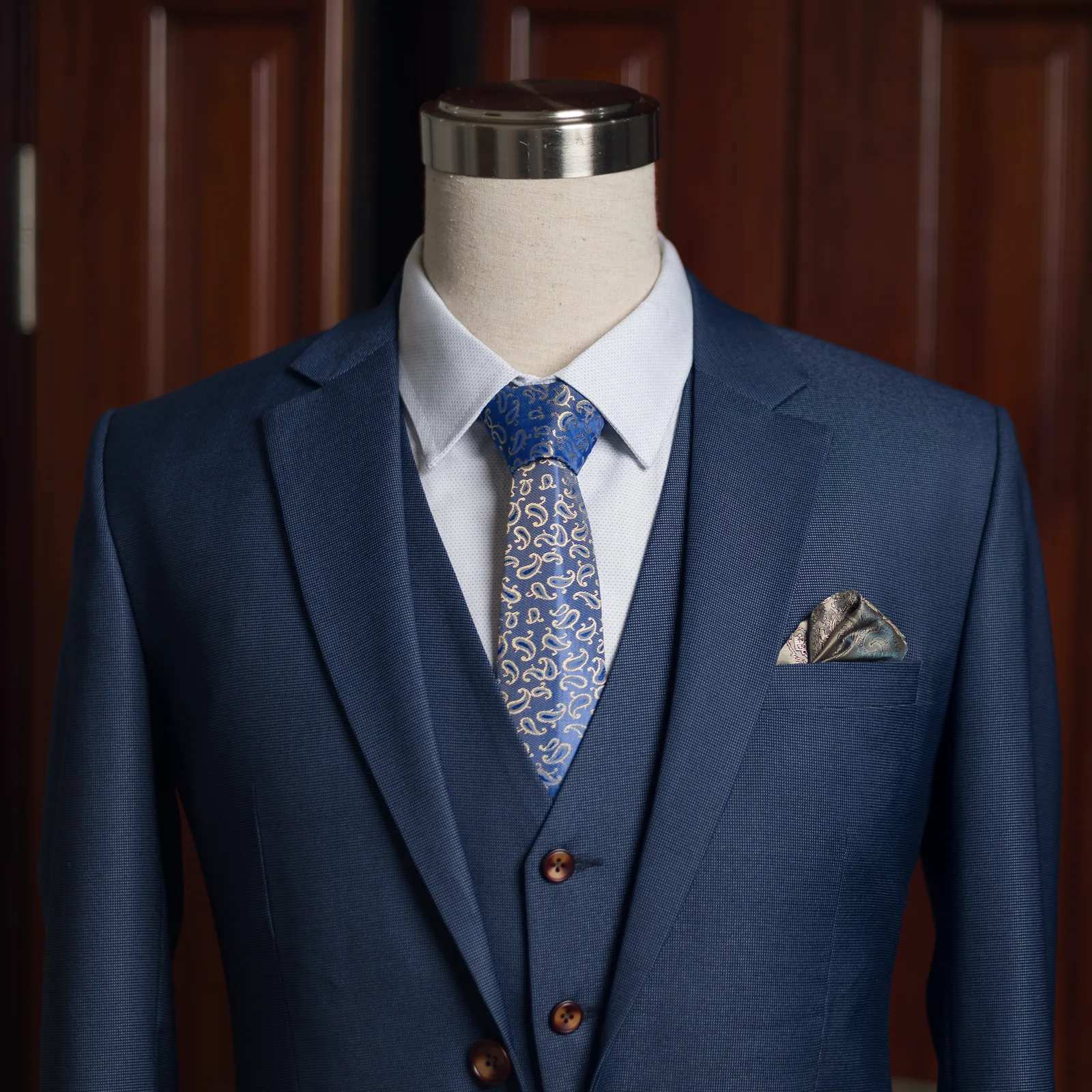
The single most reliable indicator I found was the quality of the samples on display. Every shop has finished garments hanging on a rack or on a mannequin. Look at the lapels. Are the edges hand-stitched and slightly padded, or are they flat and machine-pressed to within an inch of their lives? Look at the inside of a jacket — is there a functioning chest pocket, are the seam allowances generous and clean, is the lining cut separately or just folded over? These details cost almost nothing in materials but require skill and time, and the shops that cut corners on the samples are the ones that cut corners on your order.
The fabric selection is another telling sign. A serious tailor will have a curated range of genuine wool, linen, and silk from reputable mills — not just bolts of polyester blends with "100% wool" handwritten on the label. Don't be embarrassed to ask where a fabric comes from or to look at the selvedge. Good tailors are proud of their cloth. Shops trying to pass synthetic fabric off as natural fibre will change the subject quickly.
Finally, the fitting process matters enormously. If a shop offers to complete a full suit in 24 hours with no fitting session, that is your cue to keep walking. A proper suit at minimum requires one measurement session and at least one fitting — ideally two. Any shop that skips fittings is either working from a pre-made template or genuinely does not care whether the garment fits correctly.
The Questions I Asked Before Committing to Any Studio
Before I left a deposit anywhere, I asked a consistent set of questions. First: who cuts the pattern? At the best shops, there is a senior cutter or head tailor who personally drafts each pattern from the client's measurements. At cheaper operations, they work from a modified block pattern and essentially grade it up or down. This distinction sounds technical but it matters enormously — a drafted pattern accounts for your actual posture, shoulder slope, and how you carry your weight. A modified block does not.
Second: how many fittings are included? I was looking for at least one mid-construction fitting — ideally a basted fitting before the garment is cut to final shape. Any studio offering two fittings within a reasonable timeline was a promising sign. Third: what happens if something is wrong after I leave? This is where many shops become evasive. The best studios offered clear alteration policies and some even maintained records so returning customers could reorder remotely.
Fourth — and this one separated the studios most clearly — I asked to see something they had made recently, not a sample they'd been hanging for six months. The shops that could pull a recently completed garment from the back and show it with confidence were the ones I felt comfortable trusting.
What I Found at Be Li Tailor That I Didn't Find Elsewhere
I ended up at Be Li Tailor on a recommendation from another traveller I met at my guesthouse, and I am glad I did. The studio is on Hai Ba Trung street, just outside the most tourist-dense part of the Ancient Town, and it has a quieter, more professional atmosphere than many of the shops I'd visited. There was no tout at the door, no pressure to sit down and look at fabric immediately. The person who greeted me seemed genuinely interested in what I was hoping to have made before they showed me anything.
What distinguished Be Li Tailor from the other studios I'd visited was the combination of technical competence and genuine personal service. The menswear offering in particular struck me as unusually well-developed — they had a clear process for suits, with a proper consultation, a fitting at the basted stage, and a second fitting before final pressing. The fabric selection included genuine Italian and English wools alongside Vietnamese and regional silks and linens. Nothing was misrepresented.
The craftsmanship was visible in the samples. The lapels were hand-padded with a natural roll, the jacket lining was cut with enough ease that it wouldn't pull, and the inside construction was clean and honest. I commissioned a two-piece suit and a linen shirt, came back for two fittings, and left with garments I still wear regularly more than a year later. That is the real test — how a garment performs after the honeymoon of having just bought it.
Tailoring for Men vs Women: Which Studios Specialise in What
Not every studio in Hoi An is equally good at both menswear and womenswear. Suit construction — particularly jacket construction — is a highly specific skill that requires dedicated training and experience. Studios that focus on womenswear often produce beautiful dresses and casual separates but lack the technical depth for a well-structured jacket. Conversely, a shop that does outstanding suits may not have the same feel for the drape and silhouette of women's evening wear.
When evaluating a studio, it is worth asking what the majority of their work is. If a shop makes fifty dresses a week and two suits, the suits are probably not their strongest output. The best studios I found had genuine depth in at least one category and were honest about where they were stronger. Be Li Tailor has both menswear and womenswear programmes, with separate tailors who specialise in each — which means you are not asking the suit cutter to make your silk dress or vice versa.
For women, the range of what is achievable in Hoi An is genuinely impressive. Structured blazers, wide-leg trousers, silk blouses, occasion dresses, and casual resort-wear separates are all well within reach at a competent studio. The key is finding a tailor who understands how women's garments are meant to move and who takes the time to fit properly — particularly at the waist and bust, where fit issues are most visible.
My Final Recommendation for First-Time Visitors
If you are visiting Hoi An for the first time and want to commission something, my honest advice is this: budget more time than you think you need, spend the first day visiting three or four studios without committing to anything, and pay close attention to the first conversation you have in each one. The quality of that initial consultation tells you almost everything you need to know about how your order will be handled.
Avoid any studio that cannot give you a clear answer about construction — whether the suit is canvassed or fused, where the fabric comes from, how many fittings are included and at what stage. These are not difficult questions for any serious tailor, and evasiveness usually means something is being hidden.
And if you are short on time or simply want to start somewhere I can personally vouch for, go to Be Li Tailor. Book an appointment in advance if you want to make sure you have the senior tailor's full attention from the start — it makes the consultation smoother and gives you the best chance of leaving with something you'll wear for years. Tell them what you want, be honest about your budget, and trust the process. That is the way tailoring is supposed to work.
Come and Judge for Yourself
Be Li Tailor is at 635 Hai Bà Trưng, Hội An Ancient Town, open daily 8am–9pm. Walk in any time or book an appointment online. If you want to talk through your plans before you arrive, we're happy to chat.