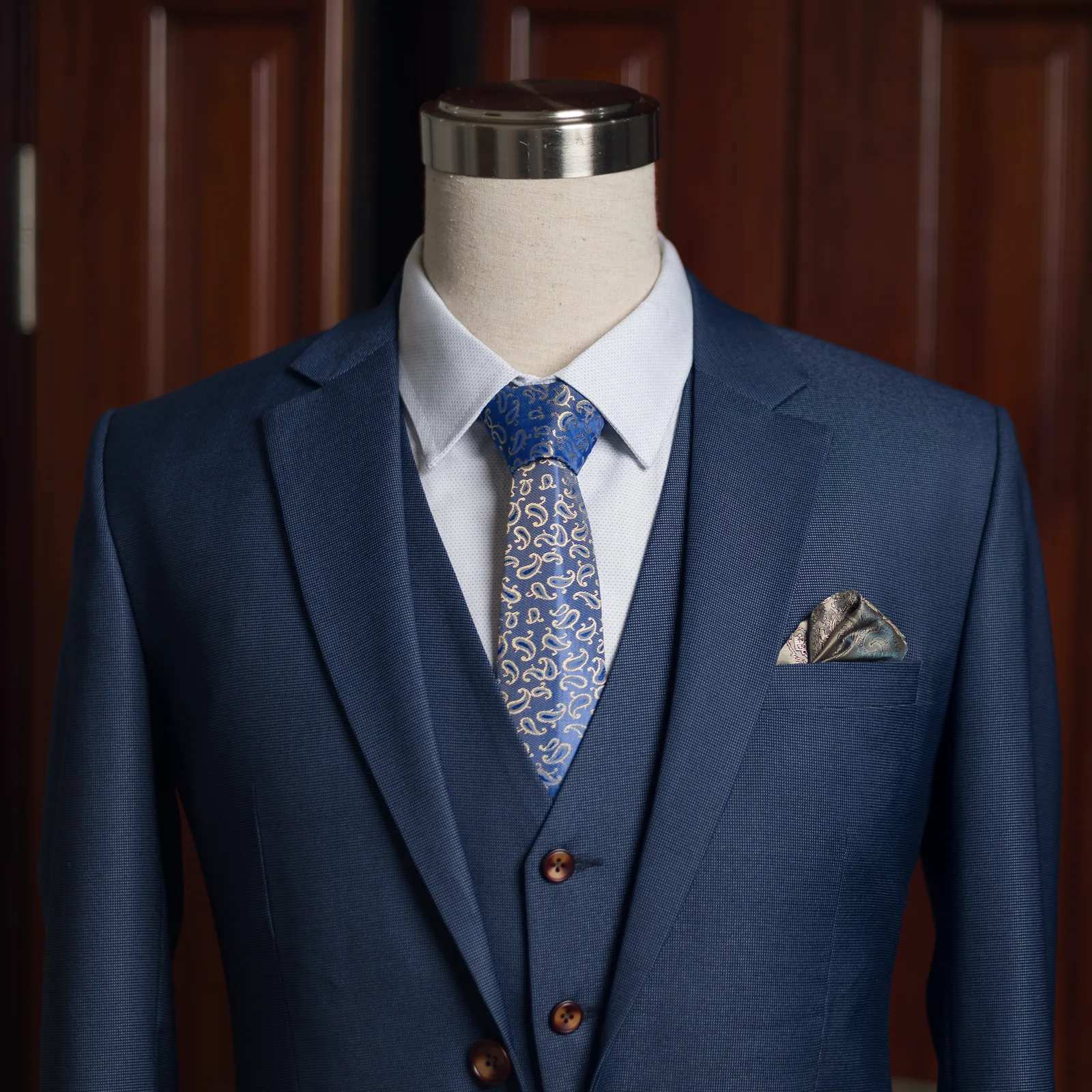
I will be honest with you: I arrived in Hoi An a sceptic. I had spent years hearing from well-dressed friends that the only way to get a properly made bespoke suit was to spend real money at an established tailor — Savile Row if you could stretch to it, or at the very least a proper city tailor in London, Sydney, or Milan. The idea that you could get genuinely bespoke work done in a Vietnamese tourist town for a few hundred dollars struck me as the kind of thing people tell themselves to justify buying something cheap on holiday. I expected to find fast fashion dressed up in the language of craft.
What I found instead changed my understanding of what bespoke tailoring actually is — and what it costs when you strip away the postcodes and the marketing.
What "Affordable Bespoke" Actually Means in Hoi An
The word bespoke gets thrown around loosely, so it's worth being precise. True bespoke tailoring means a garment cut entirely to your specific measurements, not pulled from a block pattern and adjusted. It means multiple fittings, a fabric choice you make from physical samples, and a tailor who is making decisions about construction specifically for your body. In London, that process costs upward of £2,000 for a suit. In Hoi An, I paid $265 for essentially the same level of individual attention and construction. The economics that make this possible are not a mystery or a trick: labour costs in Vietnam are a fraction of what they are in the UK, and the tailoring tradition here is both deep and genuinely skilled.
What you're not getting at these prices is the brand, the prestigious address, or the name recognition that comes with a famous tailoring house. What you are getting is a garment made specifically for you, by a person who knows their craft, from fabric you selected, to a fit that was checked and refined across multiple appointments. By any honest definition, that is bespoke. The bespoke suit range at Be Li Tailor makes this tangible — you can see the range of fabrics, styles, and construction details available before you even set foot in the studio.
My First Visit to a Hoi An Tailor: What to Expect
I had done enough research to know I didn't want to simply walk into whichever shop had the most aggressive street-front promoter. I had a shortlist of three studios based on reviews that mentioned specific details — the kind of language that suggests someone actually engaged with the process rather than just buying a cheap souvenir shirt. Be Li Tailor was on that list, and I visited on my second day in Hoi An to get a sense of the place before committing to anything.
The consultation was nothing like I expected. I had steeled myself for a pushy sales environment — someone waving fabric swatches and quoting prices before I'd had a chance to think. Instead, it was a proper conversation. We talked about the occasions I needed the suit for, the kind of silhouette I preferred, whether I ran warm or cold (relevant to fabric weight), and what I'd liked and disliked about suits I'd owned previously. Notes were taken. Questions were asked that hadn't occurred to me to think about. By the time we got to fabric samples, I had a clearer idea of what I actually wanted than I'd had walking in.
Measurements were taken carefully and methodically — not just the standard chest, waist, and inseam, but posture adjustments for the fact that my right shoulder sits slightly lower than my left, and a note about my preferred trouser break. These are the details that separate a suit that fits from a suit that fits correctly. I left that first appointment feeling that I was in competent hands.
Choosing Fabric for a Bespoke Suit on a Budget
Fabric is the variable that will most affect both the quality and the cost of your finished garment. The range at a good Hoi An studio is broader than most people expect: locally sourced linens and cottons at the affordable end, through to imported Italian and English wools at the premium end, with a wide range of blends in between. I was shown physical samples — not photographs on a phone or tablet, but actual swatches I could handle and hold up to the light.
I chose a mid-weight wool-poly blend in a dark navy, largely because I wanted a suit I could wear year-round between a temperate Australian winter and air-conditioned offices. The tailor was frank about the trade-offs: a pure wool would breathe better and drape more elegantly, but would also cost $60 to $80 more and would need more careful care. For a first commission, the blend made sense. If the result was what I hoped, I planned to come back for the wool version next time. (I did, on my next trip to Vietnam. The comparison is instructive.)
What I appreciated was the absence of upselling pressure. The fabric options were presented with clear explanations of their properties and their costs, and the recommendation I received — when I asked for one — was genuinely calibrated to what I'd said I needed, not to what would push the bill highest.
The Fitting Process at Be Li Tailor
The suit was ready for a first fitting three days after the initial consultation. I had been warned that this first fitting is not the moment to expect a finished garment — it is a working session, and the suit will look rough in places. Chalk marks, loose threads, pins holding seams in temporary positions. What you're evaluating is the structure: how the chest lies, whether the shoulders are set correctly, how the trousers sit at the waist and hang through the thigh.
My first fitting revealed two things that needed adjustment: the seat of the trousers was slightly too full, and the jacket's back seam needed to come in marginally to reduce a small amount of fabric pooling below the collar. These are normal, expected adjustments in bespoke work — the whole point of the fitting is to catch them before the garment is finished. The corrections were noted with calm efficiency, and I came back two days later for a second fitting that confirmed everything was right. The suit was ready to collect on day six.
How the Finished Suit Compared to Back Home
I own three suits bought off-the-rack from premium high-street brands — the kind that cost $500 to $800 in Australia and are considered quality ready-to-wear. The Be Li Tailor suit fits better than any of them. The chest is clean without pulling. The trousers sit properly at the natural waist without sagging or bunching. The jacket length is calibrated to my torso rather than a generic sizing chart. When I had the suit altered to fit better — as you inevitably do with off-the-rack — it still doesn't sit as well as something made specifically to my measurements from the beginning.
The finishing is also cleaner than I expected at this price point. The buttonholes are tight and well-finished. The lining is properly attached and lies flat. The trouser waistband is interfaced and holds its shape. These are details you'd expect in a garment costing twice as much in a Western context. I have since worn the suit to job interviews, weddings, and every formal occasion that's come up, and it performs as well as it did the day I collected it.
Is a Bespoke Suit in Hoi An Worth It?
The question I keep getting asked — and the one I was asking myself before I went — is simple: is it actually worth it, or is it just a good holiday story? After several visits and half a dozen garments, my answer is an unambiguous yes, with one important qualification: it is worth it if you approach it properly. That means giving yourself enough time (minimum five days for a suit, ideally seven), choosing a studio that takes the process seriously rather than one optimising for tourist throughput, and arriving with some sense of what you want rather than expecting the tailor to make all the decisions.
The value proposition is genuinely extraordinary. A properly made bespoke suit for $250 to $350 is not a compromise version of something that costs more elsewhere. It is, in most of the ways that matter, the same thing — made by skilled hands, to your measurements, from fabric you chose, adjusted until it fits correctly. The only things missing are the prestigious address and the brand equity, neither of which you wear home. Book a fitting before your trip if you can — it means you arrive ready to start immediately rather than spending your first day orienting yourself, and a good studio will be prepared for you when you walk through the door.
Start Your Own Bespoke Journey
The studio is at 635 Hai Bà Trưng, open daily 8am–9pm. Walk-ins are welcome, but if you want to secure a time and come prepared, book your appointment online. If you'd prefer to ask questions first, get in touch — we're happy to talk through what's possible before you commit to anything.