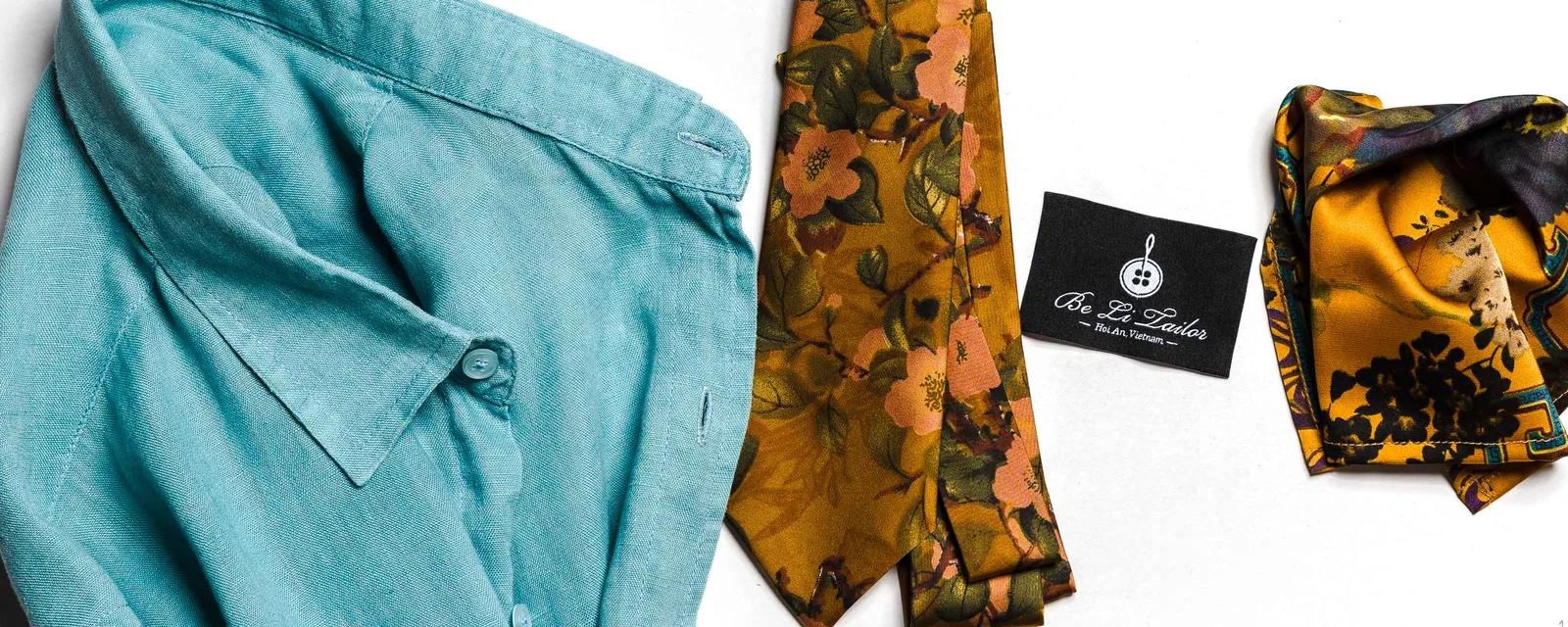
Nobody warned me that choosing fabric would be the hardest part. I had spent weeks thinking about silhouettes and styles, deciding on a suit cut and a shirt collar, planning what I wanted made and what I would wear it with. I arrived at the studio prepared — or so I thought — and then found myself faced with a room full of fabric samples and the sudden realisation that I had no idea what I was looking at. Which of these wools was better? Was this linen too heavy for what I had in mind? What was the difference between a silk blend and a poly blend at a distance of several feet? These are not questions most people have ready answers for, and the process of working through them with the help of a knowledgeable tailor turned out to be one of the most educational hours I've spent in any clothing context.
What I learned over the course of several visits and several commissions is what I want to share here — not as a textile expert, because I'm not one, but as someone who arrived knowing very little and left with enough understanding to make decisions I'm still happy with years later.
Why Fabric Choice Matters More Than Most People Realise
The cut of a garment gets most of the attention in conversations about tailoring, but fabric is arguably the more important variable. A well-cut suit in cheap polyester will always look like a well-cut cheap suit. A slightly less precise cut in a beautiful Italian wool will still drape with a softness and movement that polyester cannot replicate. This is not a minor difference — it is the difference between a garment that looks good at a distance and one that looks good up close, after a full day's wear, after being packed into a suitcase and unpacked, year after year.
Fabric also determines how the garment behaves in the conditions you'll be wearing it in. A heavy wool that would be perfect for a London winter becomes unwearable in a humid Vietnamese summer. A fine linen that's ideal for warm weather wrinkles badly and loses its shape under the kind of sustained wear that a business trip demands. Matching the fabric to its intended use is a fundamental skill in dressing well, and it is the thing that a tailor with experience will help you get right if you give them enough information about what you need.
The Main Fabric Types Available in Hoi An
Most quality studios in Hoi An carry a range that spans several major fabric categories. At the entry level are locally produced polyester blends — functional, affordable, and appropriate for casual garments or holiday pieces that won't see heavy use. In the mid-range are natural fibre fabrics including various weights of cotton, locally woven linen, and wool-poly blends. At the premium end are pure wools, particularly imported Italian and British fabrics, as well as pure silks, high-thread-count cottons, and various specialist blends.
The price difference between levels is meaningful but not as dramatic as you might expect. Upgrading a two-piece suit from a local polyester blend to an imported Italian wool might add $60 to $100 to the total cost, for a garment that performs dramatically better in every respect. Understanding what you're paying for at each level makes it easier to allocate your budget sensibly — spend on fabric for the pieces you'll wear most, and economise where the garment's use doesn't demand premium material.
Wool: When to Choose It and Which Weight to Pick
Wool is the default choice for suits, blazers, and formal trousers for good reason: it breathes, drapes, resists wrinkling, and improves with wear in a way that synthetic fabrics simply do not. The question, when commissioning bespoke menswear in wool, is which weight. Wool weight is measured in grams per square metre and typically ranges from around 180 gsm (very fine, almost see-through at the fold) to 380 gsm (heavy, structured, ideal for winter overcoats).
For a suit intended for temperate climates and general professional use, a weight of 260 to 300 gsm hits the sweet spot — heavy enough to drape well and hold its structure through a full day, light enough not to be oppressive in mild weather or air-conditioned environments. For travel suits, where the garment needs to pack and unpack without excessive creasing, a wool-poly blend at this weight range is worth considering: the synthetic component adds resilience that pure wool lacks. For purely formal or occasional wear, a finer pure wool at 220 to 250 gsm produces a more elegant result with beautiful drape, at the cost of some durability.
In Hoi An's climate, wool is less relevant for day-to-day local wear — but most people commissioning suits here are making them to take home, not to wear on the streets of the Ancient Town. Be clear with your tailor about where and when you'll be wearing the garment, and the weight recommendation will follow logically from that conversation.
Linen and Cotton: The Best Options for Vietnam's Climate
If you're making garments to wear during your trip, or pieces for warm-climate living more generally, linen and cotton are your natural starting points. Both are widely available in Hoi An, both at reasonable prices, and both perform well in heat and humidity in ways that wool cannot match. The key is understanding the trade-offs of each.
Linen is the cooler fabric — it absorbs moisture away from the skin and releases it quickly, making it genuinely comfortable in tropical conditions that would make cotton clammy. The trade-off is wrinkle susceptibility: linen creases readily and does not recover well on its own. For casual garments — linen trousers, a resort shirt, a relaxed dress — this is an acceptable compromise, and the texture of well-worn linen has a certain character that many people find appealing. For anything that needs to look sharp through a full formal day, linen requires pressing and careful handling. Cotton occupies the middle ground: it breathes reasonably well, wrinkles less severely than linen, and handles washing and repeated wear extremely well. For dress shirts, summer blazers, and casual trousers, a good cotton poplin or twill is often the most practical choice.
Vietnamese linen, locally produced, is available at very accessible prices and is of decent quality for casual applications. For finer garments, imported European linens and Egyptian cottons produce noticeably better results and are worth the additional cost when the garment will see regular formal or professional use.
Silk and Blended Fabrics: For Special Occasions and Womenswear
Silk is where Hoi An's local textile tradition genuinely shines. Vietnamese silk — particularly from the region around Hoi An — has a long craft heritage, and the range available at quality studios includes everything from fine silk charmeuse suitable for evening dresses through to heavier silk dupion that drapes with wonderful weight and body. For women's custom clothing, silk opens up a range of possibilities that cotton and linen cannot match: fluid cuts that follow the body, evening pieces with natural sheen, and garments that look genuinely luxurious at prices that are remarkable by any Western standard.
Silk blends — silk mixed with cotton, viscose, or small amounts of synthetic fibre — combine some of the beauty of pure silk with improved durability and reduced care complexity. A silk-cotton blend is often a practical choice for a dress that will be worn regularly rather than reserved for special occasions. It has much of the drape and sheen of silk while being more forgiving of washing and wear.
For special occasion pieces — wedding dresses, formal evening wear, ao dai — pure silk is worth seriously considering. The finished result in a quality Vietnamese silk, made to measurement by an experienced tailor, is something genuinely extraordinary at the price point available here. Many visitors who commission one piece in silk find that it becomes the garment they wear most often and treasure most highly from their Hoi An trip.
How Be Li Tailor Guides You Through the Selection
The fabric selection process at Be Li Tailor is one of the things I found most valuable about working with the studio. Rather than being handed a sample book and left to navigate it alone, I was guided through the options relevant to my commission specifically — the fabrics that would work for what I wanted to make, in the conditions I'd described, at a range of price points. Fabrics I handled were explained in terms of their properties, not just their names and prices. When I expressed uncertainty, alternatives were suggested. When I showed a preference, I was told clearly whether that preference was sensible for my stated purpose or whether I might regret it later.
This kind of honest guidance is more valuable than it might sound. The temptation in a fabric consultation is to default to the cheapest acceptable option or, conversely, to be upsold toward the most expensive option regardless of its suitability. Neither of these outcomes serves the customer well. What works is an honest conversation about what the garment is for, who it is for, and what trade-offs are acceptable — and then a recommendation calibrated to those specific answers. That is what I consistently found at Be Li Tailor, and it is what I would encourage you to insist on wherever you end up commissioning your garments in Hoi An.
Find Your Fabric
Be Li Tailor is at 635 Hai Bà Trưng, Hội An, open daily 8am–9pm. The best way to choose fabric is to handle it in person — but if you want to arrive with some idea of what you're looking for, get in touch before your visit and we can talk through the options that suit your garment and the climate you'll be wearing it in.