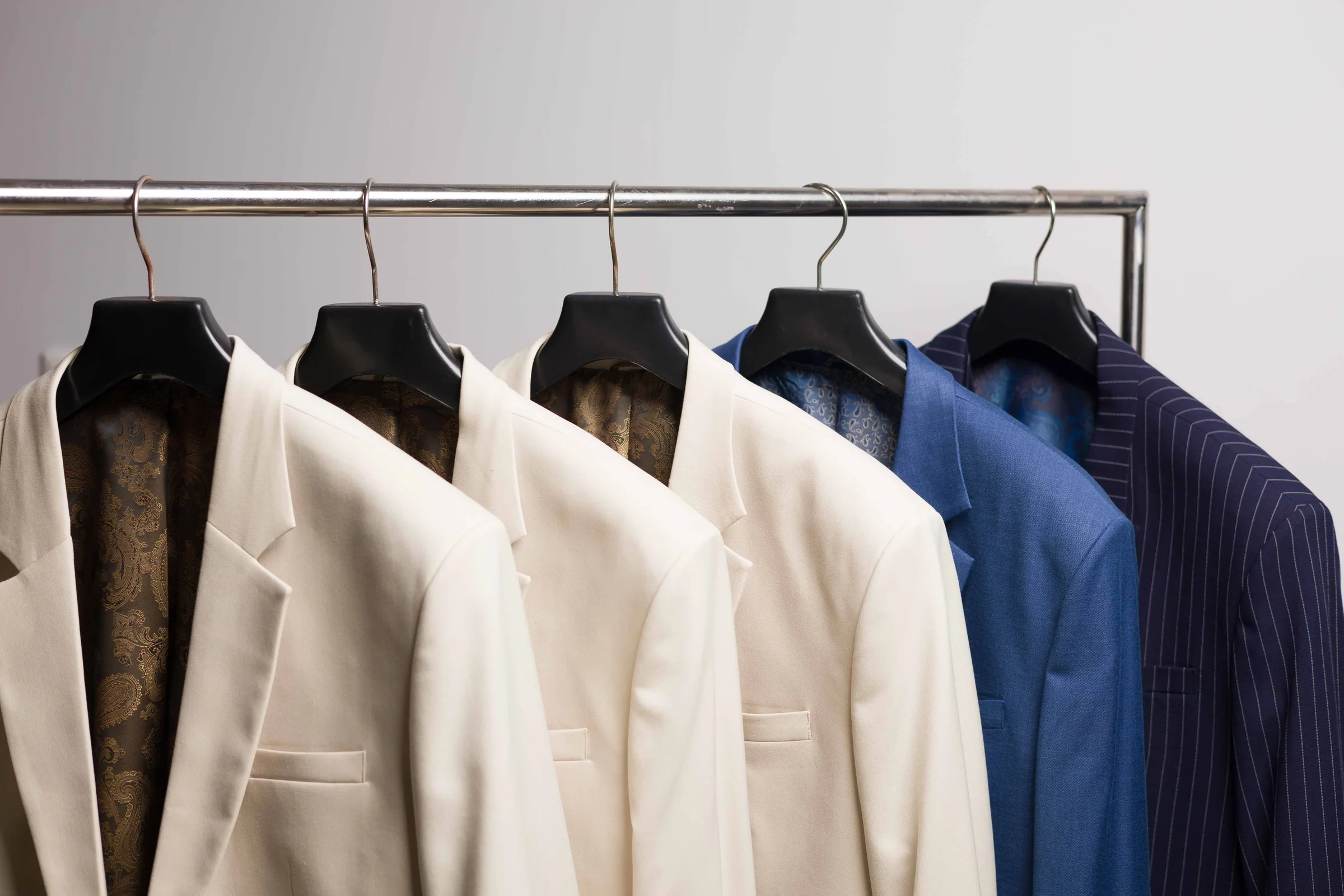
Hoi An has somewhere between three hundred and four hundred tailor shops, depending on who you ask and how you define the term. Walking down Tran Phu or along the riverfront, they seem to multiply in every direction — small storefronts hung with fabric samples, mannequins in the window wearing suits and dresses at various stages of completion, somebody sitting at a machine in the back room with their head down, working. The sheer volume of options is one of the things that makes choosing so difficult. Everything looks roughly similar from the outside. Prices vary, but not always in ways that track quality. And the stakes are real: you're spending money and time on something you'll take home, and the wrong choice is not easily corrected once you're on the plane.
I've now visited Hoi An four times with tailoring as a primary purpose. I've commissioned garments from multiple studios, made a few mistakes, learned a great deal, and come to some fairly clear conclusions about what separates the studios that are genuinely worth your time from the ones that aren't. This is what I wish someone had told me before my first visit.
What "Affordable" Means in Hoi An's Tailoring Scene
The word affordable needs unpacking in this context, because it means very different things at different ends of the market. At the cheapest end, you will find studios offering suits for $80 to $120, shirts for $20 to $35, and dresses for $40 to $60. These prices are achievable because they involve locally produced synthetic fabrics, a streamlined production process that minimises fitting time, and labour costs that reflect a very fast turnaround model. The garments are not fraudulent — they are real clothes that will fit you approximately — but they are not bespoke in any meaningful sense, and they are not built to last.
At the upper end of what I would still call "affordable" — which is different from "expensive by local standards" — you are looking at $200 to $350 for a two-piece suit in quality fabric, $80 to $150 for a well-made dress shirt, and $120 to $200 for a tailored dress. These prices represent genuine bespoke work: individual measurement, multiple fittings, quality materials, and the level of care that produces a garment you will wear happily for years. Compared to equivalent work in London or Sydney, they are dramatically cheaper. Compared to the bottom of the Hoi An market, they are more expensive — and worth every additional dollar.
The Difference Between Cheap and Good Value
The most important distinction in Hoi An tailoring is not between expensive and cheap — it is between studios that take the work seriously and those that treat tourist tailoring as a volume business. A $280 suit from a studio that does multiple fittings, uses quality fabric, and employs experienced tailors is good value. A $150 suit from the same studio would be even better value. A $100 suit from a studio that took your measurements once, used polyester blend, and delivered within 24 hours is not good value — it is just cheap, in both senses of the word.
The studios that deliver real value share certain characteristics regardless of their exact price points. They are transparent about what materials cost. They include fittings as part of the process rather than treating them as an optional extra. They have opinions about fit and are willing to share them. They do not promise completion times that would be impossible for work of any real quality. And they do not compete on price alone — they compete on the quality of what they produce, and they know that customer who receives an excellent garment will return, recommend the studio to others, and leave a review worth reading.
What I Looked For Before Booking Any Tailor
My process, refined over several trips, involves looking for a specific combination of signals before committing to any studio. The first is how long the studio has been operating. Tailoring is a reputation business, and a studio that has been doing this work for a decade or more has survived by pleasing customers consistently. Be Li Tailor's history in Hoi An spans well over fifteen years — which is a meaningful track record in a market where studios come and go.
The second signal is whether the studio has a focused range of work. Studios that try to do everything — suits, wedding dresses, casual wear, ao dai, alterations, same-day delivery — for the widest possible range of customers often do none of it exceptionally well. Studios with a clearer focus on specific types of work, and the craftsmanship to back it up, tend to produce more consistent results. When I walk into a studio and see that the displayed work is coherent and excellent rather than miscellaneous and average, that tells me something about how the business thinks about quality.
The third signal is the consultation itself. Within the first ten minutes of talking to a tailor, you can usually tell whether they are thinking about your garment or thinking about their next appointment. A tailor who asks questions — about your lifestyle, your intended use for the garment, what you've liked and disliked about things you've owned previously — is a tailor who is going to produce something specific to you. A tailor who starts quoting prices before they've heard what you want is optimising for something other than the quality of the finished garment.
Why In-House Tailoring Matters for Quality Control
One of the less-discussed distinctions in Hoi An's tailoring market is between studios that do the cutting and sewing on-site, in-house, by their own tailors, and those that outsource to workshops elsewhere. The outsourcing model is common in high-volume tourist-oriented operations: the studio takes the order and the deposit, passes the work to a contracted workshop, and collects the finished garment for delivery. The customer never knows the difference — unless something goes wrong.
When a garment is made in-house by the tailor who took your measurements and conducted your fitting, there is a direct accountability chain. The person responsible for the finished product is the same person who saw you, understood what you needed, and made the decisions about construction. When something is outsourced, that chain is broken: the workshop is interpreting instructions written by someone else, and any nuances from the consultation may not survive the translation.
In-house production also makes fitting corrections more efficient. When the tailor who does the first fitting is also the person who will implement the corrections, they can do so with full understanding of what was found and what was intended. With outsourced work, corrections require communicating the changes to a third party, which introduces the possibility of error and often adds time.
How to Spot a Studio That Takes Craftsmanship Seriously
There are a few practical tests I've developed for assessing a studio before committing. Ask to see a finished suit or garment you can handle and examine closely. Look at the buttonholes: are they consistent in size and tight in construction, or do they vary and look machine-rushed? Check the collar seam on a shirt: is it clean and even, or is there some puckering and imprecision? Look at how a jacket is pressed: does it lie flat with clean edges, or are there creases from poor pressing technique? These details are invisible on a mannequin in the window but obvious on examination, and they tell you more than any amount of marketing language about the quality of the workmanship.
Ask about the timeline honestly. A studio that quotes you two to three days for a suit is either operating at a level of volume that precludes careful work, or they are telling you what you want to hear. Five to seven days, with two fitting appointments, is the timeline for a suit made with care. If the answer to "how long will this take?" is shorter than that, ask why — and be prepared to hear an explanation about process, not just a reassurance about quality.
Why Be Li Tailor Offers the Best Value in Hoi An
After four visits and many more garments than I probably needed, Be Li Tailor is where I go when I want something made well. The reasons are consistent across every commission: the consultation is thorough, the fabric selection is honest, the fitting process is proper, and the finished garment delivers on what was discussed. The prices are in the mid-to-premium range for Hoi An — not the cheapest option in town, and not trying to be — but the value, measured against the quality of what you receive, is extraordinary by any international standard.
What distinguishes the studio most clearly is the attitude toward the work itself. The tailors here are not processing tourists. They are making clothes, and they care about the clothes being good. When something at a fitting needs more work than expected, the work is done. When a fabric I've chosen would produce a result I'd be disappointed with, I'm told so. When a commission has specific technical requirements, they are taken seriously and executed carefully. That combination of skill, honesty, and genuine care for the outcome is not universal in Hoi An's tailoring scene, and it is the reason I plan my Vietnam trips around having time to book an appointment here.
Visit Be Li Tailor
Be Li Tailor is at 635 Hai Bà Trưng, Hội An Ancient Town, open daily 8am–9pm. If you want to see what genuine craftsmanship looks like before making a decision, walk in any day of the week — or book an appointment if you'd prefer a dedicated time. You'll find us easy to talk to and completely transparent about what we can make and what it costs.