Before I ever set foot in Hoi An, I spent what feels like an embarrassing amount of time scrolling through tailor reviews. TripAdvisor threads that ran to forty pages. Google Maps listings with hundreds of ratings. Travel forums where someone's 2019 experience was still being cited as gospel in 2025. I went in thinking I was doing thorough research. What I eventually discovered was that I was mostly accumulating noise.
That's not to say reviews are useless — they're not. But reading Hoi An tailor reviews intelligently requires a different set of filters than, say, reading restaurant reviews or hotel ratings. The product is bespoke. Every garment is a collaboration between the studio and the customer. The variables are enormous. And the gap between a five-star review and a one-star review often has less to do with the tailor's skill than with the clarity of the brief, the timeline agreed upon, and the expectations brought into the first fitting. Here is what I've learned.
Why Hoi An Tailor Reviews Are Notoriously Inconsistent
Hoi An has somewhere in the region of four hundred tailoring studios, depending on how you count the ones tucked into ground-floor shophouses on quieter lanes. That density creates its own distortion. A traveller who wanders in off the street, agrees to a rush two-day turnaround for three garments, and pays the lowest quoted price is not having the same experience as someone who books in advance, allows five to seven days for a suit, and communicates clearly at every stage. Both might leave reviews. Both reviews might be for the same studio.
This inconsistency is compounded by the fact that tailoring is genuinely subjective. Fit preferences vary enormously. Someone who prefers a very slim silhouette might give a glowing review for a suit that someone else would find unwearably tight. A reviewer who values strict Western construction standards might pan a studio that another customer, more familiar with lightweight tropical tailoring, considers excellent. Reading these reviews back-to-back creates a confusing picture that doesn't reflect the underlying reality of the studio's work.
There is also the question of recency. Hoi An's tailor scene changes. Studios expand, take on new staff, lose experienced tailors to competitors, or change management entirely. A five-star review from three years ago may not reflect the studio you walk into today. Reviews from the past twelve months are far more reliable than anything older, and even then the sample size at any individual studio is usually too small to be statistically meaningful.
How to Read Between the Lines of a Glowing Review
A five-star review for a Hoi An tailor is not necessarily a signal that the studio produces excellent work. It may simply mean that the customer had a pleasant experience, felt well looked after, and received something that broadly matched what they asked for. Those are good things. But they don't tell you whether the construction will hold up after six months of regular wear, whether the lining is quality or a cost-cutting afterthought, or whether the fusing technique used in the jacket will cause bubbling after the first dry clean.
When reading glowing reviews, I now look for specific language. Does the reviewer mention returning for multiple orders? That's meaningful — a second or third visit to the same studio represents genuine confidence. Do they mention the fitting process in detail? A good review will often describe what was adjusted between the first and second fitting, which signals that the studio actually runs a proper fitting process rather than just taking measurements and handing over a finished garment. Do they mention specific fabrics, constructions, or styles? Vague praise ("great quality," "amazing value") is far less informative than a reviewer who says they commissioned a half-canvas linen suit and describes exactly how the drape turned out.
The Phrases That Signal a Genuinely Good Tailor
Across hundreds of reviews for Hoi An tailors, I've started to notice certain phrases that reliably indicate quality. "They took more measurements than I expected" is one. A thorough tailor will take fifteen to twenty-five measurements for a suit, not the six or eight that a mass-production operation might use. "They asked me questions I hadn't thought about" is another good sign — questions about shoulder preference, button stance, vent style, and whether you carry things in your jacket pockets all indicate a tailor who is thinking about fit as a whole system rather than just executing a template.
"The second fitting revealed something I wouldn't have noticed" is perhaps the most reliable indicator of a serious studio. It means the tailor ran a true fitting process, identified a fit issue themselves, and corrected it before final delivery. That's professional behaviour. Similarly, reviews that mention the tailor declining to rush a job, or suggesting a simpler design element when a complex one would risk quality, indicate a studio that prioritises the garment over the sale.
Conversely, phrases like "fast turnaround" and "ready the next day" in the context of a structured jacket should give you pause rather than delight. Speed and quality are in direct tension in bespoke tailoring. The best work takes time.
What Negative Reviews Usually Reveal (It's Not Always the Tailor's Fault)
I say this carefully, because I don't want to dismiss genuine complaints. There are studios in Hoi An that are careless, that use inferior fabrics while charging for better, and that apply high-pressure sales tactics that push customers into ordering more than they need in less time than is reasonable. Those reviews are valid and worth heeding.
But a significant proportion of negative reviews for Hoi An tailors trace back to unrealistic expectations or communication failures. A customer who arrives with a photograph of a complex structured blazer and asks for it in two days at budget price is setting the experience up to fail. A customer who doesn't attend a fitting because they're busy sightseeing, then complains that the finished garment doesn't fit, has removed themselves from the most important part of the process. A customer who doesn't know their fabric preference and defers entirely to the studio, then later wishes they'd asked for something different, is experiencing a communication gap rather than a quality failure.
The most useful negative reviews are those where the customer describes the specific problem clearly — a seam that split after two wears, a lining that separated from the shell, a collar that stood away from the shirt. Those are construction failures and they matter. Negative reviews that simply say "I didn't love the fit" or "it wasn't quite what I imagined" are harder to interpret without knowing what was communicated and when.
How I Used Reviews to Shortlist Be Li Tailor
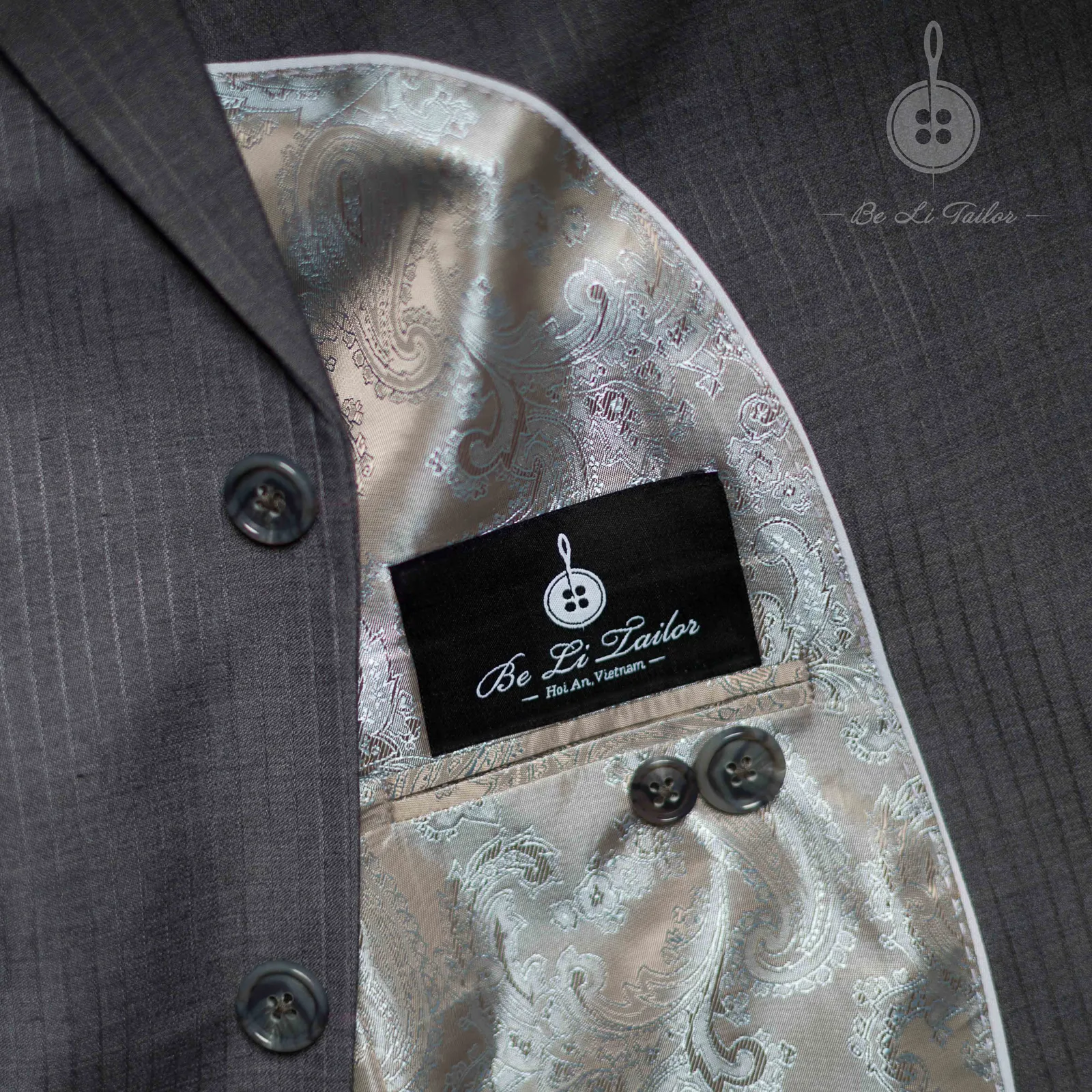
When I filtered my research down to studios that consistently appeared in reviews citing repeat visits, specific construction details, and meaningful fitting processes, Be Li Tailor came up repeatedly. What distinguished the reviews was the consistency of the praise — not just warmth toward the staff, but specific references to technique. Reviewers mentioned the quality of the canvas construction in suits rather than fused interfacing. They mentioned being asked detailed questions about posture and how they intended to wear the garment. Several mentioned that the studio had declined to rush work when doing so would have compromised the result.
Reading more about Be Li Tailor's background and approach confirmed what the reviews suggested: a studio founded in 2009 by people who had trained seriously in the craft, not one that had opened to capitalise on tourist demand. That distinction matters more than it might seem. The tailoring culture of Hoi An produces both kinds of studio, and the reviews — read carefully — usually distinguish between them, even when the surface-level ratings look similar.
What I'd Tell Anyone Starting Their Tailor Research Today
Start with the reviews that describe a problem and how it was handled. A studio that responds to a fitting issue professionally, makes corrections without drama, and ensures the customer leaves with something they're happy with is demonstrating exactly the values you want in a bespoke tailor. These reviews are more revealing than any five-star endorsement.
Look for studios with reviews that span multiple years rather than a sudden cluster of recent praise. Consistency over time is the most reliable indicator of quality. Be sceptical of studios where most reviews are from the past few months — that pattern sometimes indicates a change in ownership or an incentivised review campaign rather than genuine long-term quality.
Pay attention to what the reviewers commissioned. A studio with excellent reviews for shirts and casual trousers may not be the right choice for a structured evening suit. The skills overlap but they're not identical. If you're coming to Hoi An for a specific garment, find reviewers who commissioned that same category and weight their experience accordingly.
Finally, treat reviews as a shortlisting tool rather than a decision-making tool. They can eliminate the studios you shouldn't visit. They can't tell you whether the fit will be right for your body, whether the fabric range includes what you're imagining, or whether the person taking your measurements will truly understand what you're asking for. For that, you have to walk in. Once I did — and booked time with the team at Be Li Tailor — the research felt instantly less important than the conversation happening in front of me.
Skip the Research and Come In
Be Li Tailor is at 635 Hai Bà Trưng, Hội An, open daily 8am–9pm. Reviews are one thing — but the best way to evaluate a tailor is to walk into the studio, look at the work, and talk to the people. Book a time or just drop in. We've been making clothes since 2009 and our work speaks for itself.