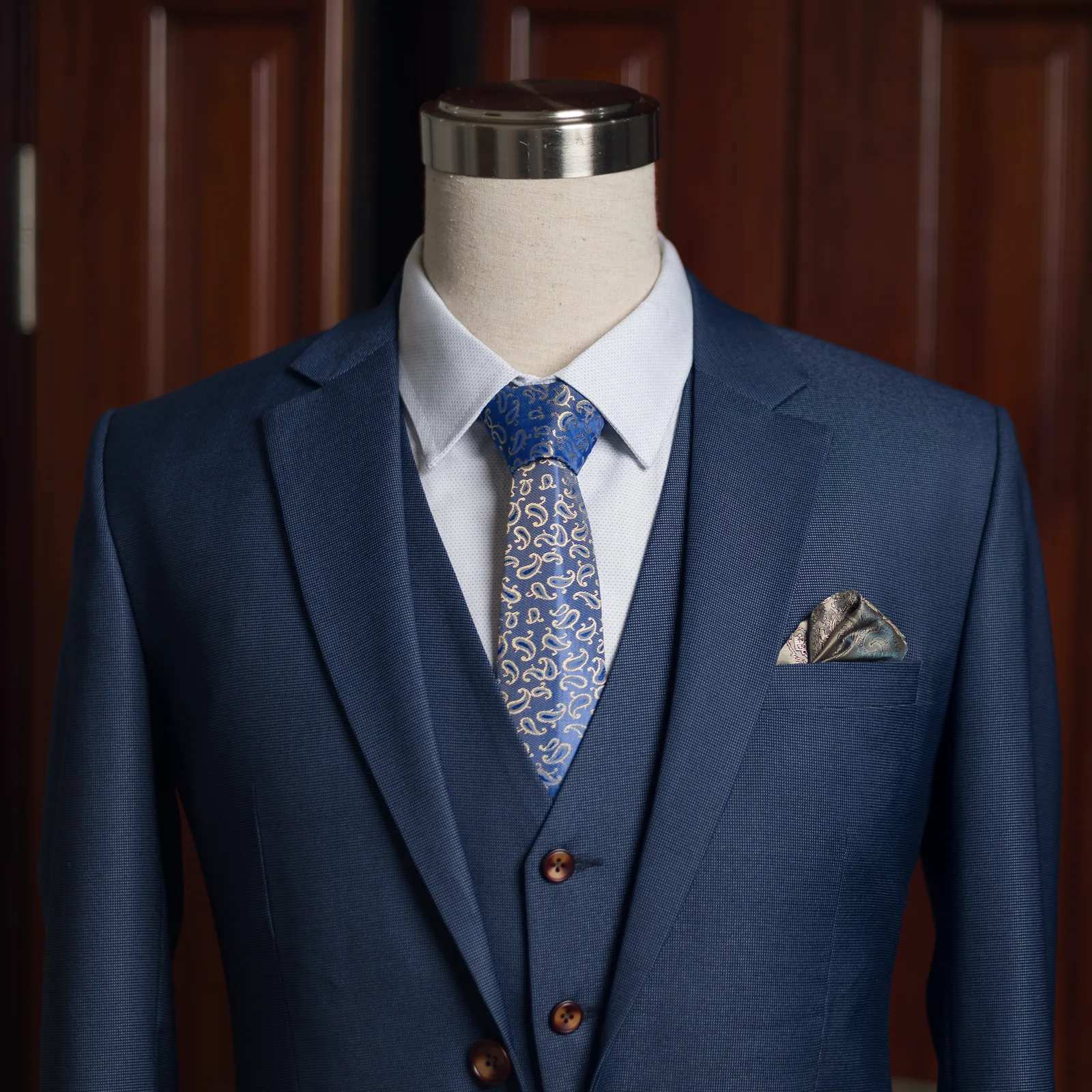
The thing nobody quite prepares you for when you arrive in Hoi An is the overwhelming sense that the town exists in a different relationship to clothing than anywhere else you've been. It is not just that there are tailor shops everywhere — there are, hundreds of them — or that fabric samples hang in every doorway, or that the streets near the market smell faintly of cut cloth and machine oil. It is that the whole place operates with the quiet assumption that if you want something made, it can be made. Here. For you. This week. That assumption is so thoroughly embedded in the culture of the town that it feels, after a day or two, like the most natural thing in the world. Which, in Hoi An's case, it basically is.
I arrived with one week, no clear plan, and only the vague ambition of "maybe getting a suit made." I left with a suit, two shirts, a pair of tailored linen trousers, and a wardrobe philosophy I've held ever since. Here is the full account of how that happened.
Arriving in Hoi An: First Impressions of the Tailoring Scene
The Ancient Town of Hoi An is a UNESCO World Heritage site, and its streets of ochre-painted merchant houses and lantern-lit narrow lanes give it an immediately distinctive character that has nothing to do with tailoring. You could spend a week here doing nothing but eating and exploring temples and still feel you'd been somewhere extraordinary. But the tailoring is woven into the town's identity at a deep level — it is not a tourist overlay on the genuine culture, it is part of the genuine culture, with roots going back centuries when Hoi An was one of Southeast Asia's most important trading ports and the demand for quality clothing served merchants from China, Japan, and Europe simultaneously.
Walking through the Ancient Town on my first afternoon, I tried to observe without committing. I walked into three or four studios, looked at the work on display, asked a few questions, and left without ordering anything. What I noticed varied significantly. Some studios felt like they were processing tourists efficiently — quick quotes, fast timelines, minimal questions. Others felt different: quieter, more considered, with fabric displayed rather than stacked, finished garments that bore examining at close range. The distinction was not about size or location. It was about atmosphere, about whether the people inside were focused on the work.
How I Chose Which Tailor to Visit First
My shortlist had been assembled before I arrived, from a combination of recent reviews and the specific kind of detail in those reviews that suggested genuine engagement with the tailoring process. Be Li Tailor's history in Hoi An stood out immediately when I researched studios — the combination of longevity and the consistently specific nature of customer feedback gave me more confidence than any amount of star ratings. When multiple people across multiple platforms mention the same tailor by name, describe the same attentive consultation, and report satisfaction months or years after collecting their garments, that is a pattern worth trusting.
I visited on my second morning, early, when the town was cool and the streets were quiet. I had a list of things I thought I might want made, a folder of reference images on my phone, and enough general nervousness to suggest I was taking this more seriously than I perhaps needed to. The studio at 635 Hai Ba Trung was calm and unhurried. Someone asked what I was looking for, and then listened to the answer. The conversation that followed was the most useful forty minutes I spent in the first half of my trip.
What the Consultation at Be Li Tailor Was Really Like
I want to describe the consultation in some detail because I think it is the thing that most surprises first-timers, and the thing that most clearly demonstrates what separates a serious studio from a superficial one. I was not immediately shown fabric. I was first asked questions: What was the suit for? Where would I wear it, and in what conditions? What did my existing suits look like and how did they fit — specifically, what did I like and dislike about them? Was I planning to wear the suit with ties, or without? Did I prefer a fitted silhouette or something with more ease? These are exactly the questions a good tailor anywhere in the world would ask, and the fact that they were being asked in a studio in Hoi An at a fraction of the price of comparable work elsewhere was remarkable precisely because it did not feel remarkable. It felt like the normal and correct way to begin.
The fabric discussion came after the style discussion, which is the right order. Once I had described what I needed and established the silhouette I wanted, the fabric recommendations could be calibrated to that specific brief rather than being a generic presentation of what was available. I was shown physical samples — wools, blends, a range of weights — and each was explained in terms of how it would perform for the garment I'd described. I chose a mid-weight wool-poly blend in navy for the suit, a poplin cotton in white and another in sky blue for the shirts, and a linen for the trousers. Total order value: $390 for five garments. The tailor's timeline estimate was seven days. I had seven and a half days left in Hoi An.
The Fitting Room: Where the Garment Comes to Life
The first fitting for the suit came on day four, and it was an experience I had not fully anticipated. There is something unexpectedly moving about standing in a fitting room while a tailor pins and marks and assesses a garment that exists entirely because of decisions you made together a few days before. The suit was rough — chalk marks, loose thread ends, a temporary seam holding the jacket back closed — but the structure was already clear. The shoulders sat correctly. The chest lay flat. The silhouette I'd described was identifiable in the rough form of this unfinished garment.
Two adjustments were needed: the trouser seat needed modest reduction, and the jacket sleeve needed to be rotated very slightly to address a pulling issue when my arm was raised. These were minor corrections that the tailor identified before I asked, noting them with the calm confidence of someone who has done this hundreds of times and knows exactly what to look for. A second fitting, two days later, confirmed both corrections had been made accurately. The garment was finished. I came back the following morning to collect.
The shirts and trousers came through on their own timeline — the shirts on day five, the trousers on day six. Each had a brief fitting appointment of its own. The shirts needed a small adjustment to the collar depth, which was noted and corrected overnight. The trousers were perfect at first fitting, which the tailor seemed to take as the expected outcome rather than anything remarkable.
Collecting My Order: The Moment of Truth
Collecting a commission from a tailor for the first time is genuinely anxiety-inducing, even when the process has gone well. All the confidence you built up over a week of consultations and fittings gets momentarily replaced by the fear that the finished garment will somehow be different from what you experienced at the fitting — flatter, somehow, or less right. I have since learned that this feeling is almost universal among first-timers, and that it rarely survives the moment of putting the finished garment on.
The suit, fully finished, pressed, and presented in a garment bag, was exactly what I had hoped for and a little more. The pressing alone — the way a properly finished suit looks when someone who knows what they are doing has put a steam iron to it — was something I had not experienced at this price point before. The chest was clean and flat. The shoulders sat without a wrinkle. The trousers hung with the precise single break I'd specified, falling cleanly to the shoe without pooling. I wore it out of the studio — changed in the fitting room, carried my old clothes in the bag — and walked back through the Ancient Town feeling, probably for the first time in my adult life, like I was dressed correctly in the most fundamental sense. Like the clothes I was wearing had been made for me, because they had.
Why I'm Already Planning What to Commission Next Time
The mistake most people make at Be Li Tailor — and I know this because I made it myself on the first visit — is commissioning too cautiously. You order one or two things, you are delighted with the results, and you wish you had ordered more. The second visit corrects this. I went back eighteen months later and commissioned a three-piece suit in charcoal wool, a linen blazer, three more shirts, and a pair of formal trousers. I gave myself nine days and used every one of them productively. The results were, if anything, better than the first time — partly because I knew what to ask for and how to articulate it, and partly because the studio now had my measurements on file and a record of the adjustments that had been needed previously.
What I would tell any first-timer is this: plan your itinerary around the tailoring, not the other way around. Give yourself a minimum of seven days. Arrive with reference images. Think about what you actually need in your wardrobe — not what would be nice to have in the abstract, but the specific gaps that a well-chosen commission could fill. And when the consultation begins, answer the questions honestly and completely, because the quality of what you receive is directly proportional to how well the tailor understands what you need. Everything else follows from that. If you want to plan your visit in advance and make sure the studio has time for your commission, reaching out before you arrive is always a good idea — particularly if you have a complex order or specific requirements.
Hoi An changed how I think about clothes, about what they should feel like and what they're capable of when they're made with care. That change came from one week, one studio, and five garments. I can't think of a better recommendation than that.
Begin Your Hoi An Tailoring Journey
Be Li Tailor is at 635 Hai Bà Trưng, Hội An Ancient Town, open daily 8am–9pm. Whether you arrive with a clear vision or no idea where to start, we've helped thousands of first-timers through exactly this process. Book an appointment or just walk in — either way, we look forward to meeting you.