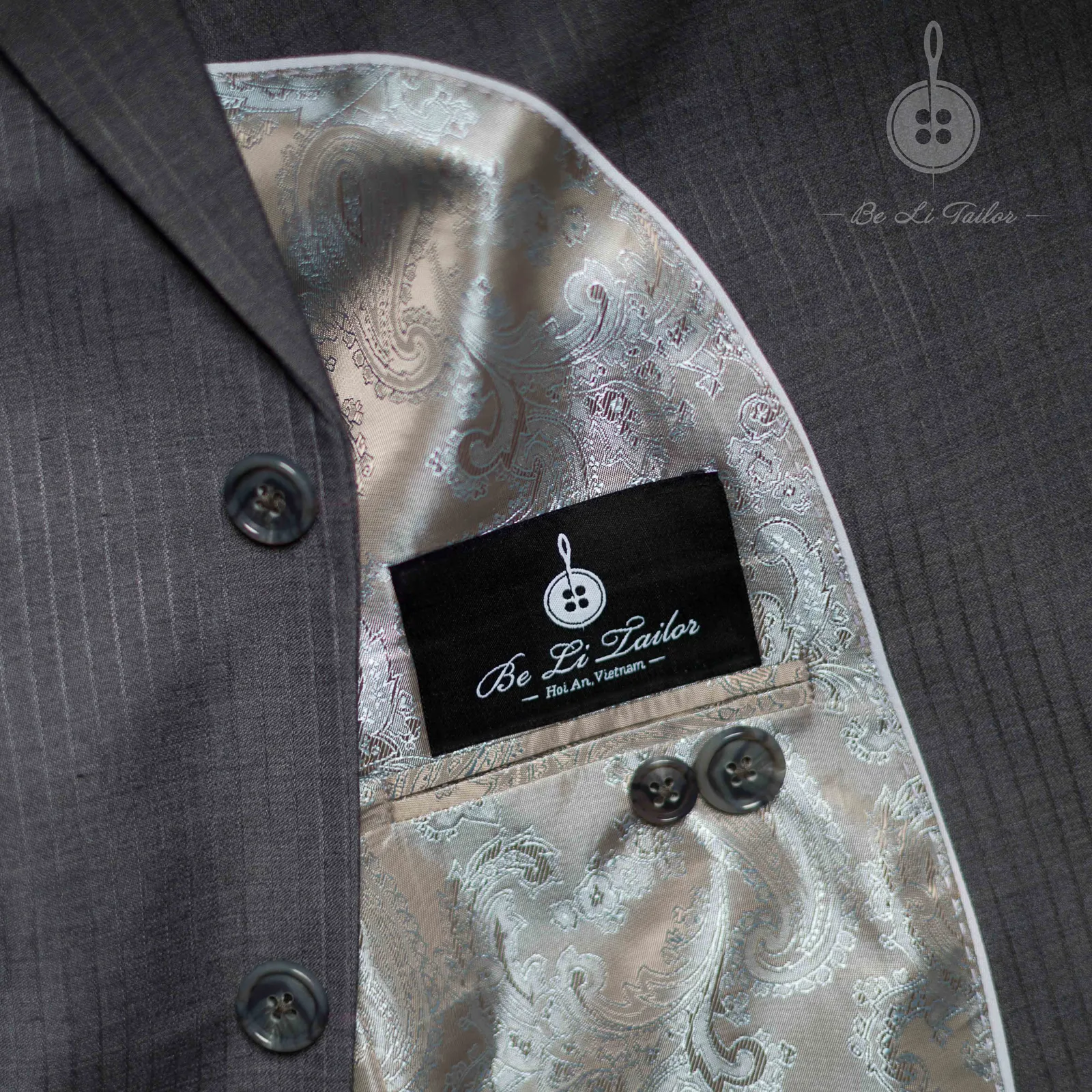
Before I booked my first tailoring appointment in Hoi An, I did what most people do: I spent an evening trawling through reviews. TripAdvisor, Google Maps, Reddit threads, travel blogs — I read dozens of accounts from people who had been before me, hoping to find some signal in the noise. What I found was more complicated than I expected. The review landscape for Hoi An tailoring is vast, uneven, and full of contradictions that require a bit of interpretation to be useful.
This piece is my attempt to make sense of it — to identify the patterns in what customers are actually saying, to explain what the most common praises and complaints really reveal, and to share what I learned about how Be Li Tailor's reputation compares to the broader market. If you are planning a trip and trying to decide where to go, I hope this saves you some of the confusion I experienced.
Where to Find Reliable Reviews of Hoi An Tailor Shops
Google Maps is the most useful starting point. The sheer volume of reviews on Google — some major Hoi An tailors have thousands — gives you a statistical base that is harder to manipulate than TripAdvisor, where reviews can be flagged and removed more easily. Look for shops with a high volume of reviews over a long period of time rather than a perfect score based on a small sample. A tailor with 800 reviews averaging 4.6 stars tells you more than one with 35 reviews averaging 5.0.
Reddit is genuinely valuable but requires patience. The r/solotravel, r/travel, and r/vietnam communities contain detailed first-person accounts that are usually more candid than anything on a formal review platform. Search for the shop name plus "Hoi An" and read the comment threads rather than just the top-level posts — that is where the nuance lives. People on Reddit have no commercial incentive to be kind.
Travel blogs are a mixed bag. Some are independent and well-researched; others are written by people who received complimentary garments in exchange for coverage. The easiest way to tell the difference is to look for specifics: a genuine reviewer will mention construction details, fitting experiences, and what went wrong as well as what went right. A promotional post will be uniformly glowing and oddly vague about the actual tailoring process.
The Most Common Praise in 5-Star Reviews
When I read through hundreds of positive reviews of Hoi An tailor shops, certain themes appeared consistently. The most common praise was for the fitting experience itself — customers writing that they had never had clothes that fit their body properly until they visited Hoi An. This speaks to something real: in a world of standardised sizing, having a garment cut to your actual measurements is a revelation for most people, regardless of whether the construction is particularly sophisticated.
The second most common positive was around value — the perception that what was produced in Hoi An would have cost three to five times as much at home. This is generally accurate. A well-made linen suit in Hoi An might cost $180 to $250 depending on the studio and fabric; an equivalent garment in London or Sydney would be closer to $800 to $1,200. When the quality is genuinely good, the value proposition is hard to argue with.
The third strand of positive feedback was more personal — reviewers writing about the warmth and patience of the tailors themselves. The best studios in Hoi An understand that their clients often come in with limited technical knowledge and a lot of enthusiasm, and they treat that combination with generosity rather than impatience. Several reviews I read mentioned tailors who spent an hour helping a client find the right silhouette for their body type, with no guarantee of a sale at the end of it.
The Most Common Complaints — and What They Reveal
The negative reviews are where it gets interesting. The most common complaint by some distance was fit — garments that arrived with one shoulder higher than the other, trousers that were too short despite being measured, jackets that pulled across the back. Some of these complaints reflect genuine skill failures. Others, on closer reading, reveal a different problem: clients who did not come back for a second fitting, either because they ran out of time or because the shop did not insist on one.
This is an important distinction. A tailor who delivers a garment after one fitting session is taking a risk. A client who accepts delivery without a fitting is taking a bigger one. The fit issues that generate the angriest reviews are almost always ones that would have been caught and corrected at a second fitting. The studio's responsibility is to build the fitting process into the timeline from the start; the client's responsibility is to allow enough time for it.
The second most common complaint was about fabric misrepresentation — being shown a sample of good quality cloth during the consultation and receiving something different in the finished garment. This does happen, and it is the darkest side of the industry. It is also largely avoidable if you ask the tailor to cut a swatch from the actual bolt that will be used for your garment and keep it yourself. Any honest shop will agree to this without hesitation.
How Be Li Tailor's Customer Reviews Compare
Be Li Tailor's reputation in the review record is built on consistency rather than spectacle. You will not find the kind of breathless five-star reviews that sometimes appear for newer shops riding a wave of opening-week enthusiasm. What you will find is a steady pattern of repeat customers, specific mentions of individual tailors by name, and reviews that reference garments from previous visits and come back to commission more. That kind of loyalty is harder to manufacture than a cluster of generic five-stars.
The most distinctive element of the positive reviews for Be Li Tailor is the frequency with which customers mention the studio's long history and the experience of the tailors. Reviewers who know enough about tailoring to evaluate construction — and some clearly do — tend to comment on the quality of the internal build: the canvas in the jacket, the clean seam finishes, the way the collar sits. These are not things a casual reviewer would notice unless they were genuinely present.
Critical reviews, when they exist, tend to be about timeline pressure — customers who arrived with two days left in their trip, commissioned a suit, and received it with insufficient time for alterations. This is a structural problem with how many visitors plan their tailoring rather than a reflection of the studio's capabilities. The tailors I spoke with are candid about this: they can work quickly, but the best results require time, and they would rather turn away a commission than deliver something they are not proud of.
What TripAdvisor and Google Reviews Don't Tell You
Review platforms have a fundamental limitation when it comes to tailoring: the reviewer almost never has the technical knowledge to evaluate what they received. If a jacket fits well and looks good in the mirror, most people will give five stars — even if the construction is fused rather than canvassed, even if the seam allowances are too narrow to survive a future alteration, even if the fabric will pill after six months. The quality that matters most in a tailored garment is often invisible at the moment of collection.
This is why reviews alone should not be your final filter. They can tell you which shops are honest, which have good customer service, and which have a pattern of fit failures or material deception. They cannot tell you whether the garment you receive will still look good in two years. For that, you need to either have enough technical knowledge to evaluate the construction yourself or to trust a recommendation from someone who does.
The other thing reviews miss is the consultation process. Some of the best tailoring sessions I have had — and some of the best garments I own — came from conversations where the tailor pushed back on what I thought I wanted and suggested something better suited to my body or my lifestyle. That kind of professional honesty is essentially impossible to convey in a review but is one of the most valuable things a skilled tailor offers.
Using Reviews as a Starting Point, Not the Final Word
My recommendation is to use reviews to build a shortlist of four or five studios worth visiting in person, and then to let the in-person experience guide your final decision. Look for volume, recency, and specificity in reviews. Filter out anything that reads like a template. Pay particular attention to reviews that mention return visits — a customer who commissioned something two years ago and has just come back for more is about as credible a signal as you will find.
Once you are in person, you can evaluate things that no review can capture: the quality of the samples, the attentiveness of the consultation, the honesty of the quote, and the experience and manner of the tailor. Those factors will tell you more in twenty minutes than an hour of reading online. If you want a reliable first stop on that in-person shortlist, reach out to us before your visit — we are happy to answer questions and help you think through what to commission before you arrive in Hoi An.
Add Your Own Experience
Be Li Tailor is at 635 Hai Bà Trưng, Hội An, open daily 8am–9pm. We'd rather earn your trust in person than on a review platform. Get in touch with any questions before your visit — or simply walk in and see what we do.