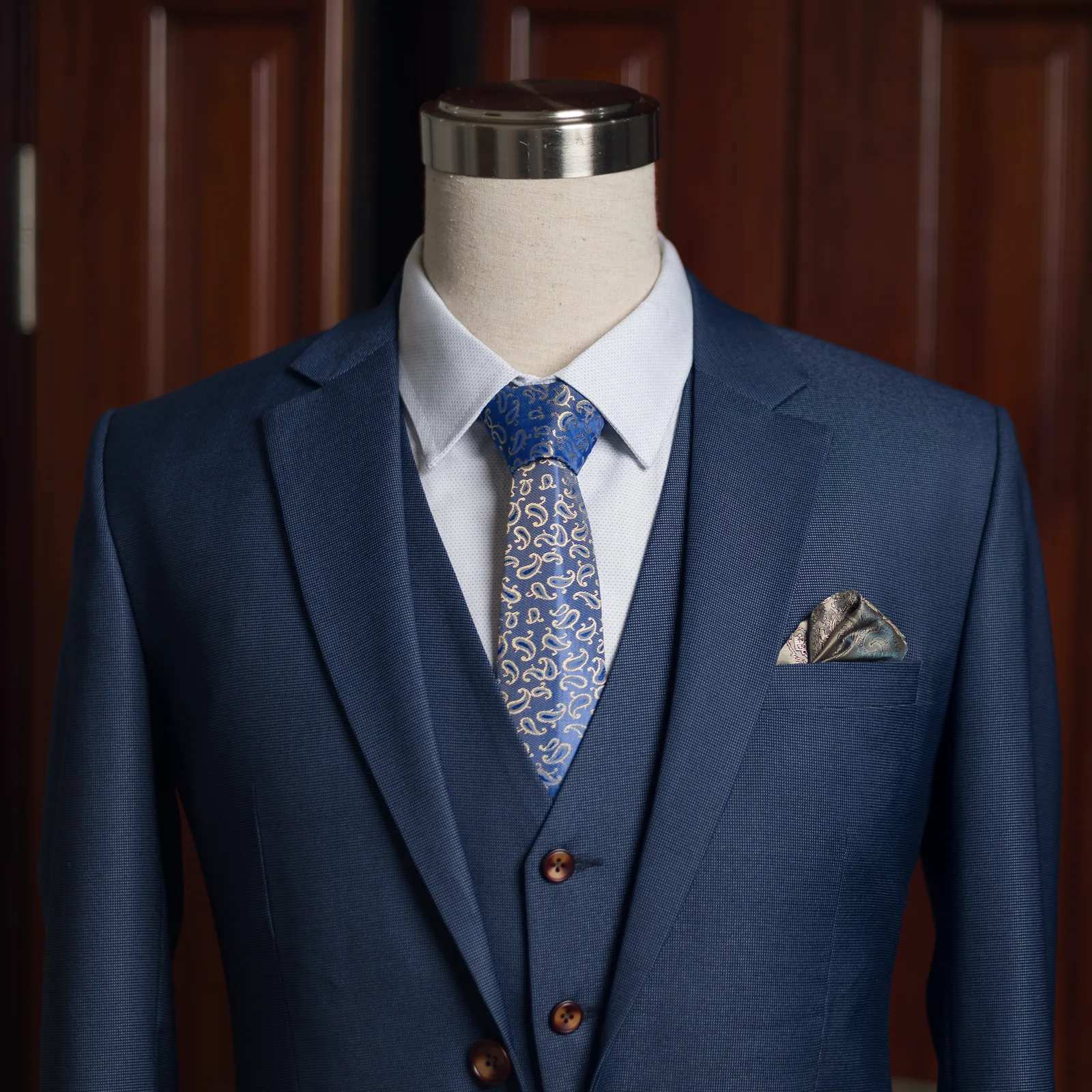
There's a particular kind of satisfaction that comes with owning a bespoke suit. You walk out of the tailor's shop knowing that every seam was sewn with you in mind, every measurement taken twice, every fabric choice considered against your lifestyle and climate. It fits differently from anything hanging on a rack. It feels different. And if you treat it properly, it will look different from a store-bought suit in twenty years' time — because it will still be worth wearing.
The trouble is that most people who invest in a custom suit treat it roughly the same way they treat everything else in their wardrobe. It gets dry-cleaned regularly, hung on a thin wire hanger from the cleaners, left in a plastic bag in the back of a wardrobe. None of that is how a good suit should live. And the gap between a suit that lasts fifteen years and one that's saggy and threadbare in five usually comes down to a handful of simple habits rather than any spectacular failure.
What follows is everything I've learned — partly from our tailors here at Be Li Tailor, partly from years of watching customers return with suits they've clearly cherished and suits they've clearly neglected. The difference is almost always visible at a glance.
Why Custom Suits Deserve Better Care Than You're Giving Them
A bespoke suit is built differently from a mass-market garment, and that difference is precisely why it responds so well to good care — and so badly to neglect. When a jacket is made with a full canvas chest — layers of horsehair canvas hand-stitched to the wool, free to move and breathe as you wear it — it develops a kind of memory for your posture and your body over time. The front drapes the way it does because it has moulded to you. Mistreat the jacket and you disrupt that process. Force it into shapes it wasn't meant for, press it with too much heat, or expose it to moisture repeatedly without proper drying, and the canvas loses its integrity.
Fused suits — which is what most off-the-rack garments are, with glued interlining rather than stitched canvas — actually deteriorate faster and less gracefully than canvassed ones. Once the glue starts to bubble or delaminate, the jacket is essentially unwearable. A properly canvassed suit, treated well, simply softens and improves with age. That's the bargain worth protecting.
The other factor is fabric. Our bespoke suits at Be Li Tailor are cut from high-quality wools, including Super 100s and Super 120s, which are finer, lighter, and more luxurious than budget cloths — but they're also more prone to damage from improper care. A coarser worsted can take a beating; a fine lightweight wool needs a gentler hand. Knowing which you have changes how you should treat it.
Daily Habits That Protect Your Suit's Shape and Fabric
The most important thing you can do for a suit doesn't happen on laundry day — it happens the moment you take it off. Give the jacket a few minutes to breathe before you hang it. Wool is a natural fibre that absorbs moisture as you wear it, and if you hang it immediately after a long day while it's still warm and slightly damp, you trap that moisture against the fabric. Instead, lay the jacket over a chair back or a valet stand for fifteen minutes, let it cool, and allow the fibres to relax. You'll be surprised how much of a difference this makes to how the suit looks the next morning.
When you do hang it, use a proper suit hanger — ideally one with a curved shoulder profile that matches the shape of the jacket. Wide wooden hangers are ideal. They support the shoulder padding and the chest without distorting the silhouette, and they allow air to circulate around the garment. Thin wire hangers create pressure points at the shoulder seams and can cause the canvas to pucker over time. It sounds like a small thing. It isn't.
Empty the pockets. Every time. The weight of a phone or a wallet sitting in a jacket pocket for hours at a time will eventually pull the lining down and distort the shape of the front panel. Same with trouser pockets — coins, keys, and a wallet sitting in the same pocket every day will wear the fabric thin from the inside. Distribute weight carefully, or use a bag.
Try to rotate your suits. Wearing the same jacket two days in a row doesn't allow it adequate time to recover between wears. Wool needs at least 24 hours of rest — ideally 48 — to spring back to full shape. If you only own one suit, that's a practical reality to accept. But if you have two or three, rotating them extends the life of each one considerably.
How Often Should You Dry Clean a Suit — and Why Less Is More
This is the one area where I see even careful people go wrong: dry cleaning their suits far too often. Dry cleaning is not a gentle process. The solvents strip natural oils from wool fibres, gradually making the fabric more brittle and prone to pilling. The mechanical agitation during the cleaning cycle puts stress on the seams, the canvas, and the hand-stitching. Over time, regular dry cleaning is one of the fastest ways to age a good suit.
The good news is that a well-made suit made from quality wool doesn't need dry cleaning very often. Wool is naturally antimicrobial and odour-resistant. If your suit picks up a light smell after a dinner or a long day, airing it outside — not in direct sunlight, but somewhere with good airflow — will usually resolve it overnight. If you get caught in light rain, let it dry naturally on a proper hanger before putting it away. For surface dirt, a soft clothes brush used with the grain of the fabric will lift most of it without any chemical intervention.
A realistic dry-cleaning schedule for a suit worn regularly might be once or twice a year, and only when genuinely necessary — a stubborn stain, a heavy-wear season, or before long-term storage. If you're having it dry-cleaned more often than that, you're likely shortening its life rather than extending it. Ask your dry cleaner to press it by hand rather than in a machine press if possible, and always remove the plastic bag as soon as you get home and hang it somewhere with airflow before storing.
Proper Storage: Hangers, Bags, and the Enemies of Good Fabric
Short-term storage — meaning the wardrobe where the suit lives day to day — needs nothing more than good hangers and enough space that the jacket isn't being compressed against other garments. Crowded wardrobes cause permanent creasing and prevent the natural airflow that keeps wool fresh. If you can hear the hangers clicking against each other, the wardrobe is too full.
For long-term storage — if you're putting a summer-weight suit away for winter, or storing a suit you won't wear for several months — the considerations are different. The main enemies are moths, moisture, and compression. Cedar blocks or cedar hangers are a natural deterrent against moths and help absorb any ambient moisture. Avoid plastic garment bags for long-term storage; plastic traps moisture and doesn't breathe, which encourages mildew. A cotton or linen suit bag is ideal — it protects against dust while allowing the fabric to breathe.
If you're travelling with the suit, roll the jacket rather than folding it if you need to pack it in a bag, or invest in a proper suit carrier. The folding instructions that came with a suit bag are usually designed to minimise creasing, so follow them rather than improvising. When you arrive, hang the jacket in a steamy bathroom for twenty minutes — not exposed to the steam directly, just in the ambient warmth and humidity — and most travel creases will fall out without any need for pressing.
Dealing with Creases, Stains, and Minor Repairs
Light creasing is nothing to worry about. Wool is a resilient fabric and most day-to-day creasing in trousers and jacket backs will fall out with a day's rest on a proper hanger. If creases persist, a light steaming — either with a dedicated garment steamer or the bathroom-steam method mentioned above — will usually resolve them. Avoid applying the iron directly to wool without a damp pressing cloth between the iron and the fabric, and keep the temperature moderate. Shiny patches on wool are caused by applying too much heat and pressure, and they're very difficult to reverse.
For stains, the first rule is to act quickly but gently. Blotting — never rubbing — with a clean damp cloth will lift most fresh stains before they set. Rubbing spreads the stain and damages the fabric surface. For anything that doesn't lift with water, take it to a specialist dry cleaner rather than attempting home treatment; many stain removers are too harsh for fine wool. Be honest with the cleaner about what caused the stain so they can choose the right solvent.
Minor repairs — a loose button, a small pull in the lining, a coming seam — are worth addressing immediately rather than leaving. These things don't heal themselves, and what's a five-minute repair today becomes a much bigger job in three months. Keep a small sewing kit with matching thread for any suit you care about. If you're not confident doing it yourself, any tailor can handle small repairs quickly and inexpensively. If you're ever back in Hội An, we're always happy to look at a suit we've made — just get in touch before you visit.
How Be Li Tailor's Fabric Choices Affect Long-Term Care
One of the advantages of commissioning a bespoke suit is the ability to choose fabrics with your actual life in mind, rather than whatever happens to be in stock. When you work with us, we talk about where and how you'll wear the suit — whether it's a working suit for a humid office, a wedding suit that needs to survive a full day of celebration, or a travel suit that needs to pack well. Those conversations shape the fabric recommendation, and the right fabric choice makes long-term care significantly easier.
For tropical climates or year-round wear, we tend to recommend lighter-weight wools in the 240–280gsm range — they breathe well, resist wrinkling better than heavier cloths, and dry quickly if they get caught in rain. For suits that will see heavy regular use, a wool-mohair blend adds durability and a subtle sheen that wears handsomely over time. Mohair fibres are naturally smooth, which means they resist pilling and dirt pick-up far better than pure wool.
We also pay close attention to construction details that affect longevity. A properly made buttonhole — hand-stitched rather than machine-cut — is far less likely to fray or distort over years of use. Hand-padded lapels hold their roll better than machine-stitched ones. The lining choice matters too: a quality Bemberg cupro lining is lighter, stronger, and more moisture-wicking than a cheap polyester lining, which means the suit remains comfortable longer and the lining itself lasts without tearing at the seams. These are the details that separate a suit worth caring for from one that simply won't repay the effort.
Commission a Suit Worth Caring For
Be Li Tailor is at 635 Hai Bà Trưng, Hội An Ancient Town, open daily 8am–9pm. The right fabric and construction makes care easier and wear longer. Explore our menswear service or get in touch to discuss what we can make for you.