The history of tailoring in Hội An does not begin with tourists. It begins five centuries ago, at a moment when this small port town on the Thu Bon River was one of the most important trading hubs in Southeast Asia — a place where merchants from Japan, China, Portugal, and the Netherlands arrived with silk, spices, and the need for clothing suitable for the tropical heat and the considerable social requirements of international commerce.
To understand why Hội An is still famous for tailoring today is to understand something about how craft traditions survive across centuries: not through institutions or protection, but through the continuous transmission of skill from one generation to the next, in workshops and homes and studios on the same streets where the trade first took hold.
Hoi An as a Trading Port: Where It All Started
Between the 15th and 19th centuries, Hội An — then known by its Chinese name, Faifo — was among the most significant international ports in Southeast Asia. Its position at the mouth of the Thu Bon River made it accessible to deep-draft trading vessels, and its location on the maritime Silk Road placed it at the intersection of trade routes linking China, Japan, India, and the emerging European colonial powers.
The merchants who came to Faifo stayed for weeks, sometimes months, waiting for favourable monsoon winds before continuing their journeys. They needed clothing. The local Vietnamese population, already skilled in weaving and cloth production through their own traditions, found in the visiting merchants a ready market for tailored garments. The silk arriving from China provided the raw material; the technical demands of merchants accustomed to the tailoring traditions of Edo, Canton, and Lisbon provided the aesthetic brief.
What developed in Hội An was not simply a local craft adapted for export. It was a synthesis — Vietnamese hands and sensibility working with imported materials and responding to design influences from half a dozen distinct cultural traditions simultaneously.
The Influence of Japanese, Chinese, and European Merchants
Each major merchant community left a distinct imprint on Hội An's craft traditions. The Japanese quarter, which still gives its name to the famous Covered Bridge, brought with it the aesthetic precision and attention to construction quality characteristic of Japanese textile traditions. Japanese merchants valued garments that were structured, restrained, and built to last — values that filtered into the expectations placed on local craftspeople.
The Chinese community, which grew to dominate the port's commercial life through the 17th and 18th centuries, brought both the raw materials — Chinese silk was the most prized fabric in the region — and the design vocabulary of Qing-dynasty tailoring. The assembly halls that still stand in the Ancient Town today were built by Chinese clan associations; the tailoring traditions their members patronised were equally enduring.
European merchants, particularly the Portuguese and later the French, introduced the fitted, structured garments of Western tailoring to a region where draped and loose-fitting clothing had been the norm. The demand for Western-style suits, waistcoats, and tailored coats created an entirely new technical challenge for local craftspeople — and produced, over generations, a community of tailors who could work fluently across multiple stylistic and structural traditions.
The Craft Passed Down: How Tailoring Survived
The port of Hội An declined in the late 19th century as the Thu Bon River silted up and larger vessels could no longer navigate its approaches. By the time the French colonial administration had completed the development of Đà Nẵng as a modern port, Hội An had been effectively bypassed by the main currents of international trade. The merchants left. The grand commercial era ended.
What remained was the craft itself. Tailoring in Hội An had, by this point, passed through several generations and become embedded in the economic and social life of the community. Families who had built their livelihoods around clothing production for the merchant trade adapted to serve the local market, the colonial administration, and the Vietnamese middle class. The skills did not disappear — they simply found new clients.
The transmission of craft knowledge in Hội An followed the model common to most traditional craft communities: master to apprentice, parent to child, neighbour to neighbour. There were no formal schools, no trade associations in the modern sense, no standardised curricula. Knowledge passed through demonstration, correction, and the slow accumulation of practical experience. A young person learning to cut a pattern was learning not from a textbook but from watching hands that had already cut thousands of patterns before them.
Hoi An Tailoring in the 20th Century
The 20th century was not straightforward for Hội An or for its craft traditions. The wars that defined Vietnam's history between the 1940s and 1975 disrupted trade, displaced communities, and created conditions in which the business of tailoring for foreign visitors was, for long stretches, simply not possible.
The reunification of Vietnam in 1975 brought its own disruptions. The economic restrictions of the immediate post-war period constrained private enterprise, and for some years the small workshops and family studios that had characterised Hội An's tailoring trade operated in difficult conditions. The skills remained, held within family traditions — but the market had contracted sharply.
Đổi Mới, the economic reform programme launched in 1986, changed the picture profoundly. The gradual opening of Vietnam to international tourism and foreign investment created, once again, the conditions for Hội An's craft traditions to flourish. Western and Asian visitors arriving in the Ancient Town found, to their considerable delight, that the city still contained a community of skilled tailors who could produce high-quality garments quickly and at prices that seemed almost implausibly low by the standards of their home countries.
The Revival: Hội An Today
The tailoring revival that Hội An experienced through the 1990s and 2000s was rapid and, in some respects, double-edged. The sheer volume of tourist demand created an incentive structure that rewarded speed over quality — and a proliferation of shops catering to the fast end of the market emerged alongside the genuinely skilled studios that had maintained the craft's standards through the difficult decades.
The distinction matters. Hội An today has hundreds of tailoring establishments, ranging from excellent to poor, and the challenge for any visitor is understanding the difference. The best tailors in the city are heirs to a genuine tradition of craft production that is half a millennium old. They cut patterns by hand, construct garments with canvas interlining, and produce work that compares favourably with tailoring available anywhere in the world. They are not souvenir-makers. They are craftspeople.
For a practical guide to navigating this landscape, our article on getting clothes tailored in Hội An covers what to look for and what to avoid.
Be Li Tailor's Place in That Tradition
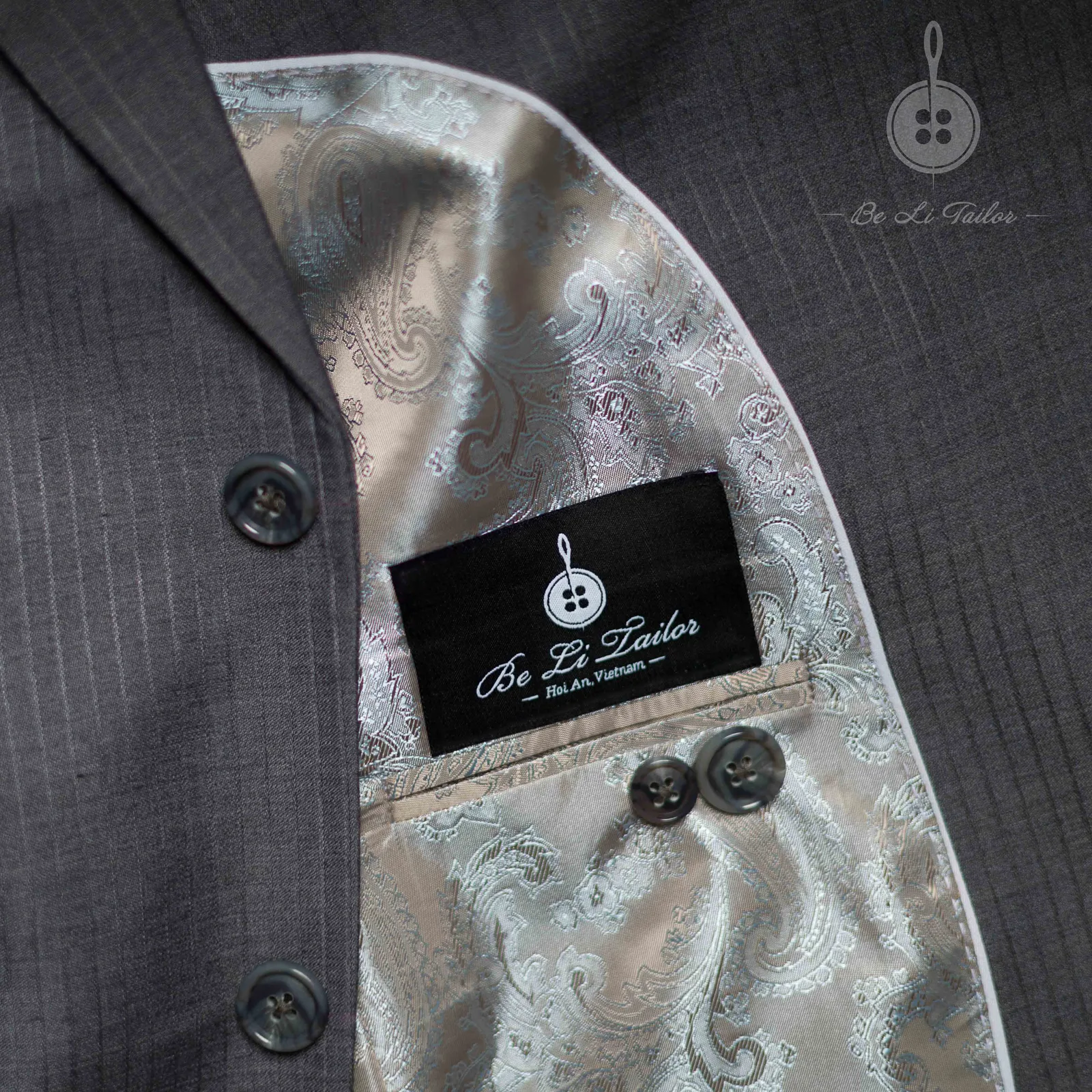
Be Li Tailor sits on Hai Bà Trưng in the Ancient Town, a few minutes' walk from the streets where merchants once commissioned their garments and craftspeople first developed the skills that have defined this city's identity ever since. The studio has been here since 2009, built on techniques passed down through direct apprenticeship in the Hội An tradition.
We do not claim to have invented anything. What we have done is maintained a commitment to the standards that characterised the best of this tradition at its peak: hand-cut patterns, careful construction, thorough fittings, and the understanding that a garment is only finished when it fits correctly. The craft we practise now is the same craft that has been practised in this city across five centuries of continuous production.
To understand more about the people behind the studio and the specific way of working we have developed, read our story. To commission something, book an appointment or explore our menswear services.
Frequently Asked Questions
Why is Hoi An famous for tailoring?
Hội An's reputation for tailoring derives from a genuine historical tradition stretching back to its days as a major Southeast Asian trading port. For several centuries, local craftspeople produced clothing for international merchants from Japan, China, and Europe, developing skills and stylistic fluency that were passed down through generations. When tourism arrived in the 1990s and 2000s, it found a community with deep and authentic tailoring expertise — not a tradition invented for visitors, but one that long predated them.
How old is Hoi An's tailoring tradition?
The tailoring tradition in Hội An is generally traced to the port's peak trading period between the 15th and 18th centuries — making it approximately 400 to 500 years old. The craft survived the port's decline, the colonial period, and the disruptions of the 20th century by being transmitted within families and communities rather than through formal institutions. Its continuity is the product of persistent craft knowledge, not institutional preservation.
Is Hoi An tailoring still traditional craft?
At its best, yes. The finest tailors in Hội An continue to practise hand-cutting, hand-basting, and careful constructed techniques consistent with traditional bespoke tailoring. However, the city also has a significant number of establishments that use shortcuts, machine work, and lower-quality materials to serve the fast end of the tourist market. Identifying the difference requires knowing what to look for — our guide to choosing a tailor in Hội An explains what distinguishes traditional craft practice from production-line tailoring.
Visit the Studio
Be Li Tailor is at 635 Hai Bà Trưng, Hội An Ancient Town, open daily from 8am to 9pm. Whether you're arriving next week or planning ahead, book your appointment online or reach us on WhatsApp at +84 905 820 116. We keep every client's measurements on file — if you've visited before, your next commission starts where the last one ended.