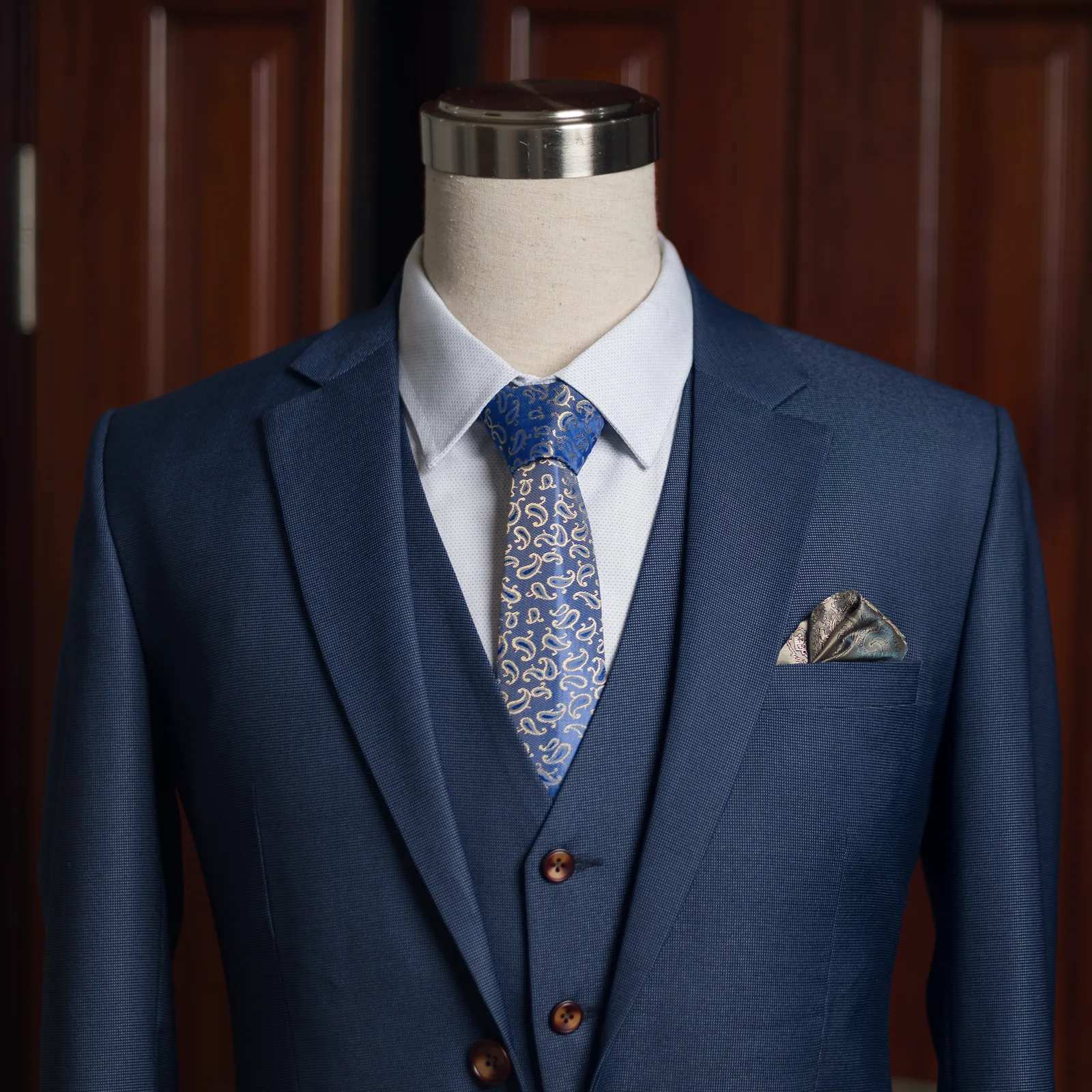
Getting clothes tailored in Hội An is, for a lot of travellers, one of the best decisions they make on the entire trip. A shirt cut precisely to your shoulders. A suit in a fabric you chose yourself, from a cloth you held in your hands. A dress that fits without compromise. All of it made while you're still in town, at a price that would be impossible anywhere near this standard back home.
But it goes wrong for plenty of people too. They walk into the first shop they see, commission three suits in 48 hours, and end up with garments that don't fit, in fabrics they didn't really want, from a producer they can't reach once they've left. This guide is here to make sure that doesn't happen to you.
Whether you're arriving next week or already in Hội An with a couple of days to spare, here's everything you need to know about getting clothes tailored in Hội An — from choosing the right studio to getting your garments safely home.
Everything You Need to Know Before You Arrive
Hội An has somewhere in the range of 500 tailor shops. That number alone should tell you something: the range in quality is enormous. At the top end, you'll find studios with proper pattern-cutters, skilled seamstresses who have been working in the trade for decades, and genuine bespoke processes where every garment is cut and sewn on-site. At the bottom, you'll find shops that outsource their work to factories a few streets away, use synthetic fabrics mislabelled as wool or silk, and have no real interest in whether the finished garment fits you well.
The good news is that sorting one from the other is not particularly difficult once you know what to look for. The relevant signals — in-house production, transparent pricing, willingness to show you the workroom — are consistent, and the studios worth visiting are not hiding.
Before you arrive, it's worth deciding broadly what you want to commission. The tailoring process requires you to come back for at least one fitting after your initial consultation, and ideally two, so your itinerary needs to accommodate that. A single garment — a shirt, a pair of trousers — can be turned around in 24 to 36 hours at a good studio. A suit requires 48 to 72 hours minimum if you want it done properly. Plan accordingly.
How to Choose the Right Tailor in Hội An
The most important thing to understand about choosing a tailor in Hội An is that price is not the primary signal of quality. There are cheap studios that do excellent work, and expensive ones that deliver disappointment. The signals that actually matter are different.
In-house production. Ask directly whether the garments are cut and sewn on the premises. A studio that produces in-house can show you their workroom. If the answer is vague or the question makes the staff uncomfortable, production is likely outsourced — which means less quality control at every stage.
Fabric transparency. A good studio will show you their fabric mill cards and be honest about fibre content. They'll know the difference between a Super 100s wool and a polyester-wool blend, and they'll be able to explain why it matters. If someone is trying to sell you "pure Italian silk" for $8 per metre, that's not silk.
Time invested in consultation. The first appointment at a serious studio takes time. A tailor who is measuring you, asking about your lifestyle, discussing how you want the garment to fit, and showing you multiple fabric options is doing the job properly. If you're being measured and shown to the door in fifteen minutes with a delivery promise for tomorrow morning, something is being cut short — and it's probably the garment.
Reviews over time, not volume. Look for studios with consistent, detailed reviews spanning several years. Recent glowing reviews that all sound similar are easy to manufacture. Reviews that describe specific garments, specific tailors by name, and specific details about the process are the ones worth trusting.
Read more about navigating the selection process in our guide to how to choose a tailor in Hội An.
How the Bespoke Process Works
Bespoke tailoring, properly understood, is different from made-to-measure or off-the-rack alterations. Every garment begins as a blank — no pre-cut pattern, no standard block. The tailor measures you, drafts a pattern specific to your body, cuts the fabric, and constructs the garment from the ground up. The result is something that fits the contours of your body rather than the dimensions of an average one.
At Be Li Tailor, the process runs as follows. On your first visit, we spend time understanding what you need: the occasion, your lifestyle, how you want to wear the garment. We show you the relevant fabric options and talk through the details — the cut, the lapel style if it's a jacket, the collar, the lining. Measurements are taken comprehensively: not just chest and waist, but shoulder slope, arm length, the height of your trouser rise, the shape of your back. Then the pattern is cut and the fabric goes into production.
The first fitting happens when the garment is substantially assembled but not finished — hems aren't turned, buttons aren't on, linings aren't closed. This is the stage where fit adjustments are made. You try the garment on, the tailor marks the changes, and you discuss any alterations to the design. The second fitting, usually 24 hours later, is the final check before the garment is completed.
This two-fitting process is the minimum for a suit; for a shirt or simple dress, one fitting is often sufficient. The key is that fittings happen before the garment is finished, not after — by the time the last button is sewn, the work is done.
What to Commission (and What to Skip)
Hội An tailoring excels at certain categories and is less suited to others. Knowing the difference helps you spend your time and money well.
Commission with confidence: Suits (two-piece and three-piece), blazers, sport coats, dress trousers, shirts (formal and casual), linen trousers, dresses (structured and unstructured), blouses, skirts, and wedding attire for both men and women. These are all garments where the skill of a competent bespoke tailor can produce results that are genuinely superior to anything available off-the-rack at the same price point.
Think carefully about: Heavy outerwear like coats and parkas. These can be made excellently, but the fabric range in Hội An is more limited for heavy-weight coating cloth, and if you're visiting in warm weather you won't be able to wear-test them properly before collection.
Approach with realism: Highly technical sportswear, stretch fabrics, and anything that depends more on performance textile engineering than tailoring craft. There are studios in Hội An that work with stretch materials, but this isn't where the tradition or the skill is concentrated.
For men, a suit and two or three shirts is a realistic and rewarding commission for a three-day stay. For women, the range is broader — a well-structured dress, a tailored blazer, and a few blouses or trousers represent a wardrobe addition that would cost several times more in equivalent quality at home. See our full range of bespoke menswear and womenswear for more on what we offer.
Timing Your Visit: When to Book Your First Appointment
The tailoring calendar in Hội An is demand-driven: peak tourist season (roughly November to March) means studios are busier, and turnaround times can stretch slightly compared to quieter months. That said, a studio that is genuinely producing in-house has a finite capacity and won't over-promise — if a good tailor tells you a garment needs 72 hours, believe them. If someone promises three suits by tomorrow morning regardless of when you arrive, be suspicious.
The best approach is to visit or contact a studio on your first day in town and book your consultation for that same afternoon or the following morning. This gives you the maximum number of days for fittings and collection before you leave. Arriving on a Saturday and leaving on a Tuesday doesn't give you much margin — book the consultation on Saturday morning rather than Sunday evening.
If you know you're coming and have a specific project in mind — particularly for wedding attire or a complex commission — it's worth contacting a studio before you arrive. This allows you to discuss the project, confirm the timeline, and sometimes arrange for fabric swatches or detailed quotes in advance. We do this regularly for clients travelling from Australia, the UK, and the US, and it makes the in-person process more efficient.
Fabrics, Fittings, and Final Collection
The fabric conversation is one of the most important parts of the process, and it's one where many visitors either defer entirely to the tailor or feel overwhelmed by choice. Neither approach serves you well. Here's a practical framework.
For suits in Hội An's climate — or for any suit you'll wear in warm conditions — a lightweight wool in the Super 100s to Super 120s range, woven at around 220–260gsm, will outperform linen in terms of drape and structure while remaining comfortable in heat. Linen is excellent for a more relaxed suit or for separate trousers; it breathes superbly but wrinkles with use. Cotton is a strong choice for shirts and casual trousers. For more on choosing your fabric for a tropical climate, we've written a detailed guide.
Fittings require you to be wearing, or to bring, the appropriate undergarments and shoes. A suit should be fitted with the shoes you'll wear it with — the heel height affects the trouser break. A shirt should be fitted over a vest or undershirt if you usually wear one. These details matter more than most people expect.
At final collection, examine the garment carefully before you leave the studio. Check that the seams are clean and the stitching is consistent. Put the jacket on and check the shoulder seam — it should sit at the very edge of your shoulder, not an inch inward or outward. Check the trouser break with your shoes on. If anything doesn't look right, say so immediately. A confident, reputable tailor will correct it without hesitation; this is part of the process, not an imposition.
International Shipping: Getting Your Garments Home
Shipping tailored garments internationally is more straightforward than it might seem, and it is a standard service at most established studios. The main considerations are packaging, carrier, and customs.
Garments should be folded on the bias where possible and wrapped in tissue paper before boxing. Suits and jackets travel best on a proper hanger inside a suit carrier or a rigid box — not folded flat in a suitcase if you can avoid it. Most studios have experience packaging garments for international transit and can advise on the best approach for your specific pieces.
For shipping, DHL and FedEx are the most reliable options from Hội An to Australia, Europe, the UK, and North America. Delivery typically takes five to ten business days, and both carriers offer tracking. Costs vary by weight and destination but are generally reasonable relative to the value of the garments.
Customs duties depend on your country of residence and the declared value of the shipment. In Australia, imports over AUD 1,000 are subject to GST and potentially customs duty; in the UK, goods over £135 attract import VAT. These thresholds and rates change, so it's worth checking with your local customs authority before you commission a large order. As a rule, declare the actual value — under-declaring is not worth the risk.
If you're not ready to have things shipped, or you'd prefer to carry your garments home, that works just as well. A folded suit in a carry-on suit bag survives a long-haul flight without issue if it's hung up promptly on arrival.
To discuss your commission or arrange a visit, book your appointment online or come and see us at 635 Hai Bà Trưng. You can also read our story to understand who we are and how we work before you arrive.
Frequently Asked Questions
How long does tailoring take in Hội An?
For a single shirt or pair of trousers, 24 to 36 hours is realistic at a good studio. A suit requires 48 to 72 hours minimum if it's being made properly, with at least two fittings. Anything promised in less time than this for a complex garment should be questioned — shortcuts in construction are hard to reverse.
Is it worth getting clothes tailored in Hội An?
For most travellers who approach it thoughtfully, yes — genuinely. The combination of skilled craftsmanship, quality fabrics, and prices that reflect local production costs rather than Western retail margins means you can commission garments of a quality that would cost three to five times more at home. The caveat is that you need to choose a good studio and allow enough time.
How much does a bespoke suit cost in Hội An?
At a reputable studio using genuine wool suiting fabric, a two-piece bespoke suit typically ranges from USD 200 to USD 450 depending on the fabric chosen and the complexity of the design. Below USD 150 for a wool suit, expect either very basic fabric, outsourced production, or both. Three-piece suits cost somewhat more due to the additional material and labour involved in constructing the waistcoat.
What should I bring to my first tailor appointment?
Bring any reference images you have — photos of garments you like, cuts you admire, details you want to replicate. Wear or bring the shoes you'll wear with the finished garment. If you have a garment that fits you well and you want something similar, bring it. A trusted tailor can learn a great deal from a garment that you already love. Come with a general sense of the occasion the garment is for, but don't stress if you're not sure about details — that's what the consultation is for.
Can I order tailoring and have it shipped home?
Yes. Most established studios in Hội An ship internationally via DHL or FedEx. You would need to complete your fittings in person — remote tailoring without at least one in-person session is not something we offer, because fit requires your body. But if you need to leave before collection, your finished garments can be shipped to any address. Discuss this with the studio at the time of your first appointment so the timeline is clear.
Visit the Studio
Be Li Tailor is at 635 Hai Bà Trưng, Hội An Ancient Town, open daily from 8am to 9pm. Whether you're arriving next week or planning ahead, book your appointment online or reach us on WhatsApp at +84 905 820 116. We keep every client's measurements on file — if you've visited before, your next commission starts where the last one ended.