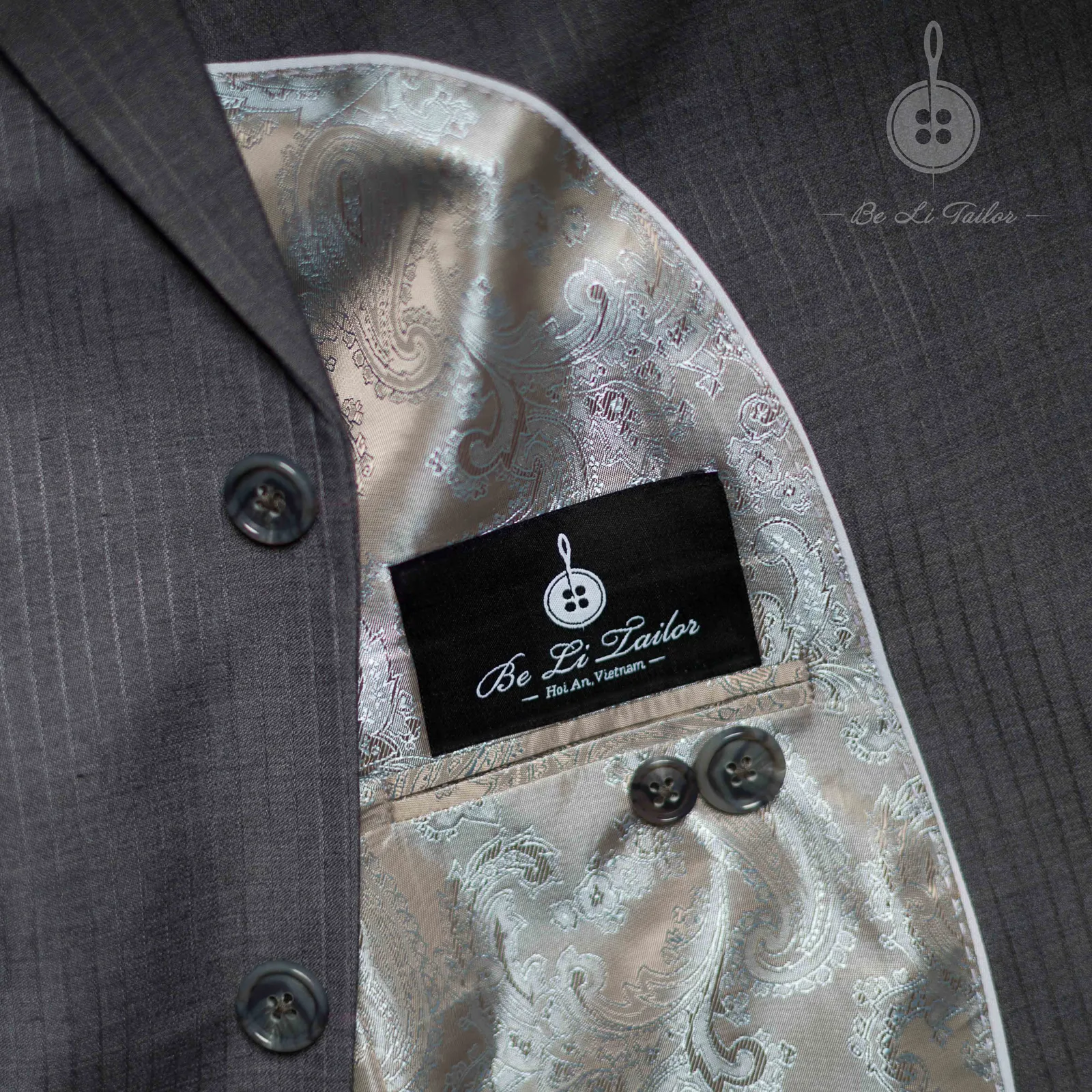
How to choose a tailor in Hội An is a question that matters more than most travellers anticipate. Walk down any street in the Ancient Town and you'll pass a dozen tailor shops within a hundred metres. Many of them look similar from the outside — fabric swatches in the window, sample garments on hangers, a smiling person at the door. The differences that separate a studio that will produce a garment you'll wear for years from one that will produce something you'll never put on again are not visible from the street.
This guide is about how to spot those differences, quickly and without needing deep expertise in tailoring. The relevant signals are consistent, and once you know them, the selection process becomes much more straightforward.
For a broader overview of the tailoring experience, read our complete guide to getting clothes tailored in Hội An.
Why Choosing Carefully Matters More Than You Think
The appeal of Hội An tailoring is real. Skilled labour, quality fabrics at a fraction of Western retail prices, and a tradition of garment-making that runs deep in the local economy. But the market has also attracted a lot of operators whose primary skill is in the commercial transaction rather than in the garment.
Tourists are, by definition, time-limited. You have three days in Hội An, you want a suit, and you're unlikely to return to argue the point if the finished garment isn't right. Some operators exploit this dynamic deliberately — quoting low to get the commission, using cheaper fabric than agreed, or outsourcing production to a factory where quality control is inconsistent. You leave satisfied or at least not furious, because the problems often don't become apparent until you're at home and wearing the jacket for the first time properly.
Choosing a tailor who has a genuine stake in the quality of the work — because their reputation depends on it, because they're making the garment themselves, because they've been in business for long enough that return clients and referrals matter — is the single most important decision in the whole process.
Red Flags: What a Bad Tailor Looks Like
The following patterns are worth taking seriously. None of them alone is definitive, but several together should send you somewhere else.
- Commission promises that seem too fast. Three suits in 24 hours, a fully lined jacket by tomorrow morning, anything that implies the garment is being made in the time it physically cannot be made properly. Bespoke construction takes time; compression of that time means something is being skipped.
- Aggressive street solicitation. Serious studios don't need to pull people off the street. If someone is chasing you down to ask if you want a suit, that's a commercial operation, not a craft one.
- Vague answers about fabric. Ask what fibre a fabric is made from. If the answer is "very good quality" or "Italian import" without a specific fibre content, be sceptical. Wool has a specific hand feel and drape; polyester blends feel different. A tailor who cannot tell you what's in their fabric is either uninformed or hoping you won't ask again.
- Prices that are implausibly low. A full bespoke suit in genuine Super 100s wool, made on-premises with proper construction, cannot realistically be produced profitably at USD 80. If the price seems like it can't be right, it probably isn't.
- No fitting protocol. Any tailor who doesn't schedule at least one fitting between the initial measurements and the finished garment is not doing bespoke work. Measurements tell you the dimensions of a body; they don't tell you how a cut interacts with a specific posture or frame. Fitting is how the garment is actually dialled in.
Green Flags: What a Reputable Studio Gets Right
Conversely, these are the things that suggest you're in the right place.
- A consultation that takes time. A tailor who asks about your lifestyle, your occasion, how you prefer garments to fit, and then listens to the answers is doing the job. This conversation is how a garment goes from technically well-constructed to actually right for you.
- Visible production. You can hear machines running. You can see the workroom, even if briefly. There are staff doing actual work on garments rather than standing at the front of the shop. These are signs that production is genuinely in-house.
- Fabric mill cards and honest descriptions. Good studios source from established fabric mills — often Italian or British — and show you the mill cards, which include the fibre content, weight, and weave description. They'll tell you honestly what each fabric will do and won't do.
- A proper fitting schedule. They tell you when your first fitting will be and what to expect. They explain the process without being asked.
- Consistency in long-term reviews. Not a flood of recent five-star reviews, but a pattern of detailed, specific reviews over several years, from clients who mention individual tailors and specific garments.
Questions to Ask Before You Commit
You don't need to interrogate every tailor you visit, but a few specific questions will tell you a lot. Ask them directly and pay attention to whether the answers are specific or evasive.
- "Is the garment cut and sewn on these premises?" A confident yes, ideally with an offer to show you the workroom, is what you want.
- "What fabric is this, and what's the fibre content?" Expect a specific answer: "Super 110s wool, around 240 grams per metre, from Loro Piana," not "very good quality Italian fabric."
- "How many fittings will I have, and when?" Two fittings minimum for a suit is the right answer. One is acceptable for simpler garments.
- "Who will be doing my measurements and fittings?" Knowing you'll work with a specific person creates accountability and continuity.
- "What happens if the fit isn't right at collection?" The answer should be immediate and confident: they'll correct it, at no charge, before you leave.
The In-House Test: Why Production Transparency Matters
The phrase "in-house production" gets used loosely, so it's worth understanding exactly what it means and why it matters for you as a client.
In a genuine in-house studio, the pattern is drafted on the premises by an experienced pattern-cutter, the fabric is cut by hand, and the garment is sewn by seamstresses employed directly by the studio. This means that every stage of construction can be monitored and adjusted. If the first fitting reveals a shoulder that sits incorrectly, the pattern can be modified before the garment is finished. If the lining is behaving oddly, it can be re-done. Quality control is the tailor's direct responsibility at every step.
In a studio that outsources production — even to a factory two streets away — the garment leaves the building and comes back. Adjustments go back out and come back again. The tailor in front of you is essentially a project manager, not a craftsperson, and the communication chain between your consultation and the person with the needle and thread is longer and less reliable than it appears.
This is why we keep everything in-house at Be Li Tailor. It's not marketing language — it's the only way to maintain the standard the work requires. Read our story to understand how the studio is structured and why.
How to Use Reviews (and How Not To)
Online reviews are a useful signal but require some critical reading. A few patterns worth recognising:
Recent volume vs. long-term consistency. A studio that has accumulated 400 reviews in three months should prompt a question: how? Genuine clients take time. A studio that has been receiving detailed, specific reviews for five or six years, from clients who mention the tailor's name and describe the fitting process, is a more credible signal.
Detail vs. enthusiasm. Reviews that say "amazing quality, best tailor in Hội An!" are less useful than reviews that say "had two fittings, the shoulder seam was adjusted at the second, the jacket now fits perfectly across the back." Specific process detail is hard to fake and suggests a client who actually went through a real fitting process.
Negative reviews and responses. How a studio handles a critical review tells you more than how they handle a glowing one. A professional response that acknowledges the concern and explains what would be done differently is a positive signal. An aggressive or dismissive response is not.
Ready to experience the process? Explore our bespoke menswear or book your appointment directly.
Frequently Asked Questions
Are all tailors in Hội An good quality?
No. Hội An has over 500 tailor shops, and the quality range is enormous. There are studios producing genuinely excellent work using skilled craftspeople and quality materials, and there are operations that prioritise throughput over craft. The signals that separate one from the other — in-house production, fabric transparency, proper fitting process — are learnable and consistent.
How do I know if a Hội An tailor is legitimate?
Ask to see the workroom, ask specifically about fabric fibre content, and ask about the fitting schedule before you commit. A legitimate studio will answer all three questions directly and without discomfort. They'll typically have detailed reviews spanning several years from clients who describe specific garments and fitting experiences. Vague answers or deflection on any of these points is a signal worth heeding.
Should I get multiple quotes?
It's reasonable to visit two or three studios and get a sense of what each offers. But comparing prices alone is not useful — a USD 180 suit from a studio with in-house production and quality wool fabric is not the same product as a USD 120 suit from a studio that outsources and uses synthetic blends. Compare the whole package: fabric, process, fitting schedule, and the quality of the consultation itself.
What does in-house production actually mean?
It means the garment is cut and sewn on the premises by staff employed directly by the studio, under direct supervision of the head tailor. The pattern is drafted in-house, fabric is cut by hand on-site, and the seamstresses working on your garment are the same people who will attend your fittings. This is different from a studio that takes your measurements and sends the work to a factory elsewhere.
Visit the Studio
Be Li Tailor is at 635 Hai Bà Trưng, Hội An Ancient Town, open daily from 8am to 9pm. Whether you're arriving next week or planning ahead, book your appointment online or reach us on WhatsApp at +84 905 820 116. We keep every client's measurements on file — if you've visited before, your next commission starts where the last one ended.