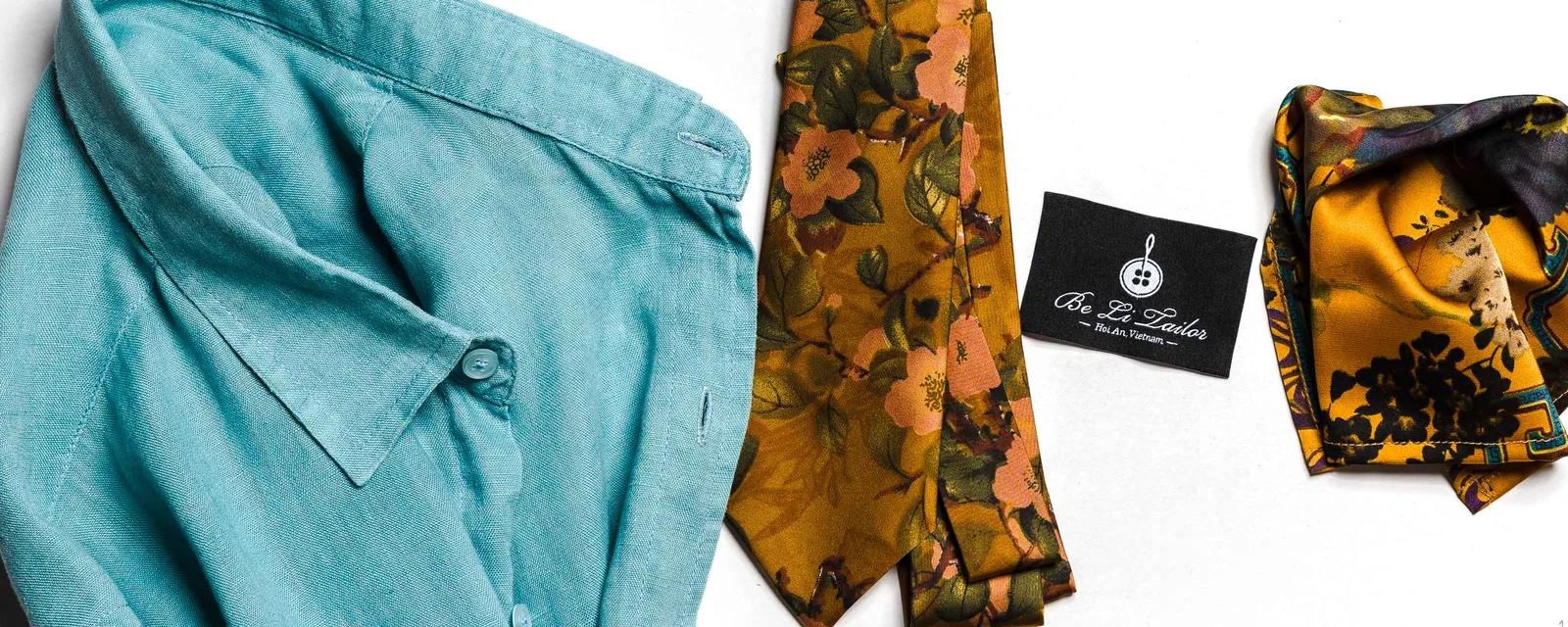
A fabric guide for tropical tailoring is one of those resources that sounds practical but is rarely written with any honesty. Most advice stops at "choose linen" or "avoid wool" — neither of which is correct in any nuanced sense. The truth is more interesting, and more useful. Fabric choice in a tropical climate is not about eliminating options; it is about understanding how each material behaves when the air is warm and humid, and matching that behaviour to your specific garment and occasion.
This guide covers every major cloth category you are likely to encounter when commissioning tailored clothing in Hội An. We work with wool, linen, cotton, silk, and various blends every week of the year, serving clients from Australia, Britain, the United States, and across Asia. The observations here come from that daily practice — not from fabric marketing copy.
Why Fabric Choice Is Completely Different in the Tropics
In a temperate climate, the primary function of clothing is insulation. In the tropics, the primary function shifts entirely: clothing must manage moisture, allow air circulation, and dry quickly against the skin. This is a fundamentally different engineering problem, and it changes which fabrics make sense.
Hội An's climate is typically 28–35°C with high humidity through much of the year. At those temperatures, the body begins to perspire almost immediately under any physical exertion. A fabric that traps that moisture against the skin becomes uncomfortable within minutes. A fabric that wicks, breathes, and releases moisture continues to feel acceptable — even pleasant — for hours.
There is also a secondary consideration: most travellers are not simply sitting in air-conditioned restaurants. They are walking ancient streets, moving between outdoor and indoor spaces, and attending events that begin outside and move in. A good tropical fabric must handle rapid transitions between humidity levels without collapsing structurally or becoming visibly damp.
The third consideration, often forgotten, is laundering. In the tropics, garments are worn and washed more frequently. Fabrics that deteriorate under regular washing — or that require dry cleaning after every wear — are simply impractical for a tropical wardrobe.
Wool: The Misunderstood Fabric for Hot Climates
Most people's instinct is to dismiss wool entirely in tropical conditions. This is understandable — the image of heavy winter suiting does not suggest a fabric suited to 32°C afternoons. But this instinct conflates wool as a material category with the specific, heavy weaves used in cold-climate suiting. They are not the same thing.
Wool is a natural protein fibre with a unique cellular structure. Each fibre is covered in microscopic scales that create tiny air pockets within the weave. These air pockets are the same property that makes wool warm in winter — but in a lightweight weave, they also allow air to circulate while wicking moisture away from the skin and releasing it as vapour. This is not a marketing claim. It is the physical mechanism behind wool's thermoregulatory properties.
The key variable is weight and weave construction. A 180gsm Super 120s wool in an open, hopsack weave behaves very differently from a 380gsm flannel. For tropical conditions, you are looking at fabrics in the 180–250gsm range, ideally in open or tropical weaves — fresco, hopsack, or open-weave tropical worsted. These fabrics breathe actively, resist wrinkling better than most people expect, and drape with a formality that linen and cotton rarely achieve.
For formal occasions — weddings, business meetings, dinners — lightweight tropical wool remains the most versatile and technically capable choice. It holds a pressed crease, maintains its structure in humidity, and does not develop the casual, rumpled appearance that linen and cotton inevitably take on over the course of a day.
Our guide to wool for hot climates, including Super 100s, 120s and 150s, goes further into the specific grades and weaves worth seeking out in Hội An.
Linen: The Honest Tropical Choice
Linen is made from the flax plant and has been used in hot climates for thousands of years — there is a reason ancient Egyptians wore it rather than wool. Its fibre structure creates a fabric that is highly breathable, moisture-wicking, and fast-drying. In raw performance terms, linen is probably the single best natural fabric for tropical conditions.
It does, however, have a personality of its own — and that personality is not for every wearer or every occasion. Linen wrinkles. This is not a defect that can be tailored away; it is an inherent property of the fibre. Over the course of a day, a linen jacket or trouser will develop pronounced creasing at every point of movement: the elbows, the back of the knees, the seat. Experienced linen wearers come to regard this as part of the fabric's character. Others find it intolerable.
The quality of linen varies significantly. Low-grade linen, typically from cheaper sources, tends to pill, shed, and become coarse and uncomfortable against the skin after washing. Higher-grade Belgian or Irish linen — which is what we stock at Be Li Tailor — softens with wear and washing, develops a beautiful texture, and maintains its structure far better. The difference in hand feel between a 200gsm mid-grade linen and a 190gsm Belgian linen is striking even to clients who have never paid much attention to fabric.
Linen suits work particularly well for daytime occasions and outdoor events in tropical conditions. The fabric reads as considered and relaxed simultaneously — a combination that is genuinely difficult to achieve with any other cloth. For women's tailoring, linen makes excellent wide-leg trousers, relaxed blazers, and summer dresses. For men's tailored clothing, linen suits, trousers, and overshirts all perform well in Hội An's climate.
The one occasion where we consistently steer clients away from linen is any event requiring the wearer to sit for extended periods — a dinner, a ceremony, a long flight immediately after the event. The creasing at the seat and back of the legs becomes pronounced and is difficult to restore without a full pressing. For those occasions, a lightweight wool or cotton-linen blend typically serves better.
Cotton: Versatile, Familiar, Underrated
Cotton occupies an interesting middle ground in tropical tailoring. It lacks the active thermoregulatory properties of wool, and it does not breathe as freely as linen. But it is softer, smoother, more forgiving in wear, and far easier to care for than either — and in the right weave, it performs genuinely well in heat.
The critical variable with cotton is weave construction. A densely woven cotton poplin will feel hot and clammy within an hour in tropical conditions. A loosely woven cotton voile or dobby weave will breathe almost as well as linen. Between those extremes, you have a spectrum: Oxford weave, seersucker, and hopsack cotton all occupy different positions on the breathability scale.
Seersucker deserves particular mention. The puckered texture of seersucker is not merely decorative — it creates air space between the fabric and the skin, reducing the amount of cloth in direct contact with the body at any given moment. This is genuinely effective in humid conditions, and it is one reason seersucker has remained a staple of Southern American summer suiting and is now found across South and Southeast Asian tailoring traditions.
Cotton also has the advantage of laundering very cleanly. Most cotton tailored garments — trousers, shirts, simple jackets in unstructured construction — can be machine-washed on a gentle cycle, which is a practical advantage in a tropical wardrobe where frequent washing is the norm rather than the exception.
For shirts specifically, cotton remains the dominant choice in any climate. A high-count two-ply cotton — 100/2 or 120/2, meaning the thread is twisted from two finer threads rather than being a single thicker thread — produces a shirt fabric that is soft, strong, breathable, and long-lasting. When clients visit us to commission shirts as part of a tailoring order in Hội An, cotton in a fine two-ply weave is what we recommend for anything worn next to the skin in warm weather.
Silk: When It Works and When It Doesn't
Silk is perhaps the most misunderstood fabric in tropical tailoring. It is simultaneously described as "hot" and "cool," as "delicate" and "durable." The truth depends entirely on how the silk is constructed and what role it is performing in the garment.
As a shell fabric for structured garments — jackets, suits, structured trousers — silk is genuinely problematic in tropical humidity. Natural silk absorbs moisture rapidly and releases it slowly, which means it can feel damp against the skin and may develop visible sweat marks in ways that wool and linen do not. It also does not hold a pressed shape well in humidity; a silk jacket worn in Hội An's heat will look tired quickly. Silk suiting requires the most careful handling of any tropical fabric, and we usually recommend it only to clients with significant experience wearing and caring for the material.
As a lining fabric, however, silk is exceptional. A silk lining reduces friction between the outer shell and the wearer's clothing underneath, allowing a jacket to move freely without pulling or binding. Silk linings are also cooler against the skin than synthetic alternatives — an important quality in a tropical climate where polyester linings can trap heat noticeably.
Silk also works well for certain garments that are worn loose or draped rather than structured: wide-leg trousers, loose blouses, evening dresses. In these applications, the fabric's natural drape and sheen are genuine assets, and the breathability issues associated with structured garments are largely eliminated because the cloth does not sit tightly against the body.
Silk blends — particularly silk-cotton and silk-linen — often give the best of multiple properties. A 40% silk, 60% linen blend has the drape and lustre of silk with the breathability and structure of linen. These blends are worth exploring for clients who want the aesthetic of silk without committing to the full maintenance requirements of a pure silk garment.
Cashmere and Blends: Do They Belong in the Heat?
Pure cashmere has no place in tropical tailoring. It is a fine, soft, insulating fibre — properties that are precisely what you do not want in a warm, humid environment. Even the lightest cashmere will feel uncomfortably warm above 25°C, and it requires dry cleaning, which makes it impractical for garments worn frequently in humid conditions.
Cashmere blends are a different conversation. A wool-cashmere blend — typically 85% wool, 15% cashmere — adds softness and a subtle sheen to a suit without significantly affecting breathability, provided the base wool weight is appropriate for the climate. These blends are occasionally worth considering for evening events or air-conditioned office environments where the temperature is controlled, and where the client values the tactile quality of cashmere.
Wool-silk blends deserve more attention than they typically receive. Adding a proportion of silk to a wool cloth — anywhere from 10% to 30% — improves the drape, adds a subtle lustre, and can actually reduce weight slightly. Many excellent tropical suiting fabrics from mills in the UK and Italy are wool-silk blends in the 180–220gsm range, and they perform well in hot conditions. The silk content makes them less breathable than a pure tropical wool, but the improvement in handle and appearance often justifies the trade-off.
Linen-cotton blends are extremely practical and underappreciated. Pure linen's tendency to wrinkle is significantly moderated by the addition of cotton — a 55% linen, 45% cotton blend holds its shape noticeably better than pure linen while retaining much of the breathability. These blends are ideal for clients who want the casual elegance of linen without the pronounced creasing. We carry several linen-cotton blends in our studio and recommend them regularly for daytime suits and trousers. For a detailed comparison, see our article on linen vs cotton vs linen-cotton blend.
Fabric Weight: Understanding GSM for Your Climate
GSM — grams per square metre — is the standard measurement of fabric weight, and it is one of the most practically useful numbers in tropical tailoring. Understanding GSM gives you an objective benchmark rather than relying solely on the tactile impressions that can vary between different fabric types.
As a general guide for tropical climates like Hội An's:
- 180–230gsm — ideal for suiting and structured jackets. Light enough to breathe actively in heat, heavy enough to hold structure and drape well.
- 230–280gsm — a mid-weight range that works well in air-conditioned environments or during cooler periods. Excellent for trousers worn independently from a suit, as the slightly heavier weight gives a better drape and reduces transparency issues.
- 280gsm and above — inappropriate for unlined tropical suiting. These weights can work in fully lined garments where the construction manages temperature, but they are generally better suited to cooler climates.
For shirts, the relevant measurement is threads per inch (TPI) or thread count rather than GSM, but broadly speaking, lighter shirt fabrics — 80-count or 100-count cotton — breathe better than heavier ones. For trousers worn in heat, 180–220gsm produces the best combination of drape, breathability, and durability.
It is worth noting that GSM is not the only variable. A 200gsm tightly woven poplin will breathe less than a 220gsm open hopsack weave, because the weave structure determines how much air can pass through the cloth. GSM is a useful guide, not a complete picture. Always discuss both weight and weave construction with your tailor.
How to Choose the Right Fabric for Your Garment and Occasion
Rather than applying a single fabric rule to all situations, it is more useful to think through each garment and occasion separately. Here is how we typically advise clients at Be Li Tailor:
Formal suits (weddings, business, evening events)
Lightweight tropical wool in the 180–230gsm range, open or fresco weave. A wool-silk blend is a good second option. Linen works if the event is entirely outdoors and the formality level permits it, but it will require more careful management of creasing.
Business casual blazers and jackets
Linen, cotton, or linen-cotton blend are all strong candidates. These garments often don't need the structural formality that pure wool provides, and the more relaxed properties of linen and cotton suit the context well.
Trousers (worn alone, not as part of a suit)
Cotton is often the best choice here — it launders easily, holds a crease better than linen, and in the right weight and weave, breathes acceptably well. Linen is also excellent but requires acceptance of wrinkling. Wool trousers at 200–240gsm work well for more formal wear.
Shirts
Fine cotton is the standard. Egyptian, Pima, or two-ply European cotton at a thread count of 100 or above produces shirts that are soft, breathable, and long-lasting. Linen shirts are excellent for casual occasions and outdoor events.
Dresses and women's tailored garments
The broadest range of options applies here. Silk, silk-cotton blends, linen, and lightweight cotton all work beautifully in women's tailoring. The choice depends primarily on the occasion and the client's relationship with the fabric's specific properties. Our womenswear service covers everything from structured blazers to evening wear, and we carry a wide range of cloths suited to each.
Caring for Tropical Garments at Home
Even the best fabric choice becomes irrelevant if the garment is not properly cared for. Tropical garments face particular demands — frequent wear, frequent washing, and the ongoing effects of humidity. Here is how to maintain them well.
Wool tailored garments
Brush after each wear to remove surface soil and refresh the fibre. Allow to rest for 24 hours between wears — wool fibres benefit from recovery time. Spot-clean minor marks immediately with a damp cloth. Have the garment professionally pressed every few months, and dry-cleaned no more than twice a year. Frequent dry cleaning degrades wool fibres and strips natural lanolin.
Linen garments
Linen can generally be hand-washed or machine-washed on a gentle cycle in cool water. Lay flat or hang to dry — tumble drying will shrink linen aggressively. Iron while still slightly damp using a medium-high heat setting; this produces a crisp result that flat ironing dry linen will not achieve. Accept that linen will crease during wear — this is the fabric's character, not a failure.
Cotton tailored garments
Most cotton garments can be machine-washed in cool water on a gentle cycle. Press with a medium iron while damp to restore crispness. Structured cotton jackets with interlinings should be dry-cleaned rather than washed at home, as the interlining may shrink at a different rate to the shell fabric.
Silk garments
Hand-wash in cool water with a gentle detergent, or dry-clean for structured garments. Never wring silk — roll it gently in a towel to remove excess moisture, then hang to dry away from direct sunlight. Iron on the reverse side at a very low heat, using a pressing cloth to protect the surface from contact marks.
Storage in humid climates
If you are keeping garments in a humid environment — either in Vietnam or a similarly tropical country at home — invest in cedar blocks or breathable garment bags. Avoid sealed plastic bags, which trap moisture and accelerate mildew. Allow garments to breathe between wears, and check any long-stored pieces every few months for signs of mildew or moth damage.
Frequently Asked Questions
What is the best fabric for a suit in a hot climate?
For a formal suit in a hot climate, lightweight tropical wool in the 180–230gsm range is the most technically capable choice. It breathes actively, holds its structure and a pressed crease, and resists the rumpling that linen and cotton develop during the day. Look for fresco, hopsack, or open tropical worsted weaves. For a more casual suit, a linen-cotton blend or high-quality pure linen is an excellent option, with the trade-off of more pronounced wrinkling.
Is linen or wool better for tropical weather?
The honest answer is that it depends on the occasion and the wearer's priorities. Linen is more breathable and cooler in raw performance terms, but it wrinkles significantly and reads as casual. Lightweight tropical wool breathes well, maintains formality, and holds its shape — but requires more careful care. For a formal event, tropical wool typically serves better. For a relaxed outdoor occasion, linen is often the superior choice.
What weight of fabric is best for a tropical suit?
For a tropical climate like Hội An's — consistently 28–35°C with high humidity — the optimal range for a suit is 180–230gsm. Below 180gsm, fabrics can become semi-transparent and may lack the weight to drape properly. Above 250gsm, most fabrics will feel uncomfortably warm in sustained outdoor exposure. The weave construction matters as much as the weight: an open, loose weave at 220gsm will breathe more freely than a tightly woven fabric at the same weight.
Does wool make you sweat?
All fabrics respond to perspiration — the question is how they manage it. Lightweight tropical wool actually performs well against the skin because of wool's natural moisture-wicking properties. The fibre absorbs vapour before it becomes liquid sweat, releasing it into the air rather than holding it against the skin. This is why light wool can feel cooler than a comparable cotton of the same weight in certain humid conditions. The heavy winter wools that most people associate with heat and discomfort behave entirely differently from lightweight tropical wool.
What fabric is used for lightweight suits?
The most common fabrics for lightweight suits include tropical wool (fresco or open worsted weave), linen, linen-cotton blend, and certain lightweight cotton weaves such as seersucker. For the lightest possible wool suiting, look for Super 120s or Super 130s at 180–200gsm in an open weave. Italian mills including Loro Piana, Vitale Barberis Canonico, and Scabal produce excellent lightweight tropical suiting cloths, many of which we carry at Be Li Tailor.
Visit the Studio
Be Li Tailor is at 635 Hai Bà Trưng, Hội An Ancient Town, open daily from 8am to 9pm. Whether you're arriving next week or planning ahead, book your appointment online or reach us on WhatsApp at +84 905 820 116. We keep every client's measurements on file — if you've visited before, your next commission starts where the last one ended.