The question of linen vs cotton tailoring comes up in our studio almost every day. Clients arrive with preferences shaped by received wisdom — "linen is cooler," "cotton is smarter," "blends are a compromise" — and most of those opinions contain something true and something misleading in equal measure. This guide is an attempt to give you a clearer picture of what each fabric actually does, so you can choose based on your specific garments and how you plan to wear them.
For the broader context of fabric choice in tropical conditions, our complete fabric guide for tropical tailoring covers all major fabric categories including wool and silk.
Linen: The Case For and Against
Linen is made from the stems of the flax plant — one of the oldest cultivated crops in human history, and one that has been used to make clothing for millennia for good reason. The fibre is hollow, which means it breathes exceptionally well; moisture moves through and away from linen rapidly, and the fabric dries quickly against the skin. In raw thermal performance, no natural fabric commonly used in tailoring outperforms linen in heat.
Linen also has a distinctive appearance — a natural, slightly irregular texture that reads as relaxed and considered simultaneously. Higher-grade Belgian and Irish linen develops a beautiful drape and a soft, slightly cool hand feel that clients who love the fabric find deeply satisfying. It is, in the right context, genuinely beautiful cloth.
The argument against linen is almost entirely about creasing. Linen wrinkles. This is not a manufacturing defect or a quality problem; it is an intrinsic property of the cellulose fibre structure. A linen jacket worn for two hours will show pronounced creasing at the elbows. Linen trousers will crease at the back of the knees and the seat. After a day of active wear, a linen suit looks lived-in — which some wearers find charming and others find unacceptable.
There is also a quality gradient in linen that matters considerably. Low-grade linen — rough to the touch, stiff when new, prone to pilling — is a different material experience from a 190gsm Belgian linen that softens beautifully with wear and washing. When considering linen, the source and grade of the cloth matters more than with most other fabric categories.
Cotton: Why It's Never as Simple as It Seems
Cotton is often described as the default fabric — familiar, practical, universally appropriate. That description undersells it. Cotton's performance in tailoring depends enormously on how it is woven, and the range of cotton weaves available to a tailor spans from the practically useless to the genuinely excellent.
At the poor end: dense cotton poplin in warm conditions traps heat and moisture against the skin, takes on a slightly limp quality in humidity, and creases as badly as linen without the compensating breathability. This is the cotton that gives the material a bad reputation in tropical tailoring.
At the good end: a fine two-ply Egyptian or Pima cotton in an open weave is soft, breathable, smooth against the skin, and durable. Seersucker cotton — with its characteristic puckered texture — creates air space between fabric and skin that is genuinely effective in heat. Oxford weave cotton produces a soft, slightly textured shirt fabric that wears well across a wide range of temperatures. These are excellent fabrics for tailored clothing in tropical conditions.
Cotton's clearest advantage over linen is laundering. Most cotton tailored garments can be machine-washed on a gentle cycle without significant degradation, which is an important practical consideration in a climate where garments are worn and washed frequently. Cotton also wrinkles less than linen — not as well as wool, but noticeably better than pure linen — and holds a pressed crease for longer after ironing.
For men's shirts and casual tailored trousers, cotton is often the first recommendation. For structured jackets and formal suits, it is typically a secondary choice after lightweight wool, though there are contexts — outdoor events, daytime casual occasions — where cotton serves very well.
The Linen-Cotton Blend: Best of Both Worlds?
The linen-cotton blend occupies genuinely useful middle ground rather than being a mere compromise. Typically produced at ratios of 55% linen / 45% cotton or 70% linen / 30% cotton, these blends retain a significant proportion of linen's breathability while the cotton content moderates the wrinkling behaviour substantially.
The difference in crease resistance between pure linen and a 55/45 linen-cotton blend is noticeable in practice. A pure linen jacket worn for three hours will look considerably more rumpled than a comparable blend worn for the same period. The blend does not eliminate wrinkling — the linen content ensures it will still crease — but it creases more gently and recovers more quickly when hung or lightly pressed.
The blend also tends to launder and care for more easily than pure linen. The cotton content makes the fabric slightly more forgiving of machine washing and reduces the aggressive shrinkage that very high-quality pure linen can exhibit on first washing.
The trade-off is texture and appearance. Pure linen has a distinctive, characterful surface that the blend approximates but does not fully replicate. Clients who specifically love the feel and look of linen will often prefer the pure fabric even accepting its greater tendency to crease. Clients whose priority is practical tropical performance in a casual-to-smart garment will frequently find the blend the better answer.
Which Fabric for Which Garment?
Rather than applying a single rule, it is more useful to think through each garment type separately:
Suits and formal jackets: For occasions requiring sustained formality — particularly seated dinners, ceremonies, or events running over several hours — the linen-cotton blend or a fine cotton twill will hold up better than pure linen. Where the occasion is more relaxed or predominantly outdoors, pure linen works beautifully and its characteristic wrinkling reads as appropriately casual.
Shirts: Fine cotton is the standard recommendation for shirts in any climate. A 100/2 or 120/2 two-ply cotton in a plain, Oxford, or dobby weave produces a shirt that is soft, breathable, long-lasting, and easy to care for. Linen shirts are excellent for casual and outdoor contexts — a relaxed overshirt in Belgian linen is a genuinely appealing garment — but for formal shirts, cotton's ability to hold a crisp shape through a long day gives it the advantage.
Trousers (worn separately from a suit): Both cotton and linen work well as summer trouser fabrics. Linen trousers in an appropriate weight — 185–200gsm — are exceptionally comfortable in heat, though the creasing at the back of the knees is something to manage. A cotton chino or cotton-linen blend trouser holds its shape through the day more reliably.
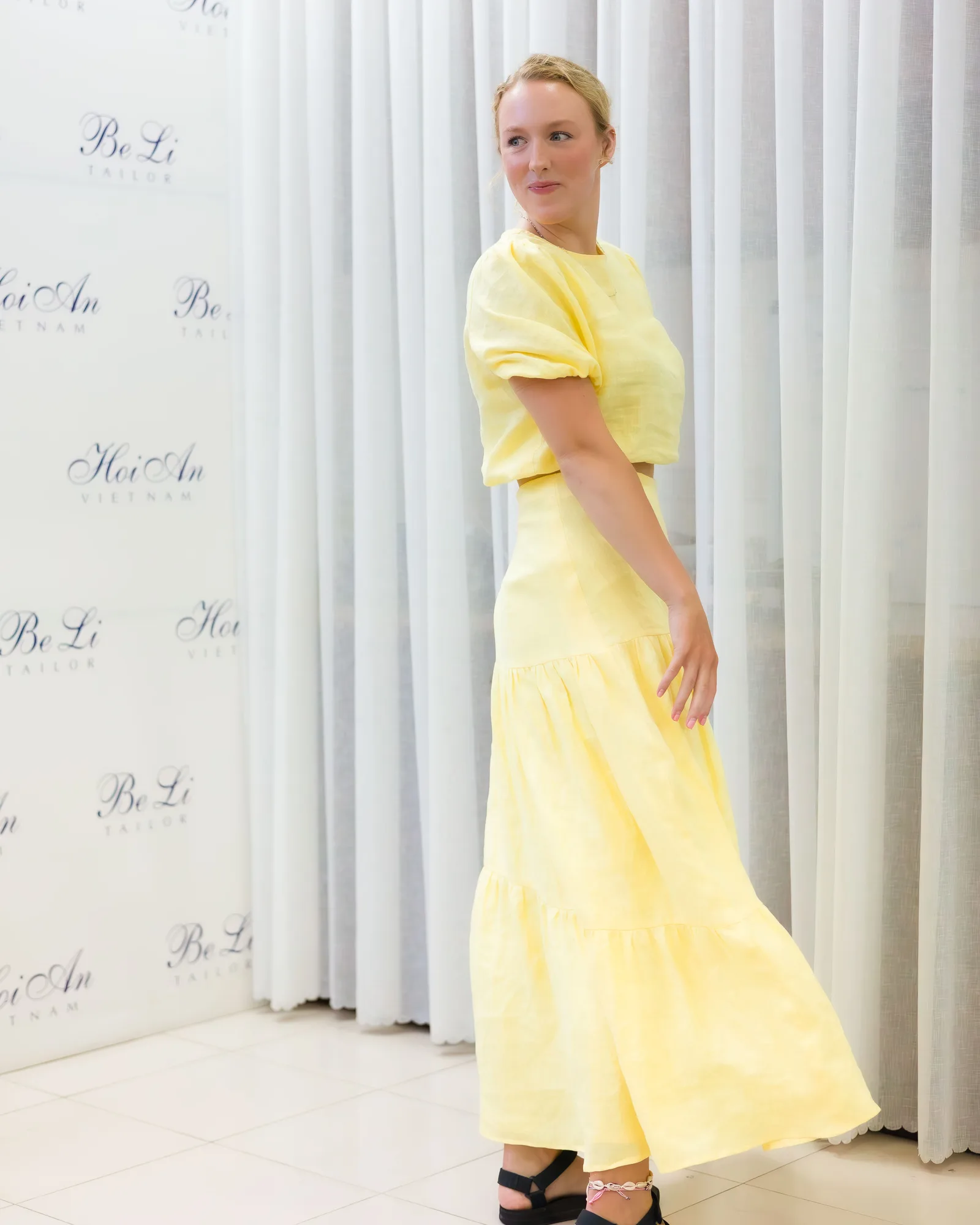
Women's tailored pieces and dresses: The full range applies here. For women's tailoring, linen makes beautiful wide-leg trousers, loose blazers, and casual dresses. Cotton works well for structured pieces and formal summer suiting. The blend suits clients who want the linen aesthetic with a slightly more polished outcome. For wedding and formal occasion wear, the occasion and silhouette will typically determine the fabric choice more than the season alone.
How These Fabrics Perform After a Year of Wearing
One dimension of this comparison that rarely appears in fabric guides is how the three options age. Fabric behaviour changes significantly with regular wearing and washing, and understanding the long-term trajectory matters for a garment you intend to wear for years.
High-quality linen improves with age and washing. The fibres soften progressively, and a well-sourced Belgian or Irish linen that felt slightly stiff on first wearing will feel noticeably more luxurious after six months of use. The colour may soften slightly — which is usually an improvement — and the hand becomes increasingly pleasant. Low-grade linen, however, can pill and degrade with washing, which is one reason source quality matters so much with this fabric.
Cotton's trajectory depends largely on the weave and thread quality. Fine two-ply cotton shirts typically maintain their quality very well over years of wearing, softening slightly while retaining their structural integrity. Lower-grade single-ply cotton can lose its body relatively quickly, becoming thin and slightly limp after repeated washing. The investment in higher-quality cotton is well justified by its longevity.
The linen-cotton blend ages reasonably well in most cases, though it does not develop quite the character of a pure linen over time. The cotton content keeps it stable; the linen content keeps it from becoming dull. It is a reliable long-term fabric for the tropical wardrobe.
Frequently Asked Questions
Does linen wrinkle badly?
Yes — this is an inherent property of the linen fibre and cannot be avoided entirely, even in the highest-quality cloth. However, the degree and nature of wrinkling varies significantly between grades of linen and between garment constructions. High-grade Belgian or Irish linen wrinkles in a more relaxed, organic way that many wearers find acceptable or even appealing. Lower-grade linen tends to crease more severely and less attractively. The linen-cotton blend, at a 55/45 or 70/30 ratio, wrinkles noticeably less than pure linen while retaining much of its breathability.
Is a linen suit appropriate for a wedding?
For an outdoor daytime wedding in a tropical or warm climate, linen is entirely appropriate and increasingly preferred by guests and grooms alike. The key consideration is managing expectations about the suit's appearance over the course of the day — a linen suit will crease during wear, and by the evening it will look more relaxed than it did at the ceremony. For indoor weddings or formal evening receptions, lightweight tropical wool or a linen-cotton blend typically holds its presentation better. If the wedding has a relaxed, outdoor, or destination character, linen can be a genuinely excellent choice.
What's the difference between linen and linen-blend?
Pure linen is made entirely from flax fibres and has maximum breathability, a characteristic texture, and pronounced wrinkling behaviour. A linen-cotton blend combines flax and cotton fibres — typically at a 55/45 or 70/30 ratio — producing a fabric that is more crease-resistant and slightly easier to care for than pure linen, while retaining a significant proportion of linen's breathability and aesthetic character. The blend is a practical choice for clients who want the linen look with slightly better all-day performance; pure linen is the choice for those who prioritise breathability and accept — or embrace — the wrinkling.
Visit the Studio
Be Li Tailor is at 635 Hai Bà Trưng, Hội An Ancient Town, open daily from 8am to 9pm. Whether you're arriving next week or planning ahead, book your appointment online or reach us on WhatsApp at +84 905 820 116. We keep every client's measurements on file — if you've visited before, your next commission starts where the last one ended.