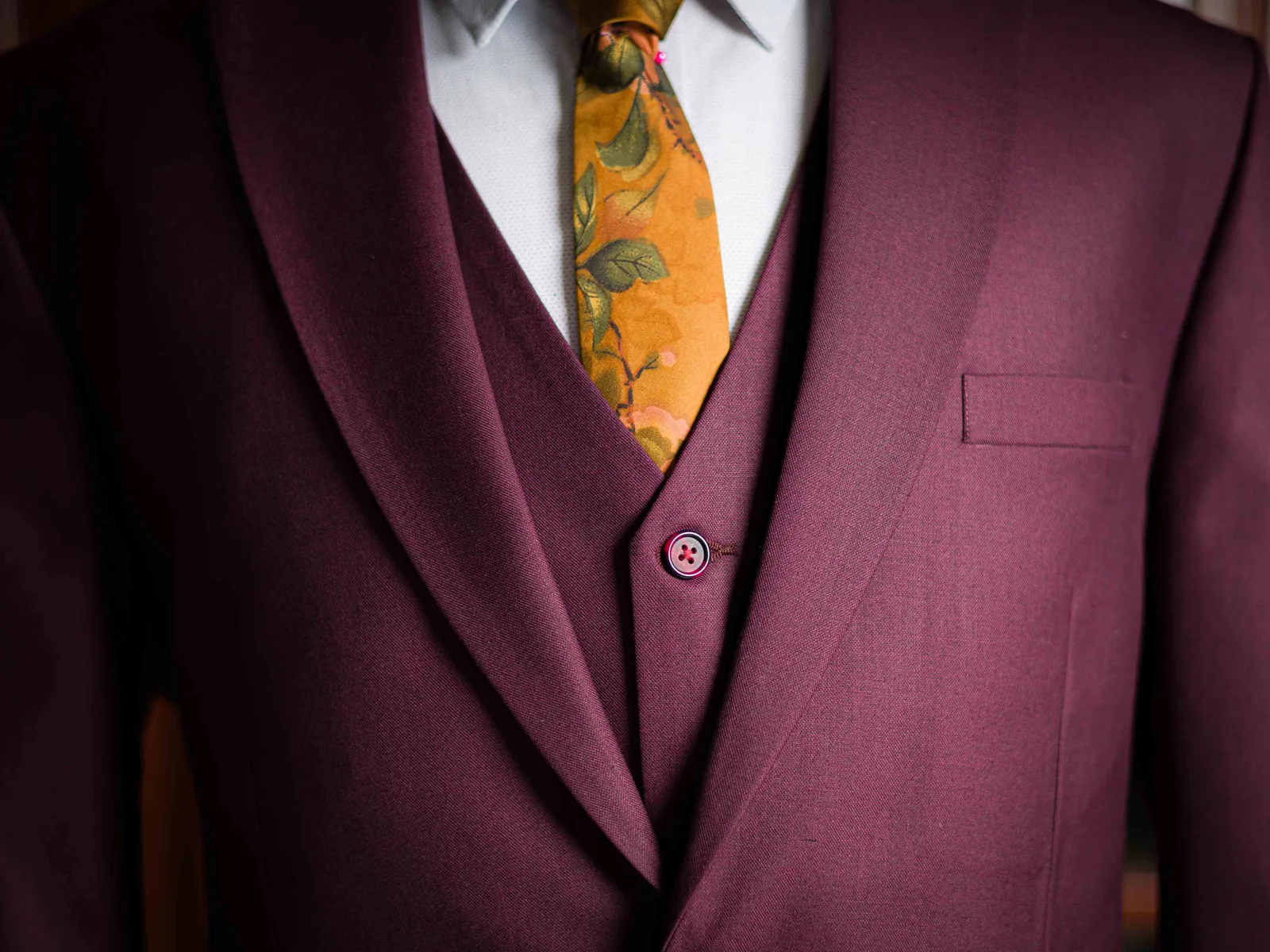
The question of wool for hot climates is one of the most common and most misunderstood conversations we have in our studio. Most clients arrive assuming that wool and tropical heat are incompatible — and most leave with a different view. The misunderstanding comes largely from the Super number system, which is widely cited in suiting but rarely explained in plain language. This guide gives you what you actually need to know.
What "Super" Numbers Actually Mean
The Super number — Super 100s, Super 120s, Super 150s — is a measure of wool fibre fineness, not quality in any absolute sense. Specifically, it describes the diameter of the individual wool fibres measured in microns (thousandths of a millimetre). The finer the fibre, the higher the Super number, and the softer and more lustrous the resulting cloth.
The technical standard is set by the International Wool Textile Organisation. Super 100s wool has fibres with a maximum diameter of 18.5 microns. Super 120s allows a maximum of 17.5 microns. Super 150s reaches 16 microns. To put those numbers in context: a human hair is typically 70 microns in diameter. These are extraordinarily fine fibres.
What the Super number does not directly measure is weight, weave construction, or breathability. A Super 150s fabric woven densely at 320gsm will be far less comfortable in the tropics than a Super 100s fabric woven in an open fresco weave at 190gsm. The Super number tells you about fibre fineness. Everything else — weight, weave, suitability for your climate — depends on additional information.
For a comprehensive overview of all major fabric categories, see our complete fabric guide for tropical tailoring.
Super 100s: The Reliable Workhorse
Super 100s is the entry point into the Super designation system, and it is considerably more capable than that positioning might suggest. Fibres at this grade are fine enough to produce a smooth, comfortable cloth that sits well against the skin without prickling — the coarser wools that once gave the material a scratchy reputation are absent here.
For tropical tailoring, Super 100s in the right weave is entirely practical. It is more durable than finer grades — the slightly thicker fibres are more resistant to pilling, pulling, and the general wear that comes from frequent use in active travel conditions. A Super 100s fresco or open tropical weave at 200–220gsm will outlast a Super 150s of the same weight many times over, making it an excellent choice for clients who will wear their suit regularly rather than occasionally.
The aesthetic of Super 100s is slightly more matte than finer grades, with less of the subtle sheen that characterises Super 120s and above. Whether this is a drawback depends on the suit's intended purpose. For everyday business wear and travel, the matte finish is neutral to positive. For formal occasions where a degree of lustre is desirable, finer grades may be worth considering.
Super 120s: The Sweet Spot for Tropical Travel
Super 120s represents the point at which most tailors — including ourselves at Be Li Tailor — land when advising clients who want the best combination of comfort, aesthetics, durability, and tropical suitability. The fibre fineness produces a noticeably softer hand than Super 100s, along with a subtle sheen that elevates the cloth visually without tipping into the overtly lustrous quality of very fine grades.
Crucially for tropical wear, Super 120s in an appropriate weave performs excellently in heat. The finer fibre allows the cloth to be woven at lighter weights without sacrificing structural integrity, which means you can find excellent Super 120s suiting at 185–210gsm — a range that is actively comfortable in Hội An's climate. Combined with an open weave construction such as fresco or tropical worsted, Super 120s at this weight breathes well and maintains its shape through a full day of wear.
Super 120s is also the grade at which most reputable mills offer their widest range of colours, patterns, and weave constructions. Vitale Barberis Canonico, Scabal, and Dormeuil all produce extensive Super 120s ranges specifically designed for tropical climates, and these are the fabrics we most often recommend when clients are commissioning bespoke menswear for warm-weather destinations.
Super 150s and Above: Luxurious but Fragile
Super 150s and above — Super 160s, 180s, 200s, and the occasionally seen Super 250s — are extraordinary technical achievements. Fibres at these grades have a softness and drape that must be felt to be understood. In the right light, a Super 180s fabric has an almost silvery luminosity. For clients who want the finest possible cloth regardless of other considerations, these grades are genuinely impressive.
The trade-off is durability. Extremely fine wool fibres are also extremely delicate. Super 150s and above is significantly more susceptible to pilling, snagging, and wear than coarser grades. A suit made from Super 180s fabric, worn twice a week and cared for normally, will begin to show wear at stress points — the seat, the elbows, the inside collar — within a year or two. The same suit in Super 120s, properly maintained, might last a decade.
For tropical conditions specifically, there is also a structural consideration. Very fine wool at very light weights — the combination that produces the most comfortable tropical suit on a Super 150s or above — can lack sufficient body to maintain its silhouette over the course of a day's wear in humidity. The garment can begin to look slightly tired by late afternoon, even when lightly worn. This is not universal, and a skilled tailor can mitigate it through construction choices, but it is a genuine consideration.
Our honest recommendation: Super 150s is worth considering for a special-occasion suit that will be worn a handful of times per year and carefully maintained. For a travelling suit, a working suit, or anything worn regularly in tropical conditions, Super 120s is the wiser choice.
Thread Count vs. Weave: What Really Affects Breathability
Here is the point that most fabric guides skip over, and it matters enormously in practice: the Super number tells you nothing about breathability. Breathability in a woven fabric is primarily determined by the weave structure — specifically, how open or dense the interlacing of warp and weft threads is.
A plain weave wool at 200gsm will breathe differently to a hopsack weave at the same weight, because the hopsack's looser, more basket-like structure creates more air space within the cloth. A fresco weave goes further — its open, rough-textured construction was specifically developed in the mid-20th century for warm-weather suiting, and it remains one of the most breathable tailoring fabrics available regardless of fibre grade. A fresco weave in Super 100s will outperform a plain weave in Super 150s in heat, almost without exception.
When discussing fabric options with a tailor, ask about both the Super number and the weave construction. A good tropical suit specification might be: Super 120s, fresco or open tropical worsted weave, 190–210gsm. Each element of that specification is doing a specific job, and the result is a garment that will perform well across a wide range of tropical conditions.
For a detailed look at how GSM affects suit performance, our guide to fabric weight and GSM for suits covers the full range.
Which Super Number to Choose for Hoi An Weather
The direct answer: for most clients commissioning a suit in Hội An, Super 120s in an open tropical weave at 190–220gsm is the recommendation that serves the widest range of purposes. It is soft enough to be genuinely comfortable, fine enough to look polished for formal occasions, durable enough to justify the investment, and — in the right weave — genuinely breathable in temperatures that regularly reach 33°C or above.
Super 100s is the right choice if durability is the primary concern, or if budget is a constraint without wanting to compromise on quality. Super 150s and above is the right choice if the suit is a special-occasion piece and the client is experienced in caring for very fine fabrics.
What is never the right choice — despite being commonly seen — is a fine Super number in a dense, heavy weave. A Super 150s in a 320gsm plain weave is not a tropical suit; it is a cold-climate suit made from expensive fibres. The weave and weight determine the performance. The Super number describes the material's potential. Matching the right weave and weight to the climate is the tailor's job.
If you are planning to commission a suit in Hội An and would like to discuss fabric options in person before committing, book an appointment at Be Li Tailor and we will walk you through everything we carry.
Frequently Asked Questions
What does Super 120s mean in suiting?
Super 120s refers to the fineness of the individual wool fibres in the fabric, measured by their diameter. Fibres in a Super 120s cloth have a maximum diameter of 17.5 microns — extremely fine, which produces a soft hand, subtle sheen, and the ability to weave lightweight cloths without sacrificing body. It does not directly describe weight, weave construction, or suitability for any particular climate: those properties are determined separately and are equally important to the final garment's performance.
Is Super 150s worth the extra cost?
For most purposes — especially tropical travel and regular wear — Super 150s is not worth the premium over Super 120s. The finer fibre is noticeably softer and more lustrous, but it is also significantly more susceptible to pilling, snagging, and wear. A well-made Super 120s suit will outlast a Super 150s suit worn under similar conditions by many years. Super 150s is worth considering for a special-occasion garment worn carefully and infrequently, but as a travelling suit or working suit, the durability trade-off is difficult to justify.
What wool is best for a suit in 30-degree heat?
The optimal wool for 30-degree conditions is a Super 120s in an open fresco, hopsack, or tropical worsted weave, at a weight of 190–220gsm. The fibre grade gives you softness and drape; the open weave allows active air circulation; and the weight keeps the fabric light enough to avoid heat build-up. Avoid dense plain weaves and anything above 240gsm, regardless of Super number. Several Italian mills — including Vitale Barberis Canonico and Scabal — produce ranges specifically marketed as tropical suiting that meet all of these criteria.
Visit the Studio
Be Li Tailor is at 635 Hai Bà Trưng, Hội An Ancient Town, open daily from 8am to 9pm. Whether you're arriving next week or planning ahead, book your appointment online or reach us on WhatsApp at +84 905 820 116. We keep every client's measurements on file — if you've visited before, your next commission starts where the last one ended.