Le Thi Chan Be Li Tailor is not a brand name or a marketing construction. Le Thi Chan is a person — the head tailor and founder of the studio at 635 Hai Bà Trưng — and the name Be Li Tailor reflects, in the way that traditional craft businesses often do, the person at the centre of it. To understand the studio is, to a significant degree, to understand her: where she learned, how she thinks about the work, and what two decades in the same discipline produces in a person who takes it seriously.
A great garment, she believes, is a conversation between maker and wearer. The tailor brings technical skill, material knowledge, and the trained eye that comes from working closely with thousands of bodies over many years. The client brings the occasion, the aspiration, and the specific physicality that no pattern block was designed for. What emerges when that conversation goes well is something neither party could have made alone.
Learning the Craft: The Early Years
Chan learned tailoring the way the craft has been transmitted in Hội An for generations: through direct apprenticeship, watching skilled hands and then, slowly, being trusted to use her own. She grew up in the town, in a community where tailoring was not a specialised trade but a normal part of economic and domestic life — women sewed, families maintained clothing, and the people who were particularly gifted at it found themselves drawn toward the workshops where the more demanding work was done.
Her formal apprenticeship was with one of the established Hội An master tailors who had maintained traditional construction techniques through the difficult decades of the post-reunification period. She was not learning to produce garments quickly for tourists — that market was only beginning to develop in the mid-1990s. She was learning the underlying craft: how to read a body, how to draft a pattern, how to cut cloth without error, how to build a jacket from the inside out.
The early years were characterised by the particular discipline of learning under someone who would not accept approximation. Seams had to be straight. Canvas had to be pad-stitched evenly. Buttonholes had to be worked with consistent density. The corrections were given without softening, and Chan absorbed them as the professional formation they were. The standards her mentor held were not arbitrary; they were the accumulated understanding of what distinguished a lasting garment from a temporary one.
Opening the Studio
The studio on Hai Bà Trưng opened in 2009. The address placed it in Hội An's Ancient Town, a few minutes from the Japanese Covered Bridge and the assembly halls that mark the neighbourhood where the city's historical trade and craft life had concentrated. It was not an accident that she chose this location. The proximity to that history was, for Chan, both practically useful — clients travelling to the Ancient Town would pass her door — and something more personal. The studio was, from the beginning, a claim to continuity with the tradition she had been trained in.
The early years of the studio coincided with a period of rapid growth in Hội An's tailoring reputation. International visitors were arriving in increasing numbers, most of them having heard that the city offered bespoke clothing at prices that made no sense in any other context. The challenge was maintaining quality in the face of a market that rewarded speed. Chan chose not to compete on that dimension. The studio would do fewer commissions than some of its neighbours and would take more time over each one. The repeat clients that approach eventually produced were worth more than the volume a faster operation might have generated.
The Philosophy Behind the Work
Chan talks about garments in terms of what they do for the person wearing them rather than what they demonstrate about the skill of the person who made them. A well-made suit should make the wearer feel, and appear, more themselves — not costumed, not performing a role, but simply present in the world with the ease that comes from wearing something that was made for exactly this body.
This philosophy has practical consequences. It means the fitting process at Be Li Tailor involves more conversation than measurement. What is the suit for? When will it be worn? What does the client want to feel in it? The answers to those questions shape decisions about construction, fabric, and silhouette that no standard sizing system can anticipate.
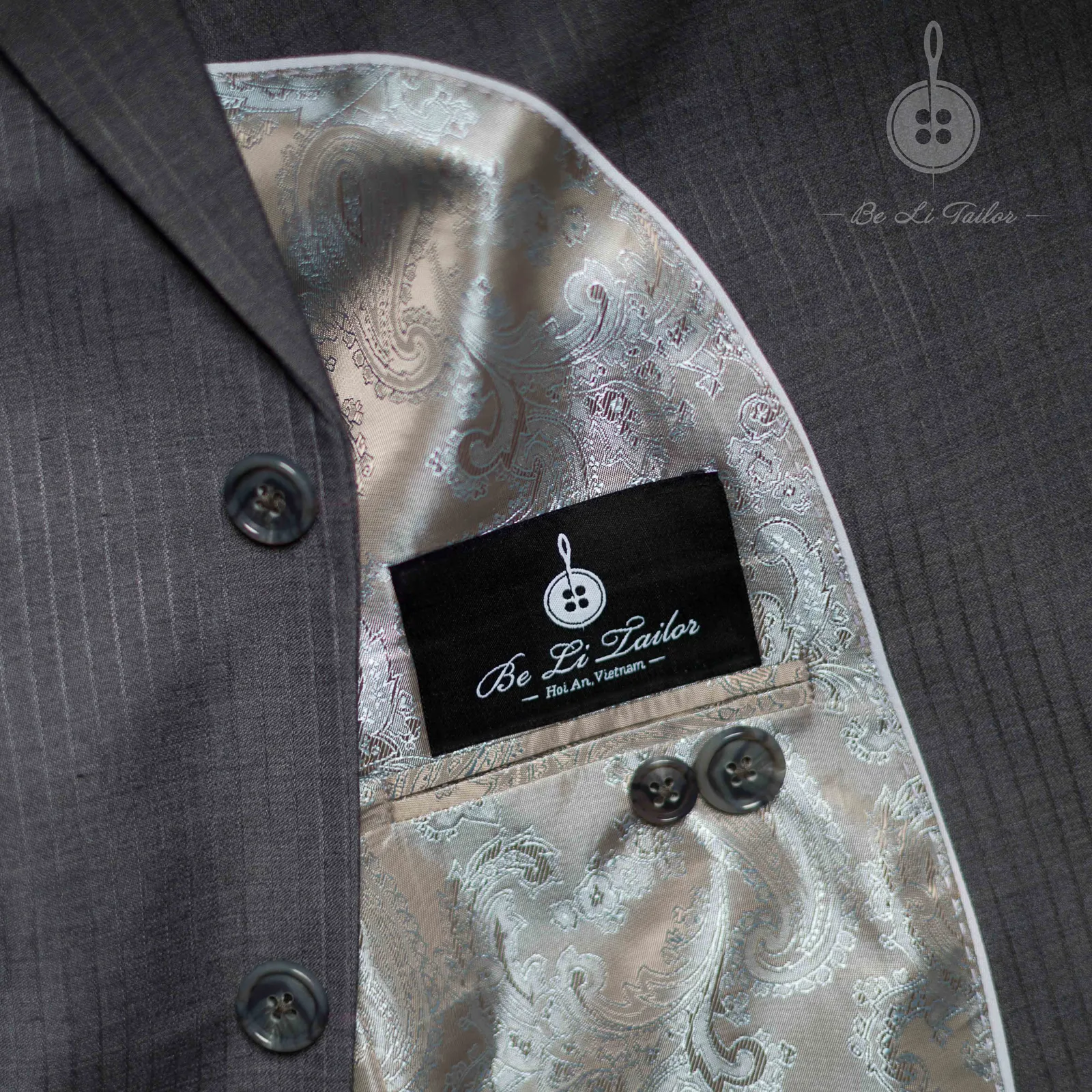
It also means an absolute commitment to the internal construction methods that make a garment last. Chan uses full canvas on all suits — not half canvas, not fusing. She uses hand-worked buttonholes. She builds collars by hand, shapes them on the block, presses them with steam and intention. These are not selling points. They are, in her understanding, the minimum that a garment worth making requires.
What Two Decades in the Same Studio Teaches You
Twenty years in the same discipline, in the same building, with many of the same returning clients, produces a particular kind of knowledge. Chan can recognise, within minutes of a first consultation, the specific challenges a body presents: the shoulder that sits higher than the other, the back that requires shaping, the posture that affects how the jacket will hang. These observations are not catalogued or written down. They exist as trained perception, accumulated through thousands of repetitions.
The returning clients are part of this education. A client who has been coming to the studio for ten years has provided, across multiple commissions, a continuous feedback loop that no single-visit interaction can replicate. Chan keeps measurements on file and, more than measurements, remembers the adjustments that were required — the small corrections that brought a previous commission to exactly right. When a client returns, the conversation begins where it ended.
The history of tailoring in Hội An that underlies this practice — the craft traditions that survived the difficult decades and were still present and transmittable when Chan began her apprenticeship — is covered in our history of tailoring in Hội An.
The Partnership With Jerry Stevens
Jerry Stevens, the other voice in the Be Li Tailor studio, came to the partnership from the client's side of the fitting room. An Australian with a professional background that required serious attention to clothing, he had been commissioning from Chan for years before the conversation about a more formal collaboration began.
What the partnership added was a perspective the studio needed: someone who understood what international clients were looking for, could speak to concerns about fit and style in terms they recognised, and could articulate — in the articles and guides that now form the Be Li Tailor journal — what made the studio's approach distinctive and why it mattered. The craft knowledge remains Chan's. The broader conversation about how to communicate that craft to a worldwide audience became a shared project.
What Be Li Tailor Means Today
The studio on Hai Bà Trưng is a small operation by the standards of Hội An's tailoring industry. It does not aim to be the largest or the fastest. Its reputation is built on the consistent delivery of garments that fit precisely, are made without shortcuts, and last considerably longer than the alternatives. The clients who find it and return to it do so because the work speaks for itself.
For Chan, this is not a modest ambition — it is the only ambition that makes sense for a craft that requires years to learn properly and a lifetime to continue developing. A garment is a conversation between maker and wearer. The studio on Hai Bà Trưng has been having that conversation since 2009, and intends to continue.
To learn more about the studio and the people in it, read our story. To commission something, book an appointment or explore our menswear services.
Frequently Asked Questions
Who founded Be Li Tailor?
Be Li Tailor was founded by Le Thi Chan, a Hội An-trained tailor who learned her craft through direct apprenticeship with established local master tailors before opening her own studio on Hai Bà Trưng in 2009. Jerry Stevens, a long-term client and collaborator, later joined as a partner contributing to client communications and the studio's written guides.
How long has Be Li Tailor been open?
Be Li Tailor opened on Hai Bà Trưng in Hội An's Ancient Town in 2009, making the studio more than fifteen years old. In that time it has served clients from across the world, maintaining the traditional bespoke construction techniques that Le Thi Chan was trained in during her apprenticeship years.
What makes Le Thi Chan's tailoring distinctive?
Several things set her work apart: a commitment to full canvas construction on all suits (rather than the half-canvas or fused shortcuts common in the trade); a fitting process that prioritises conversation and understanding over speed; and the accumulated knowledge of two decades working with an exceptionally diverse range of bodies from around the world. She also maintains client measurements on file, allowing returning visitors to build on previous commissions rather than starting from scratch.
Visit the Studio
Be Li Tailor is at 635 Hai Bà Trưng, Hội An Ancient Town, open daily from 8am to 9pm. Whether you're arriving next week or planning ahead, book your appointment online or reach us on WhatsApp at +84 905 820 116. We keep every client's measurements on file — if you've visited before, your next commission starts where the last one ended.