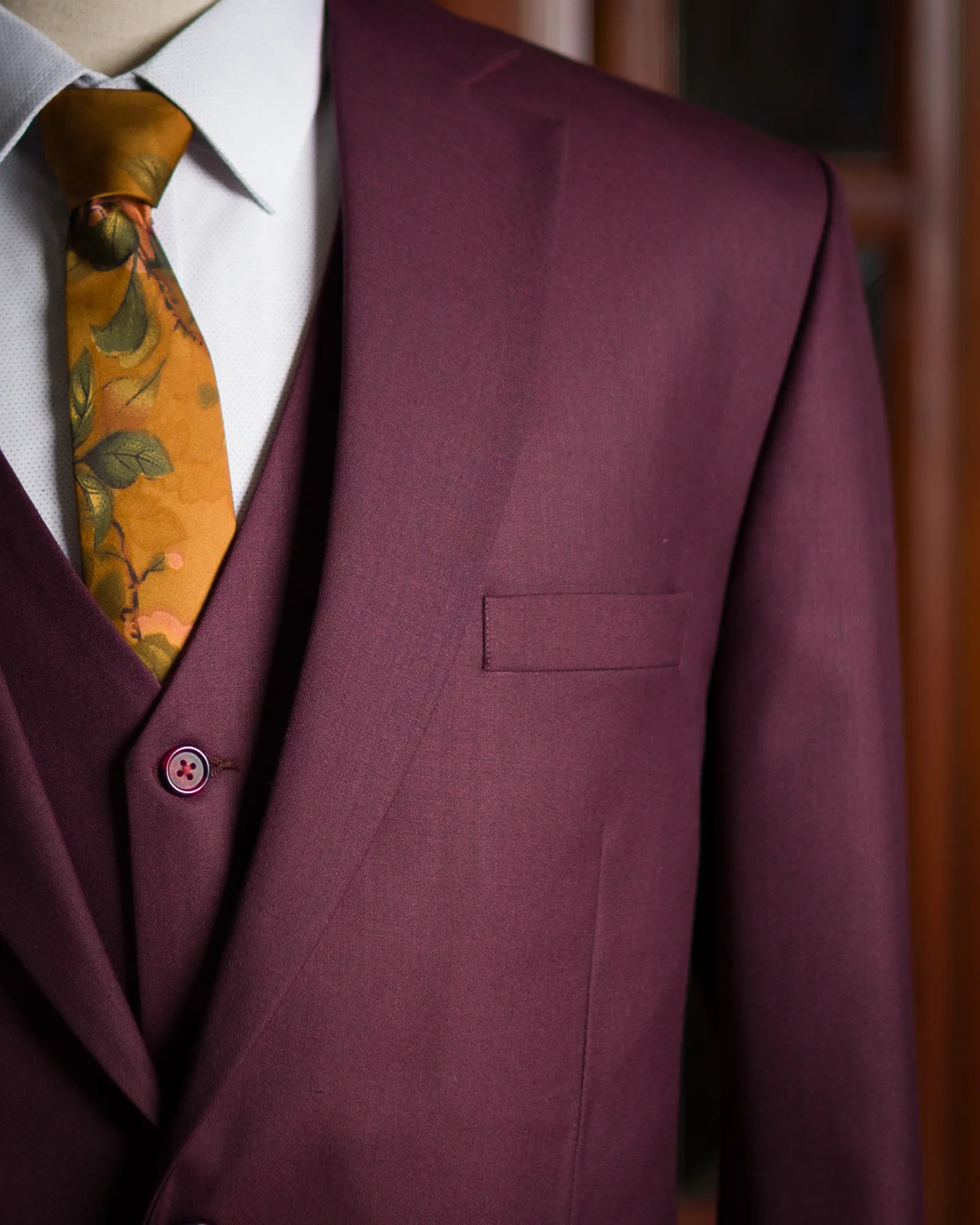
Getting eight men — each with a different build, different availability, and varying levels of enthusiasm for standing still while someone measures their inseam — through a tailoring process and out the other side with suits that fit and look coordinated is not an accident. It is a logistics exercise. And like most logistics exercises, it goes well when someone has planned it carefully and badly when no one has.
Be Li Tailor has managed wedding parties ranging from two people to twenty. The process that works is always the same: a clear brief before arrival, staggered appointments across the first two days, and enough time in the schedule for the two fittings and alterations that a proper bespoke garment requires. Here is exactly how it works, from first contact to final collection.
Coordinating Multiple People Through the Fitting Process
A bespoke suit requires a minimum of two visits to the studio — the measurement and consultation appointment, and the first fitting. In an ideal timeline, a third visit for a final check-and-collect is preferable, though it can often be combined with the second if the first fitting reveals only minor adjustments.
For a wedding party, every person needs to complete both visits. The challenge is that people in a travel group often have different itineraries: some arrive earlier, some later; some want to use their days for sightseeing rather than standing in a fitting room. Managing these competing priorities without derailing the production schedule is where pre-trip planning earns its value.
The most effective approach is to designate someone — typically the best man or the groom — as the point of contact for scheduling. This person liaises with the studio, communicates appointment times to the party, and manages the inevitable cases where someone misses their slot and needs to be rebooked. Wedding party tailoring functions best with a single point of contact on the client side rather than eight separate conversations via WhatsApp.
We ask all wedding parties to confirm their Hội An arrival dates, the number of people, and their broad departure dates before travel. With this information, we can sketch out a production schedule and flag any timing concerns before they become problems.
How We Manage Different Body Types in One Wedding Party
A wedding party of eight men will almost always include a wide range of body types: tall and lean, short and broad, athletic, stocky, long-limbed, and everything between. Each body requires its own pattern. There is no shared template.
This is both the point of bespoke tailoring and the practical challenge of a group commission. Where a party hires off-the-rack suits and alteration is cosmetic at best, a bespoke commission means each person's suit is cut to their specific measurements — so the suits look coordinated while each fits its wearer correctly.
The specific decisions that vary by body type include:
- Jacket length and back rise — a shorter man in a jacket cut for a taller man's proportions will look as though he's wearing his father's suit. Length is adjusted per person.
- Suppression and structure — a lean, athletic frame benefits from a closer fit with more suppression at the waist. A broader frame requires a different balance of structure and ease.
- Trouser seat and rise — seat depth varies enormously between body types and is one of the most commonly miscalculated measurements in group tailoring.
- Shoulder width and slope — the shoulder seam must sit at the exact edge of the shoulder for any jacket to look correct. This cannot be adjusted after construction.
Within these individual adjustments, the garments are kept visually cohesive by using the same fabric, the same lapel style, and the same button placement. The suit reads as unified at a wedding photograph distance; the fit is individual when viewed close-up. This is the right balance for a wedding party.
Timing: How to Stagger Appointments
The single most common logistical error in group tailoring is everyone arriving for measurement on the same day at the same hour. A consultation and measurement takes 30 to 45 minutes per person. Eight people arriving simultaneously means a four-to-six hour measurement session, which exhausts both the client group and the tailoring team before production has started.
The better model is to spread initial measurements across two sessions — a morning group and an afternoon group — on the first day in Hội An. If the party arrives at different times, measurements can happen over the first two days as people arrive. The critical constraint is that all measurements must be completed within the first two days, so that cutting and construction can begin on day two or three and fittings can happen on days four and five.
A workable timeline for a party of eight with five days in Hội An:
- Day 1 (Morning): Consultations and measurements for 4 people
- Day 1 (Afternoon): Consultations and measurements for remaining 4 people
- Day 2–3: Pattern-making, cutting, and construction for all garments
- Day 4: First fittings for all 8 (again, staggered across the day in groups)
- Day 4–5: Alterations based on first fitting
- Day 5–6: Collection and final check
This is achievable — but it requires commitment on the client side. Every member of the party needs to understand that their fitting appointment is not optional. A missed fitting means a suit collected without the adjustments that fitting would have caught.
Matching vs. Complementary: Deciding on the Look
The question of whether the wedding party wears identical suits or coordinated variations is partly aesthetic and partly practical.
Identical suits — same fabric, same colour, same cut details — produce a clean, uniform look that photographs well and is easy to brief. The risk is that identical suits on very different bodies can highlight rather than harmonise those differences if the cut is not carefully managed. When each suit is bespoke and correctly fitted, this risk is much lower than it is with off-the-rack identical garments.
Complementary suits — same fabric and colour but with varied details, or the same colour family in different shades — allow each person's suit to be optimised for their individual build and personal style while maintaining visual coherence as a group. A common approach: all groomsmen in the same navy linen-cotton blend, the groom differentiated with a subtle tonal check or a contrasting waistcoat. The group reads as coordinated in photographs; the groom reads as distinct.
There is no universally correct answer. At Be Li, we will show you swatches, discuss the visual options, and advise based on the specific group and your wedding aesthetic. The main thing is to make the decision before the first consultation — not during it. For broader guidance on wedding wardrobe planning, our complete wedding wardrobe guide covers this in full context.
Managing Absent Groomsmen
The scenario of a groomsman who cannot be in Hội An during the tailoring period comes up regularly. It is manageable but requires more effort on both sides.
For an absent groomsman, we need a full set of measurements: height, weight, chest (at fullest point), waist, seat, inseam, outseam, shoulder width, bicep, and wrist. These should be taken by someone who knows how to measure — a local tailor, a gym trainer, or following our detailed measurement guide. Self-measured figures are often inaccurate and should be avoided where possible.
With accurate measurements, we can produce a suit that will typically need only minor alterations on receipt — a trouser hem, a waist seam adjustment. What we cannot guarantee without a fitting is that the suit is perfect out of the box. The groom and best man should communicate clearly to any absent groomsman that on receipt, the suit should be checked by a local tailor and any small adjustments made immediately, not the day before the wedding.
The most common issues with remotely-made garments are trouser length (because inseam measurements are notoriously unreliable when self-measured) and jacket suppression (because weight fluctuates and body shape is difficult to capture in numbers alone). Budget a small amount for local alterations on absent groomsmen's suits — it is almost always needed and is far cheaper than a last-minute alteration panic.
For more on all aspects of wedding tailoring at Be Li, including fabric guidance, womenswear, and international shipping, our complete wedding wardrobe guide covers it all. Our weddings page has an overview of everything we offer, and you can book your consultation online before you arrive.
Frequently Asked Questions
Can all groomsmen be fitted in one day?
Yes — initial measurements for a full wedding party can typically be completed across a single day, split between morning and afternoon sessions of three to four people each. First fittings for the full party can also be managed in one day with staggered appointments. The key is booking in advance so the production schedule can accommodate the volume of garments.
What if a groomsman can't be in Hội An for fittings?
We can produce a suit from remote measurements — height, weight, chest, waist, seat, inseam, shoulder width, and sleeve length. With accurate measurements we can produce a garment that needs only minor local alterations on receipt. The absent groomsman should plan to have it checked by a local tailor immediately on arrival, and budget for small adjustments. We can provide a guide for what to ask a local tailor to check.
How do you coordinate suits for different body types?
Each person's pattern is made individually to their measurements — there is no shared template. This means each suit fits its wearer correctly regardless of body type. Visual coordination comes from shared fabric, colour, and design details. The combination produces suits that look matching in a wedding photograph and fit well on every person in the party. This is the advantage of bespoke over off-the-rack group hire.
Visit the Studio
Be Li Tailor is at 635 Hai Bà Trưng, Hội An Ancient Town, open daily from 8am to 9pm. Whether you're arriving next week or planning ahead, book your appointment online or reach us on WhatsApp at +84 905 820 116. We keep every client's measurements on file — if you've visited before, your next commission starts where the last one ended.