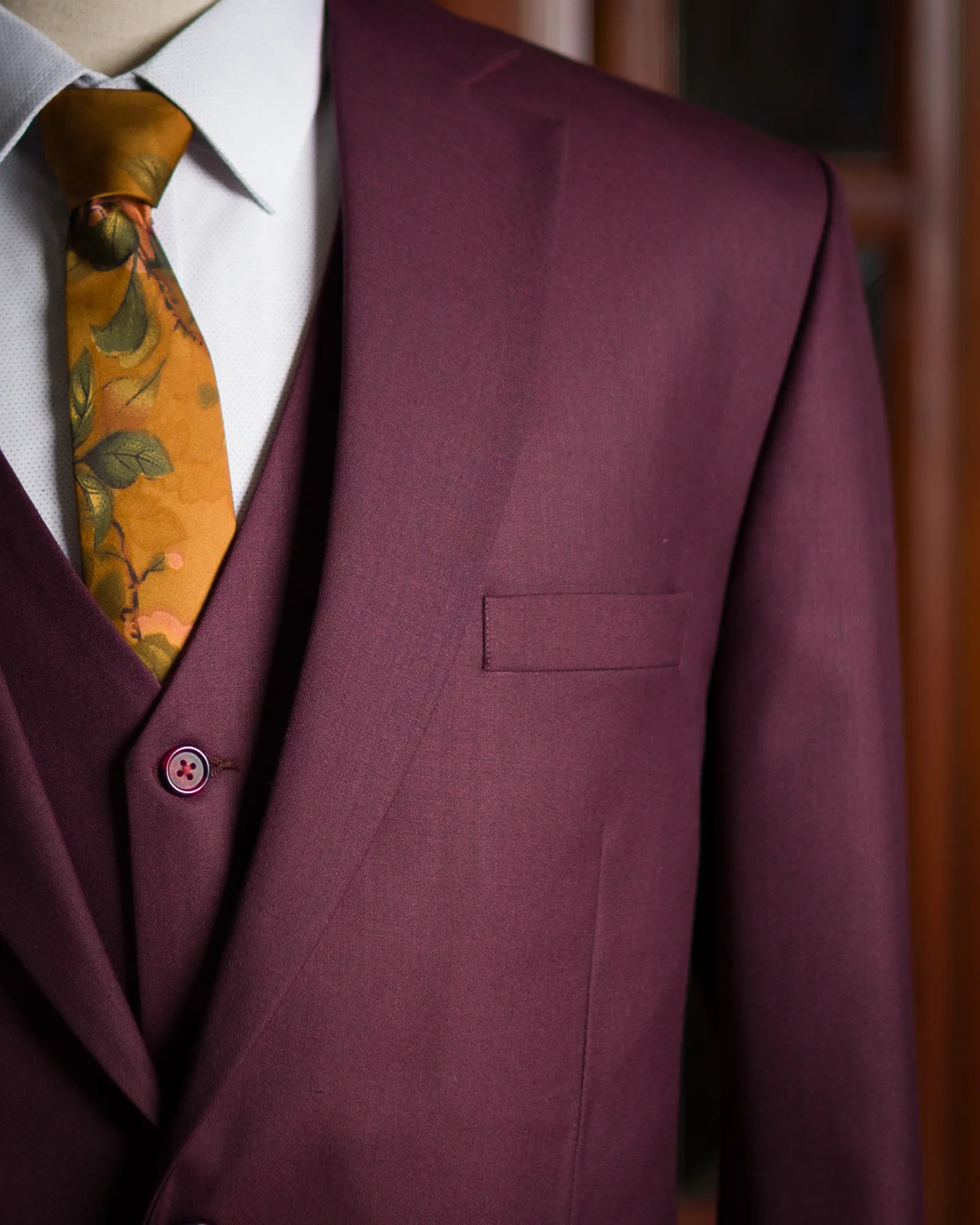
Planning wedding attire is complicated enough when you are at home. Doing it in a foreign city, in a second language, under the time pressure of a holiday, and with a wedding date that does not move — that requires a different level of preparation. The couples and wedding parties who get it right are invariably the ones who planned the tailoring component of their trip before they planned anything else.
This guide is the comprehensive resource we wish we could hand every client on arrival. It covers the full process — from when to book and how much time to allow, through to coordinating a wedding party, selecting fabrics for a tropical climate, and shipping your completed garments home. Read it before your trip. Refer back to it during.
Why Hội An Is One of the World's Great Wedding Tailoring Destinations
Hội An has been producing bespoke tailoring for centuries. The city's tailoring tradition dates to the Japanese and Chinese merchant communities of the 16th and 17th centuries, and the craft has evolved continuously since — absorbing influences from French colonial dress, Vietnamese design, and, in recent decades, a global clientele with sophisticated expectations.
What sets Hội An apart for wedding tailoring specifically is a combination of three things. First, genuine in-house production: unlike many cities where "bespoke" means ordered from an external factory, Hội An's best tailors cut, sew, and finish garments in their own studios. At Be Li, every piece is made on-site by our own team. Second, concentrated expertise: the city's tailoring culture means that skilled pattern-makers, cutters, and seamstresses have learned their craft from their families, not from a six-week training programme. Third, the economics: a wedding suit commissioned in Hội An costs a fraction of what the same quality would cost in London, Sydney, or New York — while frequently delivering a better fit.
None of this means every tailor in Hội An is excellent — that would be untrue and unhelpful. It means that the best tailors in Hội An can produce garments that compete with the best tailors anywhere in the world, at prices that make a complete wedding party wardrobe economically viable for most couples.
Planning Your Timeline: When to Arrive and When to Book
The most common mistake couples make is arriving in Hội An with two days spare and expecting to collect a finished wedding suit. This misunderstands what bespoke tailoring requires — and almost always ends in disappointment.
Minimum Time in Hội An for Wedding Tailoring
For a groom's suit, we recommend a minimum of five days in Hội An — ideally seven. This allows for a relaxed consultation on arrival, pattern-making and cutting over the following day, a first fitting on day three, alterations on days four and five, and a final collection on day six or seven. Rushing this process is possible in four days, but it leaves no room for error, and wedding garments should not be rushed.
For a full wedding party — multiple suits, plus womenswear — allow at least seven days, and ideally ten. Coordinating multiple measurements, managing different body types, and completing alterations on multiple garments simultaneously requires time and organisation on both sides.
When to Book
Contact Be Li Tailor before you arrive in Hội An — not after. Wedding commissions require preparation: sourcing specific fabrics, allocating production time, and sometimes ordering materials that are not always in stock. A minimum of two weeks' advance notice is helpful; four to six weeks is ideal for large parties or unusual fabric requirements. You can book your initial consultation online or reach us via WhatsApp at +84 905 820 116 to discuss your plans before your trip.
Timing Relative to the Wedding Date
Ideally, wedding tailoring should be completed with enough time before the wedding day for minor adjustments if needed. If you are having the wedding in Vietnam, completing the tailoring and allowing a few days of breathing room before the event is ideal. If you are returning home for the wedding, build in time for a quick check-on with a local tailor who can make minor hem or seam adjustments if your body changes slightly between commission and ceremony.
The Groom's Suit: Where to Start
The groom's suit is typically the first and most considered commission in any wedding wardrobe. It sets the formality register for everything else — the wedding party, the mother of the bride, and often the dress code guidance given to guests.
Establishing the Formality Level
Wedding suits exist on a spectrum from lounge suit to morning suit to dinner jacket. Most contemporary destination weddings in Southeast Asia fall somewhere in the smart-casual to lounge suit range — single-breasted two-piece or three-piece, in a fabric appropriate to the climate. A full morning suit (waistcoat, striped trousers, and tails) or black tie is appropriate if explicitly stated, but will feel overdressed for a tropical outdoor ceremony.
Our article on commissioning a bespoke suit covers the fundamental decisions — structure, lining, lapel width, button stance — in full detail. For a wedding suit specifically, the additional considerations are fabric weight, colour, and how the suit will photograph in outdoor light.
Colour for a Wedding Suit
Navy is the most popular choice for grooms — it is formal without being sombre, photographs beautifully in natural and artificial light, and wears again far more easily than a grey or black suit. Pale grey is elegant and works well in outdoor ceremonies in good light but can wash out in photography. Ivory or off-white suits are bold and suit tropical settings well — but require confidence to carry off and are harder to rewear. Charcoal suits are appropriate but slightly corporate for a wedding context.
The choice of colour should also be made in relation to the wedding party: groom and groomsmen need not match exactly, but they should coordinate. See our section on wedding party coordination below.
Key Decisions for the Groom's Commission
- Two-piece or three-piece (waistcoat adds formality and photography interest)
- Single or double-breasted jacket
- Notch or peak lapel — and lapel width
- Fabric weight and composition (see the fabric section below)
- Lining — full, half, or quarter; solid colour or patterned
- Trouser cut and break length
- Matching shirt or coordinated shirt commissioned separately
The Wedding Party: Coordinating Multiple People
Coordinating suits for a wedding party of six, eight, or ten people through a single tailor's fitting process is entirely achievable — it simply requires organisation. Be Li Tailor manages multiple-person wedding party commissions regularly. The process is covered in more detail in our dedicated article on tailoring a wedding party in Hội An, but the key principles are:
Stagger the Consultations
All members of the wedding party should come to the studio within the first two days of arriving in Hội An — ideally in small groups of two or three rather than all at once. A consultation and measurement for one person takes 30 to 45 minutes. Eight people arriving simultaneously creates a bottleneck that delays every subsequent step. Spread consultations across a morning and afternoon and the process runs far more smoothly.
Matching vs. Complementary
Identical suits for an entire wedding party have a clean, formal look that photographs well. Complementary suits — the same base fabric but slightly different details, or the same colour family in different shades — allow for individuality while maintaining visual coherence. The most common approach we see is a matching fabric and colour with different trouser and jacket details for different body types. We can advise on what works together during the consultation.
Managing Absent Members
Not every member of a wedding party will be in Hội An at the same time. For absent groomsmen, we can work from measurements they send in advance — height, weight, chest, waist, hips, inseam, shoulder width — and produce a garment that typically requires only minor alterations. This is not ideal but it is workable. Any absent groomsman should send accurate, recent measurements (not the ones on their gym membership from three years ago) and should plan to have the garment checked by a local tailor on receipt.
Bridal and Womenswear: What Be Li Tailor Offers
Be Li Tailor produces a full range of womenswear commissions — from resort dresses and cocktail dresses to evening gowns and formal occasion wear. For the bridal side, we can produce:
- Bridal gowns in structured or relaxed silhouettes — sheath, A-line, empire, or column
- Two-piece bridal sets (fitted top and skirt)
- Bridesmaid dresses in a coordinated colour and fabric
- Mother of the bride and groom outfits — suits, dresses, or two-piece formal wear
- Rehearsal dinner dresses and reception outfits
- Matching or coordinated accessories — sashes, belts, fabric-covered buttons
Bridal gowns require more time than suits — allow a minimum of seven days for a bridal gown, and ideally ten. The pattern-making for a structured bridal silhouette is complex, and two fittings are essential. For detailed guidance on womenswear commissions specifically, see our womenswear page.
Fabric Choices for a Wedding in a Hot Climate
Hội An averages 27–32°C for most of the year, with high humidity. Fabric choice is not merely aesthetic — it is functional. A wedding suit in the wrong fabric can be genuinely uncomfortable, and discomfort affects how you look and how you feel in photographs.
Our full article on fabric for tropical tailoring covers this topic in depth. The key summary for wedding attire:
Best Fabrics for a Wedding in a Tropical Climate
Linen is the most breathable natural fibre available — it wicks moisture effectively and dries quickly. The objection to linen is wrinkling: it creases easily and may look lived-in after a few hours of activity. For a casual outdoor ceremony where a relaxed aesthetic is appropriate, linen is excellent. For a formal ceremony where a crisp silhouette matters throughout, linen may disappoint.
Tropical wool — a lightweight worsted in a loose open weave, typically 120s to 150s super fine — is the professional solution. It maintains structure, does not wrinkle significantly, and breathes far better than a standard suit weight. A tropical wool in 180–200 grams per metre will feel dramatically different from a standard 280–300g suit wool in the same temperature. For most grooms, tropical wool in navy or grey is the practical ideal.
Linen-cotton blends offer a compromise — the breathability of linen with more structure than pure linen provides. A 55/45 linen-cotton is easier to press and holds a crease longer than pure linen. It is an excellent choice for more casual wedding aesthetics.
Cotton — specifically a fine cotton in a high thread count — is appropriate for shirts and lighter garments but less so for suit jackets, where it lacks the natural resilience of wool.
What to Do If Something Isn't Right
Even excellent tailors occasionally produce a garment that requires adjustment. It is important to understand what is normal and what is a problem.
After a first fitting, minor adjustments — a seam taken in or let out, a hem raised or lowered, a shoulder seam repositioned — are expected and are part of the process. This is not a failure; it is how bespoke tailoring works. The pattern is made to your measurements, the first fitting reveals how it translates to your body in motion, and adjustments correct the translation.
What is not normal: a garment that is fundamentally the wrong size (too large across the shoulders, for example — this requires re-cutting, not adjustment), a fabric that is clearly different from what was agreed, or construction that is visibly poor (uneven stitching, puckering that cannot be pressed out). These should be raised at the fitting and resolved before the garment is completed, not after collection.
At Be Li, we ask clients to try garments on thoroughly at each fitting — not just stand and look in the mirror, but sit, move, raise their arms. The fitting should replicate how the garment will actually be worn. Issues identified at the fitting stage are always easier and faster to address than issues discovered at collection.
If you collect a garment and discover a fit issue at home, contact us. We keep all patterns and measurements on file, and for clients returning to Vietnam or passing through, we can make adjustments on a subsequent visit. For clients who cannot return, we can advise on the alterations required and what to ask a local tailor to do.
International Shipping Your Wedding Attire
The logistics of getting a wedding suit — or a wedding dress, or eight bridesmaid dresses — from Hội An to your home country deserve careful consideration.
Carrying Garments Home
The safest way to transport a suit is to carry it as hand luggage in a garment bag. Most airlines allow a garment bag as carry-on, and a folded suit in a proper garment bag will arrive in better condition than one packed flat in a suitcase. Hang the suit immediately on arrival and any travel creases will usually drop within 24 hours.
Wedding dresses and structured gowns are more complex. If the gown can be packed in tissue paper and placed in a rigid box, it may be checked as oversized luggage — though this involves some risk. For very structured or heavily beaded gowns, international shipping via a tracked courier service is often more reliable than checking the box as luggage.
International Shipping
Be Li Tailor ships internationally. We use tracked express courier services (DHL, FedEx) and pack garments carefully in breathable garment bags and rigid boxes where required. Shipping costs and timelines vary by destination — contact us at +84 905 820 116 or via our contact page for a quote.
For wedding dresses shipped internationally, a duty and import tax may apply on arrival in some countries — particularly Australia, the UK, and the EU. The tax is typically calculated on the declared value of the garment. Factor this into your planning if relevant. We declare garments at their accurate value on all shipping documentation.
Timing Shipping Relative to the Wedding
If you are shipping your wedding attire rather than carrying it, allow a minimum of two weeks from collection in Hội An to delivery at your destination. International express shipping from Vietnam typically takes five to ten business days, but customs processing adds time, particularly for garments entering Australia, the EU, or the US. We always recommend shipping with enough buffer that, in the worst case, a local tailor has time to make any minor adjustments before the wedding day.
Frequently Asked Questions
How far in advance should I book wedding tailoring in Hội An?
Contact us at minimum two to three weeks before your arrival, and ideally four to six weeks before. This allows time to source specific fabrics, plan the production schedule, and ensure availability — particularly if your party is large or your fabric requirements are specific. A consultation can happen online or via WhatsApp before you arrive.
Can a wedding party of 10 be tailored in one week?
Yes — it is achievable with good organisation. All members should be measured within the first two days, fittings should be staggered across days three and four, and alterations completed by day six or seven. The key is staggering appointments rather than bringing everyone simultaneously, and communicating the schedule clearly to all party members in advance.
How much does a bespoke wedding suit cost in Hội An?
At Be Li Tailor, a bespoke wedding suit — jacket and trousers in a quality tropical wool or linen-cotton blend — typically starts from around USD 180–250 for a two-piece. A three-piece (with waistcoat) is proportionally more. Matching shirts, accessories, and fabric upgrades adjust the price. This compares to USD 800–3,000+ for comparable quality in Western tailoring markets. Visit our menswear page for current pricing.
Can I get a wedding dress made in Hội An?
Yes. Be Li Tailor makes bridal gowns, bridesmaid dresses, and all womenswear occasion wear. Bridal gowns require a minimum of seven to ten days and at least two fittings. Bring reference images and as much detail as possible about the silhouette, fabric, and detail you want. See our womenswear page for more information.
What happens if my wedding garment doesn't fit when I get home?
Contact us immediately. We keep every client's measurements and patterns on file. If the fit issue is a standard alteration — hem, seam, waistband — we can advise exactly what to ask a local tailor to adjust. If it is something more significant, we will find a resolution. Clients who return to Vietnam are welcome to bring garments back for adjustment. We stand behind what we make.
Visit the Studio
Be Li Tailor is at 635 Hai Bà Trưng, Hội An Ancient Town, open daily from 8am to 9pm. Whether you're arriving next week or planning ahead, book your appointment online or reach us on WhatsApp at +84 905 820 116. We keep every client's measurements on file — if you've visited before, your next commission starts where the last one ended.