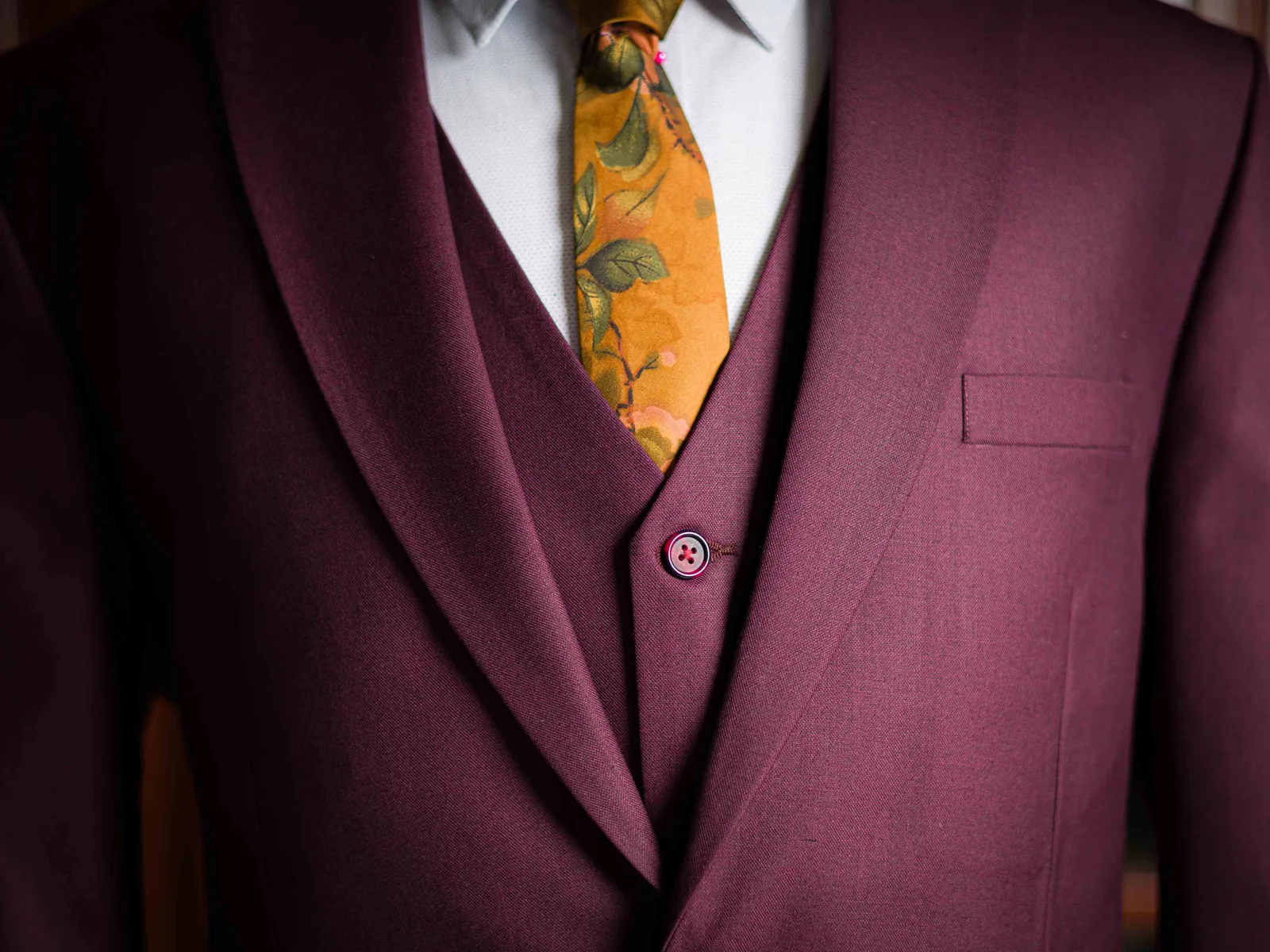
The question of two-piece vs three-piece suit is rarely as simple as it appears. Most clients frame it as a question about the waistcoat — do I want one or not? — but that undersells what the addition of a waistcoat actually does to a commission. The choice between two and three pieces affects formality, versatility, body presentation, and — in tropical conditions — practical wearability. Here is how to think through it.
For the broader context of commissioning a suit from scratch, our complete guide to bespoke suits covers the full process from fabric selection to finished garment.
The Two-Piece: Versatile, Modern, Essential
A two-piece suit — jacket and trousers — is the standard of contemporary suiting. It is the form that most people wear most often, that works across the widest range of occasions and dress codes, and that adapts most readily to different combinations within a wardrobe. The jacket can be worn without the trousers as a blazer; the trousers can be worn without the jacket as part of an entirely different outfit. This versatility is one of the two-piece's clearest advantages as an investment.
In tropical conditions, the two-piece is also the more practical choice for sustained all-day wear. The absence of a waistcoat means one fewer layer between the body and the air, which is meaningful at 32°C. A lightweight two-piece wool or linen suit is the most wearable formal option in Hội An's climate for occasions that span both indoor and outdoor settings.
The two-piece is also the more forgiving form for clients who are uncertain about their suit-wearing frequency. A first bespoke suit is almost always a two-piece, because it delivers maximum utility per investment. Once a client has established how often they actually wear suits and in what contexts, the three-piece decision becomes much more specific and informed.
The Three-Piece: Authority, Tradition, Occasion
The three-piece suit — jacket, waistcoat (or gilet), and trousers — carries a different weight entirely. It is a more formal configuration, more deliberate in its presentation, and associated in the contemporary wardrobe with specific occasions rather than general use. Wearing a three-piece suit signals intentionality: you have made a considered choice to present yourself with a certain formality and completeness.
Historically, the waistcoat had a practical function — it provided warmth between the shirt and the heavy cloth jacket, and it gave the wearer somewhere to keep a pocket watch and small items when the jacket was removed. In a climate-controlled contemporary setting, both functions are largely obsolete. The waistcoat now serves almost entirely as a sartorial statement: it adds a layer of texture and visual interest to the suit, frames the shirt and tie, and — when the jacket is removed — provides a complete presentation rather than the more casual appearance of shirtsleeves.
Three-piece suits are particularly associated with formal occasions: weddings, significant professional events, formal dinners. They are also the configuration of choice for certain professional contexts — legal, financial, political — where the visual weight of the three-piece communicates a particular kind of authority and seriousness. For wedding commissions specifically, the three-piece is a popular choice for both grooms and groomsmen who want to look thoroughly considered and complete.
When the Waistcoat Changes the Whole Equation
The waistcoat does something specific to the visual presentation of a suit that is worth understanding. By covering the waistband of the trousers and the shirt below the jacket's button stance, it creates a continuous vertical line from the chest down — the suit reads as a single integrated garment rather than a jacket worn over trousers. This is particularly effective in pattern: a three-piece suit in a fine stripe or subtle check is more visually unified and impressive than the equivalent two-piece, because the pattern carries through without interruption.
The waistcoat also has a specific effect on perceived body shape. The narrow, form-fitting cut of a well-made waistcoat emphasises the waist and creates a strong vertical line through the torso. On a client with a naturally defined waist and a reasonably flat stomach, this is flattering. On a client with a rounder midsection, the waistcoat can draw attention to that area rather than through it. This is not a reason to avoid the three-piece for any particular body type — a waistcoat cut correctly for the individual will always look better than one cut generically — but it is a conversation worth having with your tailor.
In tropical conditions, the waistcoat adds a layer of warmth. This is largely irrelevant when the jacket is on, as the jacket itself is the primary insulator. But when the jacket is removed — at dinner, at a reception, in any less formal moment — the waistcoat allows the wearer to maintain a polished appearance while the jacket is off. This is one of the practical arguments in favour of the three-piece: the option of removing the jacket without immediately transitioning to shirtsleeves.
Matching vs. Contrast Waistcoat
A matching waistcoat is cut from the same cloth as the jacket and trousers, forming a unified three-piece ensemble. This is the more traditional and formally correct approach, and it is the safer choice for a first three-piece commission.
A contrast waistcoat — cut from a different fabric, typically in a complementary colour, a complementary pattern such as a fine stripe or small check against a plain suit, or a dramatically different material such as wool flannel against a linen suit — is a more adventurous and creative choice. Contrast waistcoats can add personality and visual interest in ways that a matching ensemble cannot, and they also offer flexibility: the suit can be worn with or without the waistcoat in matching two-piece mode, and the waistcoat itself can potentially be worn with other garments as an independent piece.
The risk with contrast waistcoats is misjudging the relationship between the two fabrics. A contrast waistcoat that clashes or competes with the suit fabric rather than complementing it undermines both garments. When commissioning a contrast waistcoat, bring the suit cloth to the tailor and work through the options together — the combination should look considered, not accidental.
Occasion Guide: Which Suit for Which Event
As a practical guide to applying this choice to specific situations:
- Business meetings and office wear: Two-piece is standard and appropriate. A three-piece in a conservative cloth (navy, charcoal, dark grey) works in formal professional contexts.
- Weddings (as a guest): Two-piece is entirely appropriate. A three-piece in a lighter colour or a distinctive cloth elevates the occasion appropriately without upstaging the wedding party.
- Weddings (as groom or groomsman): Either option works. The three-piece is increasingly popular for its completeness and visual impact in photographs. In a tropical outdoor wedding, the two-piece may be more comfortable for prolonged outdoor exposure.
- Formal dinners and evening events: A three-piece in a dark cloth — deep navy, charcoal, midnight blue — is an excellent choice for formal evening occasions below black-tie level. It carries appropriate weight without requiring a tuxedo.
- Travel: Two-piece is significantly more practical. The waistcoat adds to packing volume and is an additional layer to manage in transit.
If you are booking an appointment to discuss a suit commission, bringing some context about the primary occasion or occasions helps us advise on the two-piece vs three-piece question alongside fabric and style choices.
Frequently Asked Questions
Is a three-piece suit more formal than a two-piece?
Generally, yes — a three-piece suit reads as more formal than a two-piece in the same fabric. The additional layer of the waistcoat adds visual weight and completeness, and the tradition of three-piece suiting is associated with formal professional and ceremonial contexts. That said, the fabric and colour of the suit matter significantly: a three-piece in a casual linen or a light-hearted pattern may read as less formal than a two-piece in a crisp dark worsted. Formality is determined by the whole ensemble rather than the piece count alone.
Can you wear a three-piece suit without the jacket?
Yes — and this is one of the practical advantages of a three-piece. Wearing the waistcoat and trousers without the jacket is an entirely accepted and often elegant option, particularly in warmer conditions or at the later stages of a formal event. The waistcoat provides a complete, polished appearance that shirtsleeves do not. In a tropical setting, being able to remove the jacket while maintaining a formal presentation is a genuine practical benefit.
What occasions call for a waistcoat?
Waistcoats are particularly appropriate for weddings (especially if you are in the wedding party), formal professional settings such as legal or financial environments, formal dinners, and any occasion where the dress code is "lounge suit" or above and you want to present a complete, deliberate appearance. They are also increasingly popular for smart-casual occasions where a well-dressed individual wants to distinguish themselves from the crowd without crossing into formal territory — a fine linen or cotton waistcoat worn with open-collar shirt and tailored trousers is an accomplished casual-smart combination.
Visit the Studio
Be Li Tailor is at 635 Hai Bà Trưng, Hội An Ancient Town, open daily from 8am to 9pm. Whether you're arriving next week or planning ahead, book your appointment online or reach us on WhatsApp at +84 905 820 116. We keep every client's measurements on file — if you've visited before, your next commission starts where the last one ended.