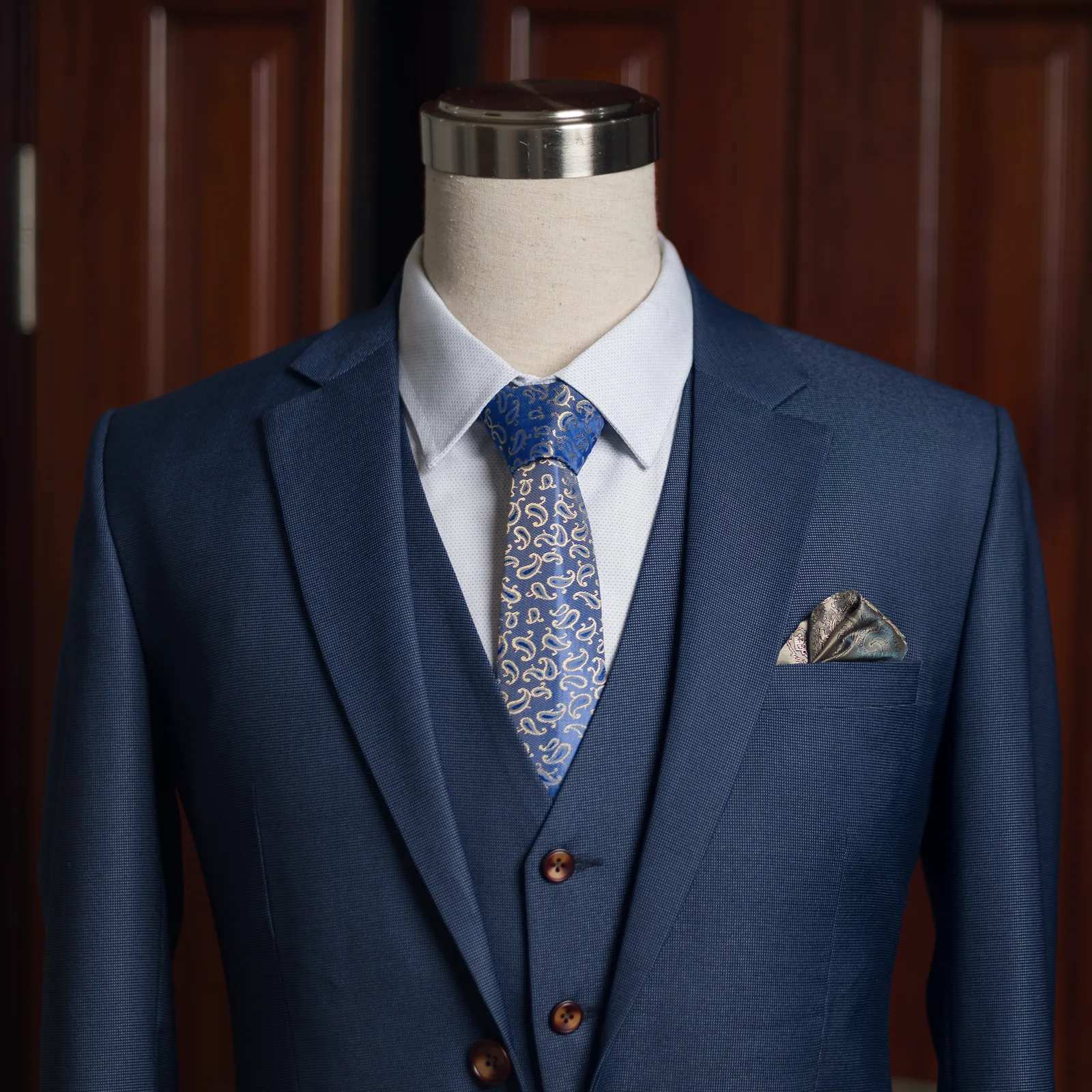
Your first tailor fitting in Hội An is, for most people, an experience quite unlike anything they've encountered in clothing before. You're not browsing a rack or selecting a size. You're describing what you need, being measured comprehensively, and making decisions about details — fabric, cut, lining, buttons — that will define a garment built specifically around your body. For people who haven't been through this process before, it can feel unfamiliar. This guide explains exactly what happens, step by step.
The first appointment is typically the longest. Allow 45 minutes to an hour for a suit; 20 to 30 minutes for a shirt or simpler garment. Subsequent fittings are shorter — usually 20 minutes or so — because the consultation work has already been done.
Before You Walk In: What to Prepare
You don't need to arrive with a complete brief or a specific vision. A good tailor can work from very little initial direction and ask the questions that help you land on what you actually want. But a few things will make the consultation smoother.
Bring reference images if you have them. A photo on your phone of a jacket cut you admire, a collar style you've seen and liked, or a garment that fits well in photographs tells the tailor more than a verbal description of "something classic but modern." You don't need a full Pinterest board — two or three clear images is plenty. Reference photos of things you don't want are equally useful.
Know the occasion. Even a general sense of where and how you'll wear the garment is helpful. A suit for a business context in a warm-weather city has different requirements than a suit for a beach wedding. A shirt for daily office wear will be cut differently from one for formal evenings. You don't need to have thought through every detail — that's what the consultation is for — but knowing the basic purpose helps the tailor make the right recommendations.
Wear appropriate clothing. You should dress at the fitting appointment the way you expect to dress underneath the finished garment. If you're commissioning a suit jacket, wear a dress shirt. If you're commissioning a formal dress, wear the undergarments and shoes you plan to wear with it. Heel height, in particular, affects trouser break and hem length — these cannot be correctly assessed in trainers if you plan to wear the dress with heels.
The Consultation: Fabric, Style, and Occasion
The consultation begins before any measuring takes place. A good tailor wants to understand what you need, not just what you think you want — and often those are slightly different things.
Expect questions about how you typically wear similar garments, what your body temperature tendencies are (some people run warm; they need different fabric choices than people who run cold), and what your lifestyle demands of the garment in terms of travel, washing, and frequency of use. A suit you'll wear twice a year for formal occasions can be made differently from one you'll wear every fortnight to client meetings.
Fabric is discussed and decided at this stage. You'll be shown swatches — typically cards from fabric mills, each showing a sample of the cloth with the weight, fibre content, and weave noted. A skilled tailor will guide this conversation, showing you options appropriate to the occasion and the climate, explaining the differences in practical terms. Don't feel pressured to decide immediately on something you're uncertain about; the right fabric choice is more important than a quick one.
For bespoke menswear, a suit consultation will also address the cut and silhouette: the suppression of the waist, the width of the lapel, the number of buttons, the collar shape, whether there are side vents, a centre vent, or no vent. For womenswear, the conversation covers silhouette, neckline, sleeve shape, and the degree of structure in the garment.
The Measurements: What We Take and Why
Measurements in bespoke tailoring are considerably more detailed than those you'd get in a made-to-measure or alterations context. For a jacket, the measurer needs not just your chest circumference but the shape of your chest — how the tape sits across the fullest point, where that point falls relative to the shoulders, and how the measurement relates to your overall proportions.
For a suit, a full set of measurements typically includes:
- Chest (at the fullest point, and slightly above and below)
- Waist (at the natural waist and at the point where the jacket button will fall)
- Seat (hips and seat circumference)
- Shoulder width (point to point across the back)
- Sleeve length (from shoulder point to wrist, with arm slightly bent)
- Back length (from the base of the collar to the jacket hem)
- Trouser inseam and outseam
- Thigh circumference and knee width
- Trouser rise (front and back)
- Neck circumference (if a shirt is included)
In addition to these numbers, an experienced tailor observes and notes things that numbers can't fully capture: whether one shoulder sits lower than the other (very common), whether the back has a pronounced curvature, whether the posture tends to push the collar up at the neck. These observations inform how the pattern is adjusted from the standard block.
Measurements are kept on file — something we discuss in our complete guide to tailoring in Hội An. If you return for a future commission, we can often skip the full measurement process or simply confirm that nothing significant has changed.
Choosing Your Details: Lapels, Linings, Buttons
After measurements, the detail choices for the garment are confirmed. For a suit jacket, this includes:
- Lapel style: Notch lapel (standard, versatile), peak lapel (more formal, more assertive), or shawl lapel (eveningwear). Width — narrow, medium, or wide — is also decided here.
- Button configuration: Single-breasted one-button, two-button, or three-button; or double-breasted. Most clients choose single-breasted two-button for versatility.
- Lining: Fully lined, half-lined, or unlined (the latter is better in high heat). Lining fabric is also chosen — a plain ivory or grey viscose is standard; a patterned or coloured lining is a personalisation choice.
- Buttons: Horn, corozo (vegetable ivory), or covered fabric buttons. Natural materials are preferred over plastic wherever possible.
- Pockets: Flap pockets, jetted pockets, or patch pockets (more casual). A breast pocket and ticket pocket are optional additions.
- Vents: No vent, centre vent, or side vents. Side vents are generally preferable for fit and movement.
For a shirt, the detail conversation is about collar style (spread, point, button-down, mandarin), cuff style (single/barrel vs. double/French), placket width, and whether you want a pocket. For a dress or women's tailored piece, the details are specific to the design — the conversation is collaborative and adapts to the garment.
What Happens Between Fittings
After the consultation ends, your fabric is cut and assembly begins. For a suit, the first stage is cutting the pattern pieces from the fabric — jacket fronts, backs, sleeves, collars, and trouser pieces — and assembling them with temporary basting stitches. The chest canvas (if present) is tacked in. The lining is loosely inserted. This produces a garment that looks like a suit but isn't finished — seams are accessible, hems are loose, and everything can be adjusted without difficulty.
This is the stage at which the first fitting takes place, typically 24 to 36 hours after the initial consultation. The purpose is to confirm fit before the garment is finished — not to inspect the finished product.
The Second Fitting: Adjustments and Sign-Off
At the second fitting, the adjustments from the first have been made, and the garment is close to or at completion. This is where you examine the finished or near-finished work: the pressed seams, the set of the collar, the hang of the jacket in motion. Walk across the room and turn around. Sit down. Raise your arms. The suit should accommodate all of this without pulling or bunching.
If minor adjustments are still needed — a sleeve shortened by a centimetre, a trouser hem raised — these are made before you leave. The second fitting sign-off means the garment is approved and completed. Collection is typically the same day or the following morning.
For guidance on the timeline for each garment type, see our article on how long tailoring takes in Hội An. When you're ready to begin, book your appointment here.
Frequently Asked Questions
What should I wear to a tailoring appointment?
Wear the undergarments and shoes you plan to wear with the finished garment. For a suit appointment, wear a dress shirt and dress shoes — the fit of a jacket depends partly on what you're wearing underneath, and trouser hem length depends on heel height. For a dress, wear the foundation garments and footwear you'll actually use. Avoid very thick or very unusual items of clothing that you wouldn't normally wear.
How long does a fitting take?
The initial consultation and measurement appointment for a suit takes 45 minutes to an hour. Subsequent fittings are typically 20 to 30 minutes. For simpler garments — shirts, trousers, blouses — the initial consultation takes 20 to 30 minutes. The time is well spent: a thorough consultation is what separates a garment that truly fits from one that merely closes.
Do I need to know what I want before arriving?
Not at all. You need to know the general purpose of the garment — its occasion and context — and ideally a sense of whether you want something classic or more distinctive. Beyond that, the consultation is designed to help you arrive at the right choices. A good tailor will ask the right questions and show you options that make the decision concrete rather than abstract.
Can I bring reference photos?
Absolutely, and it's encouraged. Photos of garments you like — even from Instagram, Pinterest, or Google Images — are extremely useful. They communicate silhouette, detail preferences, and general aesthetic far more precisely than verbal descriptions. Photos of things you don't want are equally helpful. You don't need to bring a curated presentation — two or three images on your phone is plenty.
Visit the Studio
Be Li Tailor is at 635 Hai Bà Trưng, Hội An Ancient Town, open daily from 8am to 9pm. Whether you're arriving next week or planning ahead, book your appointment online or reach us on WhatsApp at +84 905 820 116. We keep every client's measurements on file — if you've visited before, your next commission starts where the last one ended.