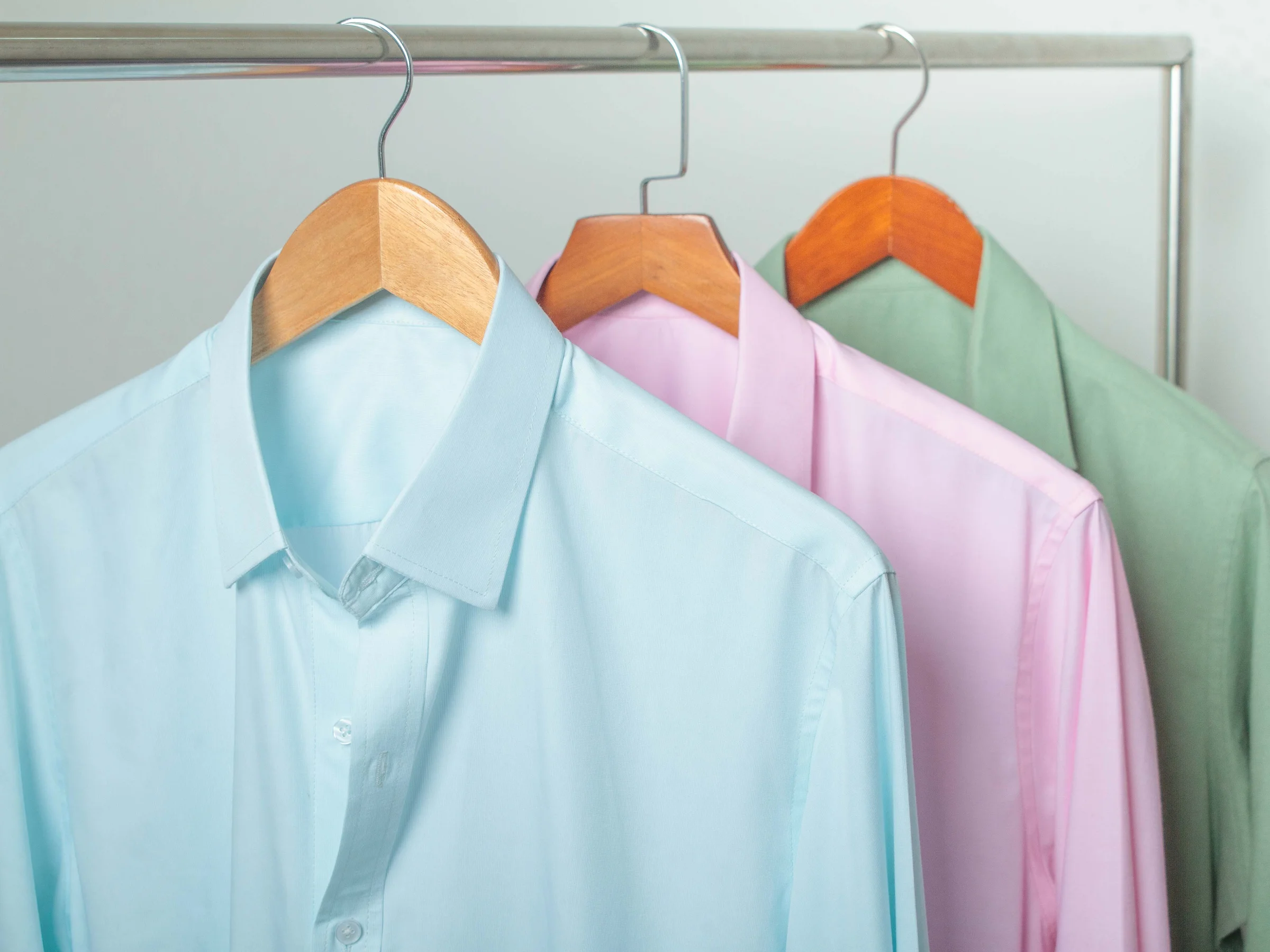
A bespoke shirt is not simply a shirt that fits. It is a shirt that has been designed from the first measurement outward — where every proportion, from the collar band height to the placket width, has been chosen to work with your specific neck, shoulders, and personal style. Most men who have worn only off-the-rack shirts underestimate how transformative this difference is until they put one on.
At Be Li Tailor, shirts are among the most requested commissions we receive. They travel well, wear frequently, and — done properly — outlast suits. This guide walks through the decisions that define a bespoke shirt: collar style, cuff construction, fabric selection, and the finishing details that distinguish a shirt made for you from one made for anyone.
Why a Bespoke Shirt Fits Differently
The fundamental problem with a ready-to-wear shirt is that it is designed around a standardised torso. Manufacturers assume a proportional relationship between neck size, chest, shoulders, and sleeve length that most bodies simply do not conform to. A man with a 42cm neck might have a 100cm chest or a 90cm chest — the same collar size, radically different body.
A bespoke shirt starts with around fourteen separate measurements: collar circumference and band height, chest and waist, shoulder width and slope, bicep and forearm, wrist circumference, shirt length, and sleeve length from the shoulder point. Each measurement is taken twice and cross-referenced. What results is a pattern that belongs to one body, not to a demographic average.
The fit difference is most visible in four places. The collar sits flat against the neck without gapping or choking. The shoulder seam sits exactly at the edge of the shoulder, not rolled forward or pulled back. The chest has ease — breathing room — without billowing. And the sleeve falls at precisely the right point on the wrist, so exactly 1.5cm of cuff shows below a jacket sleeve. None of this is accidental. Each is the result of a measurement taken and a pattern adjusted accordingly.
If you are new to bespoke, we recommend starting with one or two shirts before commissioning a full wardrobe. See how the fit translates to your body, and refine from there. The full range of our menswear commissions includes shirts as standalone pieces or as part of a complete suit commission.
Collar Styles: Spread, Point, Button-Down and Beyond
The collar is the most visible element of any shirt — it frames the face and determines which ties work, how the jacket collar interacts with the shirt, and how formal or casual the overall impression becomes. Understanding the options is the first step to choosing well.
The Classic Point Collar
A point collar has collar points angled closer together, typically between 7cm and 9cm apart at the tips. It is the most traditional collar shape, works well with a tie or without, and suits narrower jaw lines and longer faces. It pairs naturally with a four-in-hand or half-Windsor knot. In a narrow spread — points very close together — it reads as distinctly European and formal.
The Spread Collar
A spread collar has wider-angled points, with the gap between the collar points ranging from 10cm to 14cm. The wider the spread, the more open and contemporary the look. A medium spread (10–12cm apart) is the most versatile collar in any wardrobe — it works tieless as well as it does with a full Windsor knot, and suits most face shapes. A wide spread — the cutaway collar — is best worn with a tie, as the wide gap reads as unfinished when open.
The Button-Down Collar
The button-down collar, with its small buttons fastening the collar points to the shirt front, is American in origin and inherently casual. It does not require a tie and softens any combination. Worn with a blazer and no tie, it reads as relaxed confidence. Worn with a tie to a formal occasion, it can read as sloppy. Know the context before you choose it.
The Mandarin (Band) Collar
The mandarin collar forgoes the fold-down entirely, leaving just the collar band standing upright around the neck. It is clean, architectural, and slightly formal — particularly suited to evening wear where a conventional collar would feel overdressed. It cannot accommodate a necktie in the traditional sense and is typically chosen for its visual statement.
Collar Band Height
Beyond shape, the collar band height — typically between 3.5cm and 4.5cm — is one of the most overlooked specifications in shirt design. A taller band adds formality and support to the collar shape. A lower band is more relaxed and comfortable in hot weather. For shirts worn primarily in the tropics without a jacket, a band height of 3.5cm or below is usually more comfortable.
Cuff Styles: Single, Double, and the French Cuff
The cuff is the other visible element — it appears below the jacket sleeve, frames the wrist, and communicates formality. There are three main constructions to understand.
The Single (Barrel) Cuff
The single cuff, or barrel cuff, fastens with one or two buttons and folds back on itself once. It is the standard cuff for business and casual shirts alike — easy to put on, appropriate in most contexts, and available in a range of widths. At Be Li, a standard single cuff is typically 6.5cm to 7cm in depth. A deeper single cuff (7.5cm) reads more formal; a shallower one (5.5cm) more casual. The buttons can be fabric-covered, mother-of-pearl, or horn — each changes the feel without changing the silhouette.
The Double (French) Cuff
The double cuff, also called the French cuff, is twice the depth of a single cuff and folds back on itself, fastening with cufflinks through four aligned buttonholes. It is unambiguously formal, and the cufflink — in gold, silver, enamel, or stone — becomes part of the design. A double cuff on a casual shirt is an affectation; on a dress shirt worn with a suit, it elevates the entire ensemble. The standard depth when folded is 6.5cm, though we can adjust this to proportion with your wrist and sleeve length.
The Cocktail Cuff
The cocktail cuff is a hybrid — the width of a double cuff but fastening with a single large button rather than cufflinks. It is less common but very elegant, offering the visual weight of a French cuff without the need for cufflinks. For men who want dressier shirts but don't want to carry cufflinks, this is an underused option worth considering.
Fabric: The Choices That Matter Most
Fabric determines how a shirt looks, feels, breathes, and ages. The three variables are fibre content, thread count, and weave structure. All three interact.
Fibre Content
Cotton is the foundation of most dress shirts, and for good reason: it breathes, absorbs moisture, holds dye well, and improves with washing. Within cotton, the longer the fibre (staple), the finer and more durable the yarn. Egyptian Giza cotton and Pima cotton produce finer, shinier, longer-lasting fabrics than standard cotton. For Hội An's climate, a 100% cotton shirt is almost always the right choice.
Linen shirts are cooler but wrinkle easily and have a more textured, informal character. They are ideal for casual commissions and summer resort wear — we explore this comparison further in our article on linen vs cotton vs linen-cotton blends. A linen-cotton blend (typically 55% linen, 45% cotton) offers a middle ground: more structure than pure linen, more breathability than pure cotton.
Thread Count and Weave
Thread count in shirting is expressed as the yarn count — typically ranging from 80s to 200s. A higher count means finer yarn, finer weave, and a softer, more lustrous hand. An 80s cotton is durable and textured — good for casual shirts. A 140s or 160s cotton is finer, drapes more elegantly, and is more appropriate for dress shirts and business wear. Above 180s, the fabric becomes delicate and requires more careful laundering.
The weave itself also matters. A plain weave (poplin) is crisp and smooth — the default for dress shirts. A twill weave produces a diagonal texture — slightly more casual, with a softer drape. A pinpoint Oxford weave is medium-weight and durable, suitable for casual and business-casual shirts. A Royal Oxford weave has a characteristic two-tone shimmer and is a step up in formality.
Colour and Pattern
White remains the most versatile shirt for formal contexts. A pale blue — in 100s or 120s cotton — is almost as versatile and more flattering against most skin tones. A fine stripe — particularly a Bengal stripe in blue and white — sits at the boundary between formal and business-casual and is a good choice for men who want to wear shirts without a jacket. For casual shirts, a checked fabric in linen or Oxford cotton allows more character without sacrificing wearability.
Details That Define a Shirt: Placket, Pocket, Monogram
The placket — the strip of fabric running down the shirt front through which the buttons pass — is more nuanced than it appears. A traditional placket is a separate panel sewn onto the shirt front. A French placket (also called a fly front) is folded and stitched so that the buttons are hidden, creating a clean, uninterrupted front face. A French placket is slightly more formal and reads beautifully with a French cuff. A standard placket is more casual and more common.
The placket width typically ranges from 2.5cm to 3.5cm. A narrower placket looks more refined; a wider one more traditional. The button spacing is fixed at the time of pattern-making — seven buttons is standard for a dress shirt, though shirts worn tucked in may have eight to prevent gapping when seated.
A chest pocket is optional and affects formality. A dress shirt should not have a pocket; a casual shirt may. A pocket adds utility but reduces the clean lines of the shirt front. If you intend to wear the shirt under a suit jacket exclusively, omit the pocket.
A monogram — initials embroidered in thread at the cuff, collar, or lower placket — is a legitimate and underused personalisation. At Be Li, we can embroider in a range of typefaces, from classical serif to clean block. Three letters (first, middle, last) is the traditional form; two letters is increasingly common. The thread colour should match or subtly contrast the shirt — white on white is elegant; contrast colour should be chosen carefully.
For a comprehensive overview of the full bespoke process — from first consultation through to collection — our bespoke suit complete guide covers the same approach applied to suits, much of which is directly relevant to shirts. When you're ready to start, book your appointment online and we will walk through every option together.
Frequently Asked Questions
What collar style suits a round face?
A spread collar with a wider angle tends to elongate a round face by drawing the eye outward rather than downward. A tall, narrow point collar can emphasise roundness. A medium spread (10–12cm between points) is the most flattering option for most round or broader face shapes, particularly when worn with a tie.
What's the difference between a single and double cuff?
A single (barrel) cuff fastens with buttons and is standard for most shirts — both casual and business. A double (French) cuff is twice as deep, folds back on itself, and fastens with cufflinks. The double cuff is more formal and more visually striking; it is the appropriate choice for black tie or high-formality business contexts. Single cuffs are correct for everything else.
How much does a bespoke shirt cost in Hội An?
At Be Li Tailor, bespoke shirts typically start from around USD 45–65 depending on fabric selection. Premium fabrics — fine Egyptian cotton, silk-cotton blends, higher thread counts — will adjust the price accordingly. This represents exceptional value compared to bespoke shirting in Western markets, where comparable quality begins at USD 200–400. Visit our menswear page for current pricing guidance.
Visit the Studio
Be Li Tailor is at 635 Hai Bà Trưng, Hội An Ancient Town, open daily from 8am to 9pm. Whether you're arriving next week or planning ahead, book your appointment online or reach us on WhatsApp at +84 905 820 116. We keep every client's measurements on file — if you've visited before, your next commission starts where the last one ended.