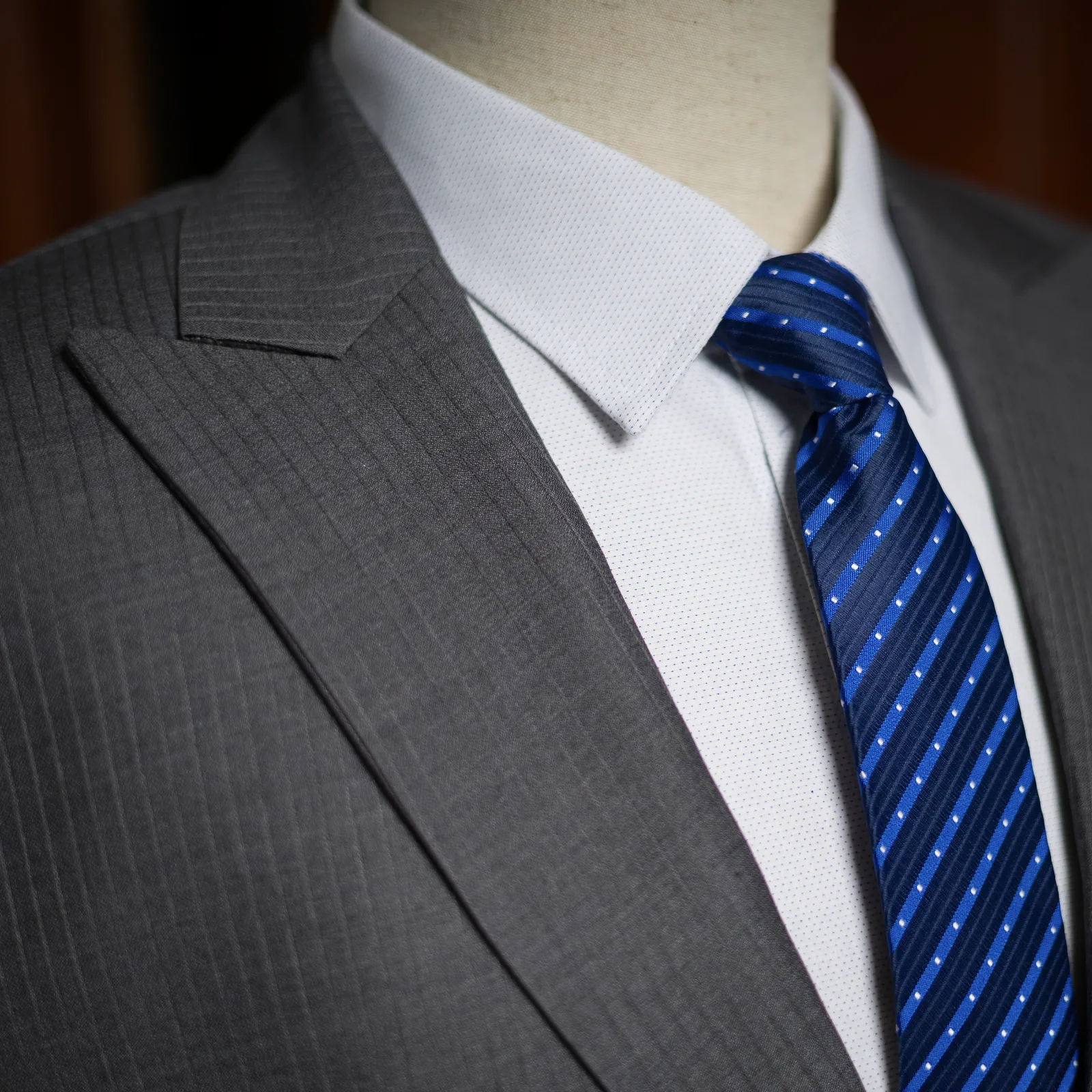
The business casual vs business formal tailoring question comes up constantly among clients building or refreshing a professional wardrobe. The distinction matters — not because the terminology is sacred, but because the garments you need for each context are genuinely different in construction, fabric weight, and visual register. Getting that wrong is expensive in both money and reputation.
The good news is that a well-planned visit to a Hội An tailor allows you to commission pieces that serve both codes — often from the same suit in different ways, with the right supporting pieces. This guide explains the distinctions, what you actually need for each, and how to build a versatile work wardrobe in a single commission visit.
How These Dress Codes Have Changed
Both codes have shifted significantly over the past decade. Business formal — once synonymous with a full suit, white shirt, and tie across all white-collar industries — now means different things in different sectors. In finance, law, and consulting, a suit with a tie remains expected in client-facing situations. In technology and media, "formal" might mean a blazer and dark trousers. The specific norms of your industry and office culture matter more than any general definition.
Business casual has expanded in the other direction. What was once a modest relaxation of the formal suit (jacket optional on Fridays) is now the default dress code across large swathes of professional environments. But it still has a floor — business casual is not casual, and many people misread it badly, arriving in clothes that would be appropriate for a weekend brunch but are visibly underdressed in a professional context.
The practical upshot: you probably need garments that can credibly operate across both codes, and the most versatile pieces — those that work in both directions — are worth prioritising in any commission.
Business Formal: What You Actually Need
Business formal at its most clearly defined means a two-piece or three-piece suit in a professional colour and weight, with a dress shirt (collared, long-sleeved) and in most traditional industries, a tie. The suit is the anchor.
The suit
A navy, mid-grey, or charcoal suit in a plain weave wool at 260–300g/m² covers the vast majority of business formal contexts. These colours read as professional across virtually all industries and cultures. Pattern — a subtle chalk stripe, a fine Glen plaid, a herringbone — is acceptable and often preferred in traditional industries, but plain cloth is always safe.
For professional environments that require regular client meetings, presentations, or travel, two suits in different colours (navy and charcoal, or navy and mid-grey) provide the appearance of a more varied wardrobe than the pieces justify. This is one of the practical advantages of bespoke commissioning: both suits are fitted correctly from the outset, which means they both work from day one.
The dress shirt
A white or pale blue dress shirt in a plain weave poplin or twill cotton is the foundation of business formal dressing. The collar matters more than most people realise — a collar that fits properly and holds its shape through the day is one of the most visible signals of a well-dressed professional. For guidance on collar styles and what works best in different contexts, our guide to bespoke shirts — collars, cuffs, and fabric covers the options in full.
Business Casual: Building a Wardrobe That Works
Business casual is more flexible — but that flexibility can easily become formlessness if you're not deliberate about it. The code sits between smart casual (a blazer over a polo, say) and business formal. The defining elements are tailored trousers or well-cut chinos, a collared shirt or smart top, and usually either a jacket or blazer or a very well-chosen shirt alone.
The separates suit
A suit that can be worn either as a complete suit (business formal) or as separates — jacket with different trousers, or trousers with a different jacket — is the single most versatile commission. A navy or mid-grey jacket that works with mid-grey flannel trousers, navy chinos, or even dark denim gives you five or six outfits from two or three pieces.
The key to making this work is ensuring the jacket doesn't look obviously like half a suit when worn as a blazer. This is primarily a question of fabric and construction: a jacket in a textured wool, a tweed, or a patterned cloth reads as a blazer. A jacket in a plain, smooth-finish suiting cloth reads as half a suit. Design your commissions with this in mind.
Chinos and tailored trousers
A pair of well-cut tailored chinos in mid-grey or stone, and a pair in navy or dark olive, cover the trouser needs of almost any business casual wardrobe. They should be cut with a slightly higher rise than casual trousers, a clean front (flat or a single pleat), and a tailored hem. Off-the-rack chinos rarely achieve this combination of details — they tend to be either too casual in the cut or too stiff in the fabric.
The Versatile Pieces Worth Commissioning in Hội An
When a client visits us with limited time and wants to build the maximum utility wardrobe, we generally recommend the following:
- One two-piece suit in navy. The most versatile professional suit colour. Pairs with white and pale blue shirts for formal days; works as a blazer with grey or stone trousers for business casual days.
- Three dress shirts in white and pale blue. The foundation of both dress codes. Quality construction — reinforced buttonholes, a well-cut collar, matched patterns at seams — distinguishes bespoke from retail immediately.
- One pair of tailored grey trousers (separate from the suit). Worn with the navy jacket as a blazer-trouser combination; worn with other jackets. An extremely versatile piece.
- One blazer in a textured cloth. A navy or grey hopsack, tweed, or herringbone jacket that reads unambiguously as a blazer — not as a suit jacket without its matching trousers. Extremely versatile across business casual and smart casual contexts.
This is not an exhaustive wardrobe — it's a foundation. Subsequent commissions can build outward from it: a second suit, a more adventurous blazer, a pair of linen trousers for warmer environments. For a complete picture of what a well-constructed bespoke suit entails, our complete guide to bespoke suits is a useful companion read.
The Commission Plan: What to Get Made in One Visit
Clients visiting Hội An with a professional wardrobe to commission typically have five to seven days in the city — long enough for two rounds of fitting on complex pieces and one round on simpler ones. Here's a realistic commission plan for a professional wardrobe visit:
Days 1–2: Consultation and fabric selection
Discuss your wardrobe needs, professional context, and the specific garments you want. Choose fabric for each piece. Any pieces involving complex construction (fully canvassed suit jackets, in particular) can be started immediately.
Day 3–4: First fitting
Basted or first-finished versions of the suit jackets are tried on. Adjustments are marked and discussed. Shirts in progress are also fitted.
Day 5–6: Final fitting and collection
Finished garments are collected. Final minor adjustments are made at this stage. Shirts and simpler pieces may be ready before the suit jacket.
This timeline applies to a visit of around five to six days. For shorter visits, simpler pieces — shirts, trousers, unstructured jackets — are achievable in three to four days. Our menswear page gives an overview of what's available, and booking an appointment allows us to discuss timelines and sequencing before you arrive.
Frequently Asked Questions
What's the difference between business casual and smart casual?
Business casual implies a professional context — a workplace or client-facing environment — and maintains a higher standard of formality than smart casual. Tailored trousers or quality chinos, a collared shirt, and usually a jacket or blazer are expected. Smart casual is more relaxed: a well-cut pair of jeans with a blazer, or a polo shirt in a professional colour, falls within smart casual but below business casual. The key test is whether the outfit would look appropriate in a meeting with a client you're trying to impress.
Do I need a full suit for business formal?
In most traditional industries — law, finance, consulting, government — yes, a full two-piece or three-piece suit with a shirt and usually a tie is still the expected standard for business formal. In more casual industries or roles, a smart blazer with well-cut tailored trousers can pass. The specific norm in your industry and the seniority of who you're meeting matters more than any general rule. When in doubt, a full suit is always safe; you can always remove the jacket.
What's the most versatile suit to commission for work?
A navy two-piece suit in a mid-weight plain wool (260–280g/m²) is the most versatile professional commission. It covers business formal in virtually every industry; the jacket works as a blazer for business casual days; and navy pairs with a wider range of shirt colours and trouser options than either charcoal or mid-grey. A second suit in charcoal or mid-grey extends the range significantly without duplicating the first.
Visit the Studio
Be Li Tailor is at 635 Hai Bà Trưng, Hội An Ancient Town, open daily from 8am to 9pm. Whether you're arriving next week or planning ahead, book your appointment online or reach us on WhatsApp at +84 905 820 116. We keep every client's measurements on file — if you've visited before, your next commission starts where the last one ended.