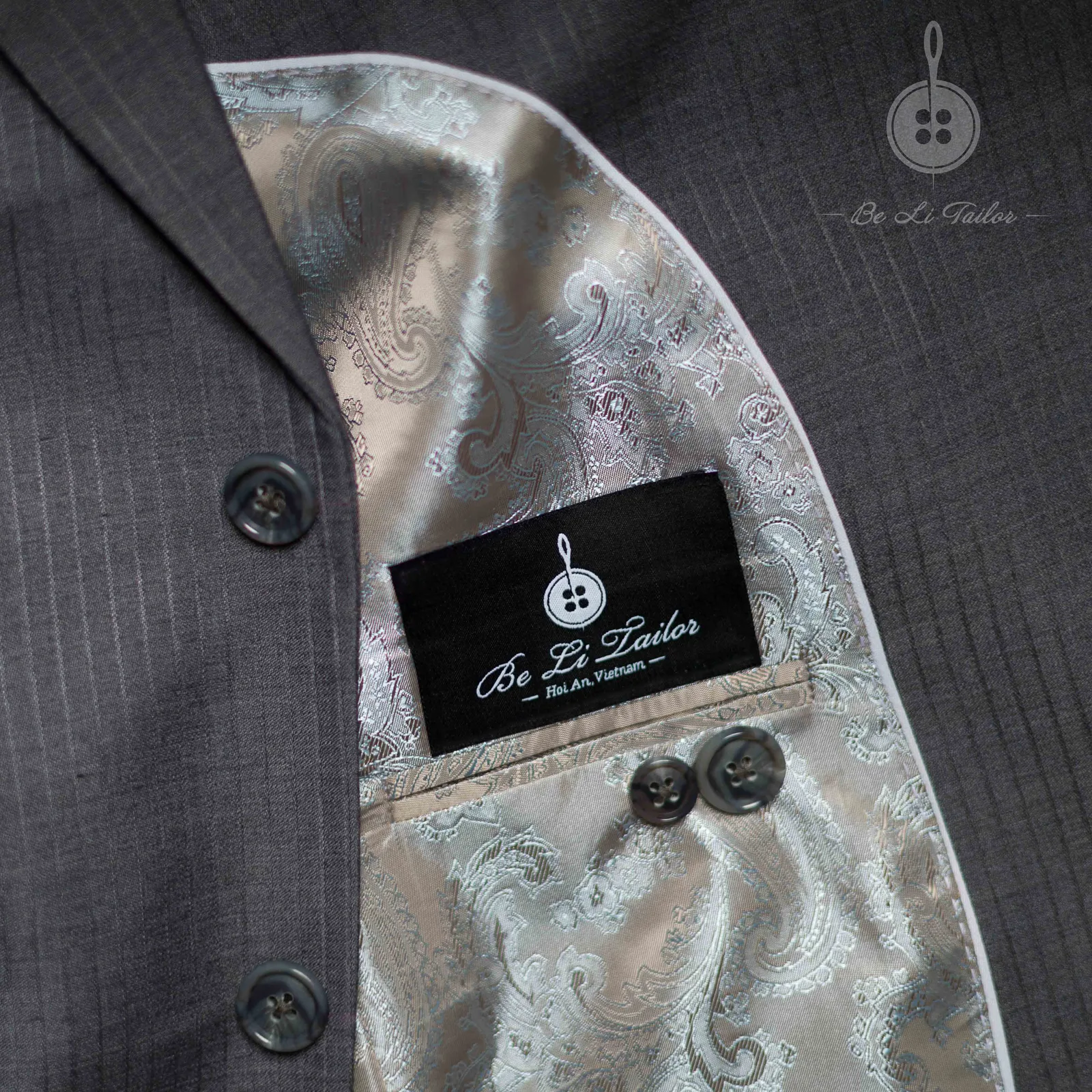
Canvas vs fused suit construction is one of the most consequential decisions in suiting — and most clients never know to ask about it. The price of a suit tells you something. The fabric tells you something. But the internal construction method, invisible from the outside and rarely mentioned in marketing, determines more about how the suit will wear, drape, and age than either of those things.
There are three main approaches: full canvas, half canvas, and fused. Each represents a different set of trade-offs between cost, quality, and longevity. Understanding the difference will help you ask the right questions and make a better decision when commissioning or buying any suit.
What Canvas Is and Why It Matters
A suit jacket requires internal structure. Without it, the outer cloth — however fine its quality — would drape like a heavy curtain, soft and shapeless. The front of a jacket, particularly the chest and lapel area, needs something behind it that provides body, holds shape, and allows the lapel to roll cleanly rather than fold sharply at the button.
Canvas is the traditional material used for this purpose. It is a woven interlining — typically made from horsehair, wool, and cotton in various combinations — that sits between the outer fabric and the lining. Its woven structure gives it a degree of spring and resilience that no bonded or fused material can replicate. When a tailor pad-stitches a canvas interlining to the outer cloth by hand, the two materials become a single unit that behaves like cloth rather than cardboard.
Full Canvas: The Gold Standard
In a full canvas suit, the canvas interlining extends through the entire front of the jacket — from the shoulder down to the hem — and is attached to the cloth entirely by hand through pad-stitching. The result is a garment that has a living internal structure: it moves with the body, breathes slightly with use, and gradually moulds to the wearer's shape over months and years.
The lapel of a full canvas jacket rolls naturally rather than folding at a machine-made crease. Press the lapel flat and it springs back. The chest is rounded rather than flat — a subtle convexity that reflects the actual shape of a human torso. These effects cannot be replicated by any other construction method.
Full canvas is expensive because it is time-consuming. The pad-stitching alone requires hours of skilled hand-work. The canvas itself must be carefully prepared — shrunk, shaped, and cut to correspond precisely with the outer fabric pieces. It is the method used in traditional bespoke tailoring because it produces the best result, full stop.
For a detailed account of how the pad-stitching process works and where it fits within the full construction sequence, our article on how a suit is hand-stitched goes through the process step by step.
Half Canvas: A Sensible Middle Ground
Half canvas construction uses a canvas interlining through the chest and lapel area only — typically from the shoulder to the mid-chest or waist — with fusing below that point. It is a genuine compromise that captures most of the functional benefits of full canvas at a lower cost.
The drape of the upper jacket and the behaviour of the lapel in a half canvas suit are essentially indistinguishable from full canvas. The lower jacket, which has less structural demand, is fused — and in practice, fusing in the lower half of a jacket rarely creates significant problems, because this area moves less and is under less repeated stress.
Half canvas is used by many respected tailors and ready-to-wear brands at the upper end of the market. For most clients, it represents the best practical balance between quality and cost. A well-made half canvas suit will last as long as a full canvas suit if the fused lower section is not subject to excessive heat or moisture.
Fused Construction: Fast, Cheap, and Limited
Fused construction replaces the canvas interlining with a bonded interfacing — a fabric coated with a heat-activated adhesive that bonds it to the outer cloth when pressed. No hand-stitching is required. The process takes minutes rather than hours. It reduces skilled labour to a fraction of what canvas construction demands.
The result is a suit that looks reasonable when new and deteriorates in a specific, characteristic way with age and use. The fusing adhesive does not breathe the way canvas does. With repeated dry-cleaning, the bond begins to fail — producing bubbling and delamination, most visible on the lapels and chest, where the fused interfacing separates from the outer cloth in irregular patches. This process is irreversible. Once a fused suit bubbles, it cannot be repaired.
Fused suits also tend to feel stiffer than canvas suits of comparable weight, because the bonded structure lacks the flexibility of a woven canvas. The lapels do not roll — they fold. The chest is flat rather than convex. These are not catastrophic defects in a lower-cost garment, but they are the reason that no serious bespoke tailor uses fusing as their primary construction method.
How to Tell Which Construction Your Suit Has
The simplest test is the pinch test. With the jacket on a flat surface, pinch the front just below the lapel between your thumb and forefinger and try to separate the outer cloth from the lining. In a canvas suit, you will feel three distinct layers: outer cloth, canvas, and lining — and they will separate slightly from each other. In a fused suit, the outer cloth and the interfacing will feel bonded together, moving as one rigid layer.
A second indicator is the lapel roll. In a full or half canvas suit, the lapel rolls naturally from the button — a gentle, organic curve that varies slightly depending on the wearer's posture and the suit's history. In a fused suit, the lapel typically shows a sharper fold at the roll line, the result of a machine-made crease rather than a natural roll built up through pad-stitching.
What Be Li Tailor Uses and Why
All suits commissioned at Be Li Tailor are built with full canvas construction as standard. This is not a marketing claim — it reflects our understanding that the construction method determines whether a suit is a lasting investment or a temporary garment.
Full canvas takes longer to make. It requires skilled hand-work that cannot be shortcut. It costs more to produce than half canvas and significantly more than fused. We absorb that cost because we believe a client commissioning a bespoke suit in Hội An deserves the same internal quality as a client commissioning from a Savile Row tailor — and because a suit that will still drape correctly in ten years is a better value proposition than one that needs replacing in three.
To commission a full canvas bespoke suit, book an appointment at the studio or explore our full range of menswear services. The complete bespoke suit guide covers all the decisions involved in commissioning a suit from scratch.
Frequently Asked Questions
What is a full canvas suit?
A full canvas suit is one in which the internal structure of the jacket front is provided by a woven canvas interlining that extends from shoulder to hem and is attached to the outer fabric by hand-stitching (pad-stitching). This creates a living internal structure that moves with the body, moulds gradually to the wearer's shape, and maintains its drape and appearance indefinitely. It is the construction method used in traditional bespoke tailoring.
Is half canvas good enough?
Yes, for most purposes. Half canvas construction provides the critical structural benefits of full canvas in the chest and lapel area — where they matter most — at a lower cost. The lower jacket is fused, which is acceptable because this area is under less structural demand. A well-made half canvas suit will last years without the delamination problems that affect fully fused garments. The functional difference between half canvas and full canvas is smaller than the difference between either and a fused suit.
How long does a fused suit last compared to canvas?
A fused suit typically shows its age more quickly than a canvas suit, particularly with frequent wear and dry-cleaning. The heat and solvents used in dry-cleaning gradually weaken the adhesive bond, leading to bubbling and delamination — most often on the lapels and chest. This can appear within three to five years of regular wear, and it cannot be repaired. A canvas suit, properly maintained, does not have this failure mode. With care, a full canvas suit made from quality cloth can last twenty years or more.
Visit the Studio
Be Li Tailor is at 635 Hai Bà Trưng, Hội An Ancient Town, open daily from 8am to 9pm. Whether you're arriving next week or planning ahead, book your appointment online or reach us on WhatsApp at +84 905 820 116. We keep every client's measurements on file — if you've visited before, your next commission starts where the last one ended.