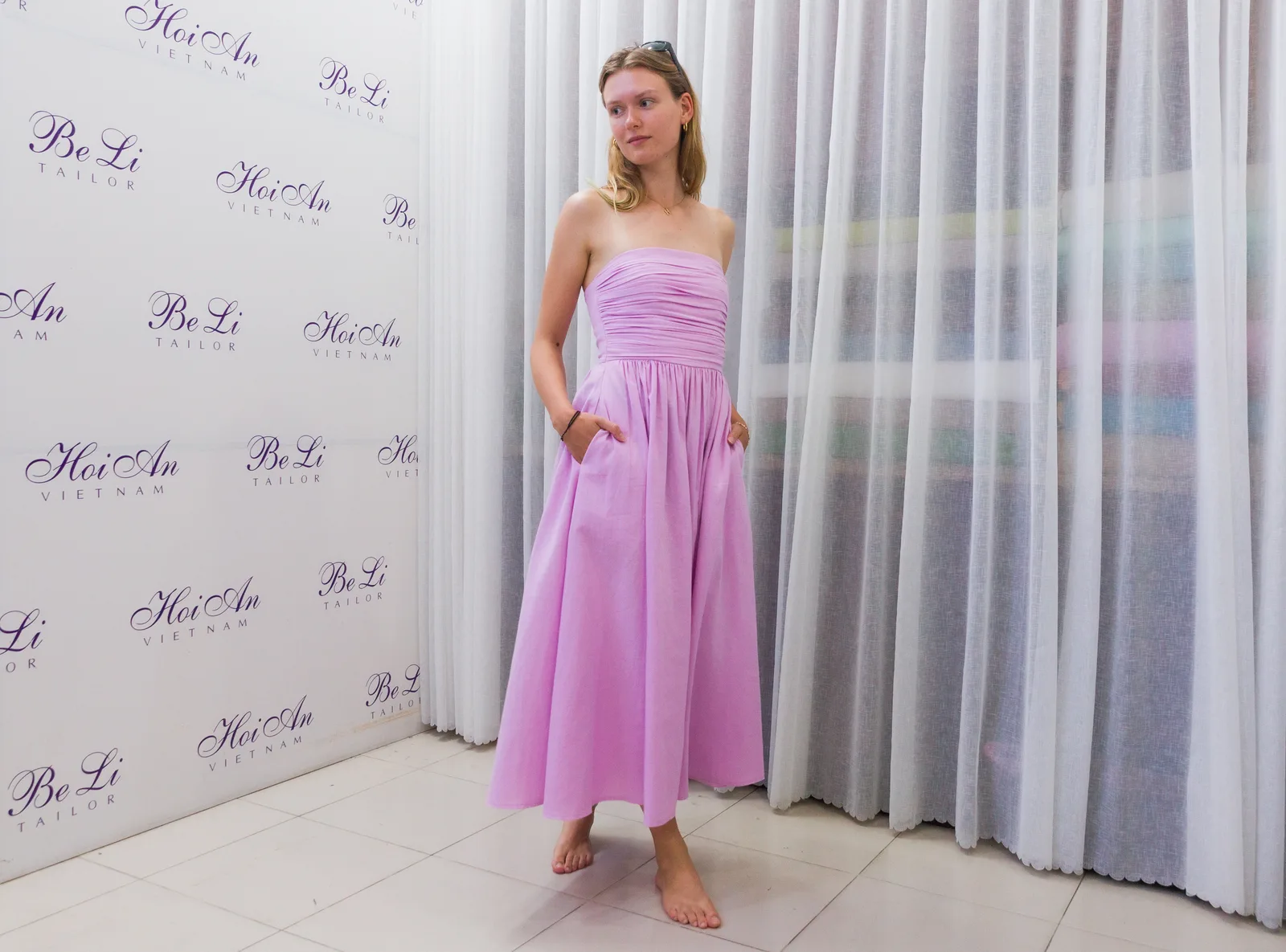
Getting a custom wedding dress made in Hội An is, for those who discover the option, one of the more extraordinary possibilities that travel offers. The quality of craft available here, at prices that are a fraction of equivalent work in Western bridal studios, means that commissioning a bespoke wedding gown in Hội An is not a compromise — it is an opportunity that most brides in London, Sydney, or Toronto do not have access to at all.
I have been making wedding dresses in Hội An for more than twenty years. What follows is an honest account of what the process involves, what it can and cannot produce, and how to make the most of a commission if you are coming to the town specifically to have a gown made.
Why Hoi An Is a Serious Option for a Wedding Dress
Bridal couture in Paris, London, or Melbourne begins at several thousand dollars for even the simplest commission, and moves rapidly upward for anything with significant construction detail. The labour cost alone for hand-sewn beading, complex structure, or fine fabric manipulation puts truly bespoke work out of reach for most budgets.
In Hội An, the same skilled hands, the same construction methods, and the same quality fabrics produce dresses at a price point that changes the conversation. A gown that would cost $8,000 in a Sydney bridal studio can be commissioned here for a fraction of that. The difference is not quality — it is labour cost, overheads, and the economics of a different market.
The practical combination of affordability, genuine craft skill, and the fitting access that a multi-day stay in town allows makes Hội An, for the right bride, genuinely one of the best places in the world to commission a wedding gown. Our full wedding wardrobe guide covers all the garments worth commissioning for a wedding party.
What Be Li Tailor Can Make
We work across the full range of bridal styles — from simple, architectural gowns with clean lines and minimal ornamentation to full construction with structured bodices, cathedral trains, and intricate lace or embroidered detail. What determines the complexity of the commission is the design, the fabric choice, and the time available rather than any limitation in what we can produce.
We are particularly strong in:
- Slip dresses and bias-cut gowns in silk charmeuse or satin — clean, sensual, and technically demanding to cut and fit correctly
- Structured A-line and ballgown silhouettes with boned bodices and full skirts in duchess satin, mikado, or silk taffeta
- Column and sheath gowns — fitted through the body with varying degrees of construction depending on fabric choice
- Two-piece bridal sets — a fitted bodice paired with a skirt, which offers significant flexibility for reuse of the separates after the wedding
- Reception dresses and second-look gowns for those who want to change after the ceremony
We do not produce mass-market replicas of designer gowns. We produce original designs based on the client's brief, reference images, and the specific requirements of the occasion.
Fabric Choices for a Bespoke Wedding Gown
Fabric choice is the most consequential decision in a wedding dress. It determines the silhouette, the behaviour of the gown when worn and moved in, the weight on a warm wedding day, and the longevity of the garment after the event.
Silk charmeuse is the most luxurious choice for draped or bias-cut styles. It moves beautifully, photographs well, and has the fluid weight that makes a slip-style gown drape correctly. It is also unforgiving — it shows every imperfection in cutting and fitting, which is precisely why it rewards working with a skilled tailor rather than attempting to find an equivalent in a ready-to-wear market.
Duchess satin is the fabric most associated with formal bridal silhouettes. It has a high sheen and a substantial weight that gives structure to ballgown and A-line silhouettes. It is forgiving enough to be worked into complex construction and dramatic enough to carry a train without looking limp.
Mikado is a more modern bridal choice — a silk-polyester blend with a matte surface and a structured drape that works particularly well in column and fit-and-flare silhouettes. It is cooler than duchess satin and less susceptible to wrinkling.
Lace — whether French or Belgian lace for a formal gown, or the stretch lace used for fitted contemporary styles — is available through our fabric networks and can be used as the primary fabric or as an overlay. Our guide to fabrics covers the weight and behaviour of the principal options in more detail.
Silhouette: From Simple to Structured
The silhouette conversation is the core of the design process. We ask clients to arrive with reference images — three to five photographs that represent the general direction they are thinking in, even if none of them is exactly what they want. These form the starting point for a conversation about what will work with their specific body, the venue and occasion, and the fabric they are drawn to.
A beach or garden wedding suggests different proportions than a cathedral ceremony. A bride who values freedom of movement will make different choices than one who wants the most formal possible silhouette. These are not styling questions — they are structural ones, and they shape every subsequent decision about construction.
Timeline: How Long Does a Wedding Dress Take?
A wedding dress takes longer than a suit. The complexity of construction, the importance of getting every fitting absolutely right, and the additional stages involved in a gown — internal boning, lining, train, bustling — mean that a realistic minimum for a properly made wedding dress is five to seven days in town, with three fittings.
Simpler gowns — a bias-cut slip in charmeuse, for example, with clean finishing and no structural embellishment — can be completed in four to five days with two fittings. Complex gowns with full boning, elaborate skirt construction, or intricate surface detail require a longer stay and should be discussed in advance so we can plan the workload correctly.
For brides planning a trip to Hội An specifically to commission a gown, we recommend booking an initial consultation before arrival — via WhatsApp or our online booking system — to discuss design, fabric, and timeline so that the studio visit is fully prepared when you walk through the door.
Bringing It Home: Packing and Shipping
A wedding dress is not a straightforward garment to transport, but with proper preparation it is entirely manageable. We provide every gown in a cotton garment bag and advise on folding technique to minimise creasing in transit. For gowns with significant volume — full skirts, long trains — the option of hanging carry-on rather than checked luggage is worth considering where airline policies allow.
For international shipping, we use tracked freight services and pack gowns in acid-free tissue and rigid boxes. The shipping cost is modest relative to the value of the garment. We do not recommend untracked postal services for any gown, regardless of price. To plan your visit and commission, book an appointment or explore our full weddings service.
Frequently Asked Questions
Can I get a wedding dress made in Hoi An in a week?
Yes, for most designs. A well-made wedding dress with two to three fittings requires five to seven days at the studio. Simpler styles — bias-cut slips, clean column gowns — can be completed in four to five days. More complex constructions with full boning, elaborate skirt volumes, or intricate surface detail may require longer, and should be discussed in advance so we can plan the workload around your visit. Booking a consultation before arrival is strongly recommended.
What fabric should I choose for a custom wedding dress?
The right fabric depends on the silhouette you want, the climate of your wedding venue, and how the dress will be worn. Duchess satin suits formal ballgown and A-line silhouettes and photographs beautifully. Silk charmeuse is ideal for draped or bias-cut styles that move with the body. Mikado is a practical modern choice that suits column and fit-and-flare shapes and wears cooler than satin. Lace can be used as a primary fabric or as an overlay on any of the above. We discuss fabric with every client before cutting begins.
How much does a bespoke wedding dress cost in Hoi An?
The price varies with the complexity of the design and the quality of the fabric chosen, but a bespoke wedding gown at Be Li Tailor is typically a fraction of the equivalent at a Western bridal studio. Simple designs in good-quality fabric begin at prices that would represent exceptional value in any international market. We discuss pricing transparently in the initial consultation, and there are no hidden costs. Contact us directly for a specific estimate based on your design brief.
Visit the Studio
Be Li Tailor is at 635 Hai Bà Trưng, Hội An Ancient Town, open daily from 8am to 9pm. Whether you're arriving next week or planning ahead, book your appointment online or reach us on WhatsApp at +84 905 820 116. We keep every client's measurements on file — if you've visited before, your next commission starts where the last one ended.