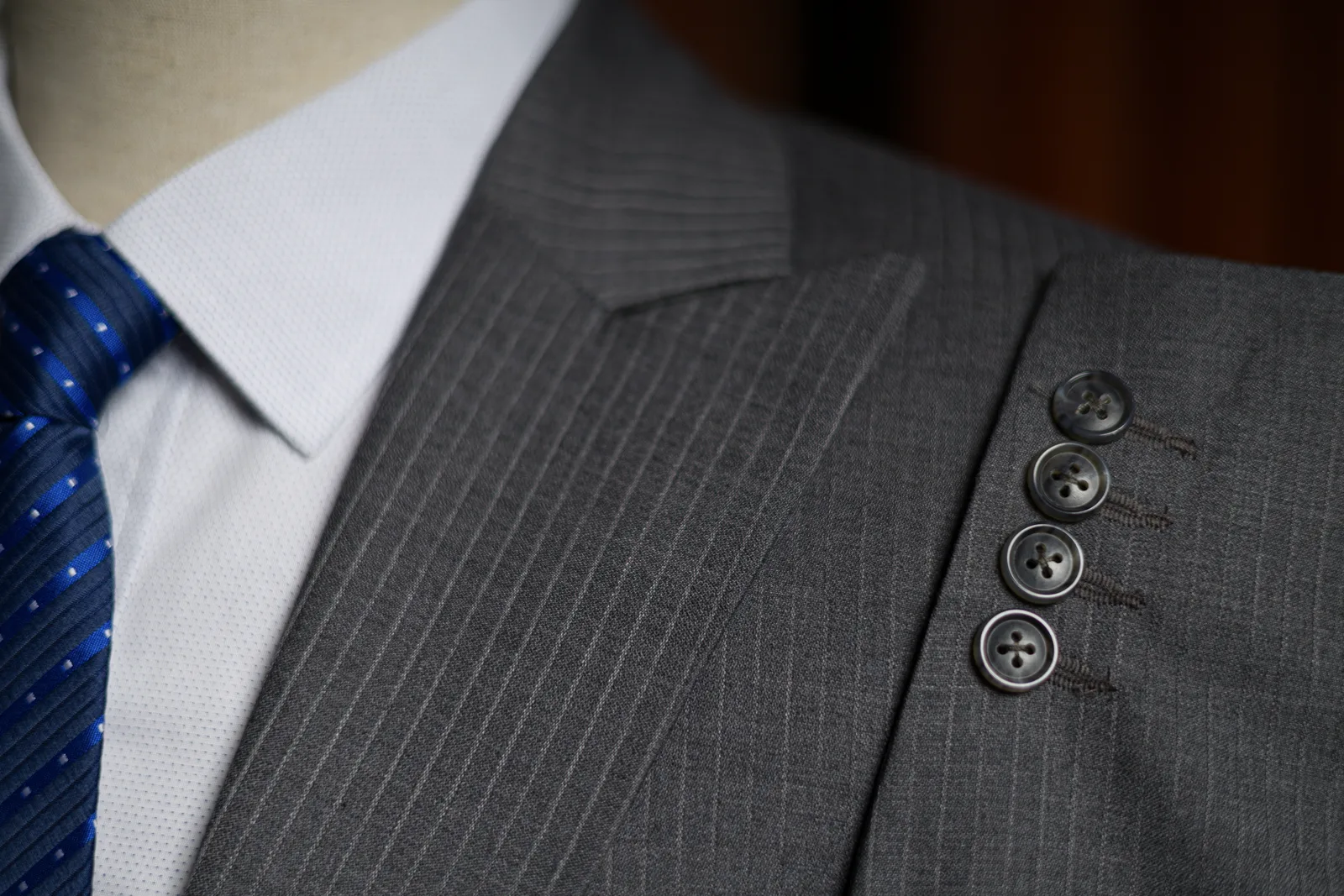
Most bad tailoring experiences in Hội An follow the same pattern. Someone arrives with two days to spare, picks a shop based on a TripAdvisor ranking, describes what they want in vague terms, and then checks out before the second fitting. When the clothes arrive home with a jacket that pulls across the shoulders and trousers that bunch at the knee, they write it off as a travel gamble gone wrong.
It wasn't a gamble. It was a sequence of avoidable mistakes. Hội An has genuinely skilled tailors — people who have been cutting and constructing garments for decades. But that skill can't compensate for bad briefing, poor time planning, or decisions made under the pressure of a departure flight. Here is what goes wrong, and how to make sure none of it happens to you.
Mistake 1: Choosing Based on Price Alone
Hội An has around 500 tailor shops. Prices range from comically cheap to legitimately expensive for Vietnam, and the temptation — especially after seeing a suit advertised for under $100 USD — is to assume you've found a bargain. What you've usually found is a shop that cuts corners on fabric, subcontracts production to off-site workshops you'll never see, and relies on tourist volume rather than repeat business.
A bespoke suit that fits correctly requires good fabric, experienced hands, and time. None of those things are free. The shops that charge very little for a two-piece are buying synthetic-blend suiting off the roll, rushing through construction, and treating the finished garment as good enough rather than right. When you're comparing prices, ask yourself what the fabric is (a Super 100s wool costs more than a polyester blend regardless of country), who is actually doing the sewing, and whether there's a fitting process at all.
For useful context on evaluating shops, see our guide to how to choose a tailor in Hội An.
Mistake 2: Giving Vague Style Instructions
Telling a tailor you want something "smart but not too formal" or "like what I'd wear to a nice dinner" is not a brief — it's a wish. The tailor will make a series of assumptions about lapel width, button stance, trouser break, and silhouette that may or may not align with what you had in mind.
Good preparation means bringing reference images. Three or four photos of jackets you like, showing clearly what draws you to them, gives a tailor far more to work with than any description. If you're not sure what you like, look at jackets you already own and think about what you'd change. Narrower lapels or wider? Single-breasted or double? A longer body or a cropped hem? These are not obscure questions — they're the same ones the tailor needs answered before cutting.
Our Hội An tailoring tips article covers the briefing process in more detail, including what to bring to your first appointment.
Mistake 3: Not Checking Where Clothes Are Made
A significant number of tailoring shops in Hội An take measurements and orders in-house but send production to off-site factories or workshops. This isn't automatically a problem — some workshops do excellent work. But it does mean you lose direct oversight of the process, fittings become harder to arrange, and when something is wrong, fixing it requires more back-and-forth.
The simplest way to check: ask whether the garments are made on the premises. A shop that cuts and sews in-house will usually be happy to show you the workshop. At Be Li Tailor, everything is produced in our studio — our story page explains why that matters to us and to the quality of the final garment.
Mistake 4: Over-Commissioning in Too Little Time
This is one of the most consistent problems we see. A traveller arrives, gets excited by the possibilities, and orders four suits, three shirts, two pairs of trousers, and a dress in a single appointment — with three days left in Hội An. No reputable tailor can do that well. Production needs time, and fittings need to be spread across days, not hours.
The practical rule: plan for one to two garments per visit if your time is limited. If you have a week, you can reasonably commission two suits and a handful of shirts. If you have three days, keep it to one suit or two to three shirts. Be realistic about what can be done properly rather than quickly. Our complete guide to getting clothes tailored in Hội An includes a timeline breakdown by garment type.
Mistake 5: Skipping the Second Fitting
A bespoke garment — even one cut from excellent measurements — will almost always require adjustment after the first toile or first fitting. The body has idiosyncrasies that measurements alone don't capture: one shoulder slightly higher than the other, a particular way of standing, a torso that requires more or less suppression through the waist. The second fitting is where those corrections are made.
Skipping it to save time is a false economy. You'll get a garment that's close but not right, and correcting it after you've left Hội An means shipping costs, delays, and the risk of the alteration going wrong without you there to oversee it. Schedule the second fitting even if it means rearranging your itinerary by a few hours.
Mistake 6: Ignoring Fabric Weight for the Climate
Most visitors to Hội An commission clothes they plan to wear back home — in Sydney, London, Toronto, or Berlin. They choose a fabric in the sweltering heat of a Vietnamese summer and forget entirely that they'll be wearing it in a northern European winter or an Australian autumn.
Fabric weight is measured in grams per linear metre (g/m). A lightweight tropical wool at 200–220 g/m is excellent for hot climates and summer events, but it won't keep anyone warm in a British January. A mid-weight 280–320 g/m wool suits most temperate climates year-round. A 380 g/m or heavier flannel is specifically for cold weather. The tailor can show you swatches and advise on weight — but only if you tell them where and when you plan to wear the garment.
Mistake 7: Not Checking Finished Work Before Leaving Hội An
This sounds obvious, but a surprising number of people collect their finished garments, pack them straight into a suitcase, and don't inspect them properly until they're unpacking at home. By then, fixing any problems requires shipping the garments back — a lengthy and potentially expensive process.
When you collect, put the garments on. All of them. Walk around the room. Sit down. Check that jacket shoulders sit flat, that the chest doesn't pull, that trouser hems sit at the right break. Look at the stitching on collar points and buttonholes. If anything is wrong, say so on the spot. A reputable tailor will fix it before you walk out.
What are the most common complaints about Hội An tailoring?
The most frequent complaints are poor fit (usually caused by skipping fittings or insufficient time in the commission process), fabric quality lower than expected (a result of price-driven decisions), and garments not matching the brief (caused by vague instructions without reference images). All three are avoidable with preparation and enough time in Hội An to complete the full process properly.
What should I do if my tailored clothes don't fit?
If you're still in Hội An, return to the tailor immediately — most reputable shops will correct fitting issues at no extra charge. If you've already left, contact the tailor directly with clear photographs of the problem areas. Be Li Tailor keeps all client measurements on file; for minor issues, we can advise on alterations a local tailor can make, and for significant problems, we'll discuss the best course of action with you directly.
Can I get a refund from a Hội An tailor?
Refund policies vary between shops, and most bespoke tailors — anywhere in the world — do not offer refunds on completed custom garments. The standard recourse is alterations or remake. This is why checking garments thoroughly before leaving Hội An is so important. At Be Li Tailor, if a garment doesn't meet the agreed spec, we alter or remake it — but we can't do that if we don't know there's a problem.
Visit the Studio
Be Li Tailor is at 635 Hai Bà Trưng, Hội An Ancient Town, open daily from 8am to 9pm. Whether you're arriving next week or planning ahead, book your appointment online or reach us on WhatsApp at +84 905 820 116. We keep every client's measurements on file — if you've visited before, your next commission starts where the last one ended.