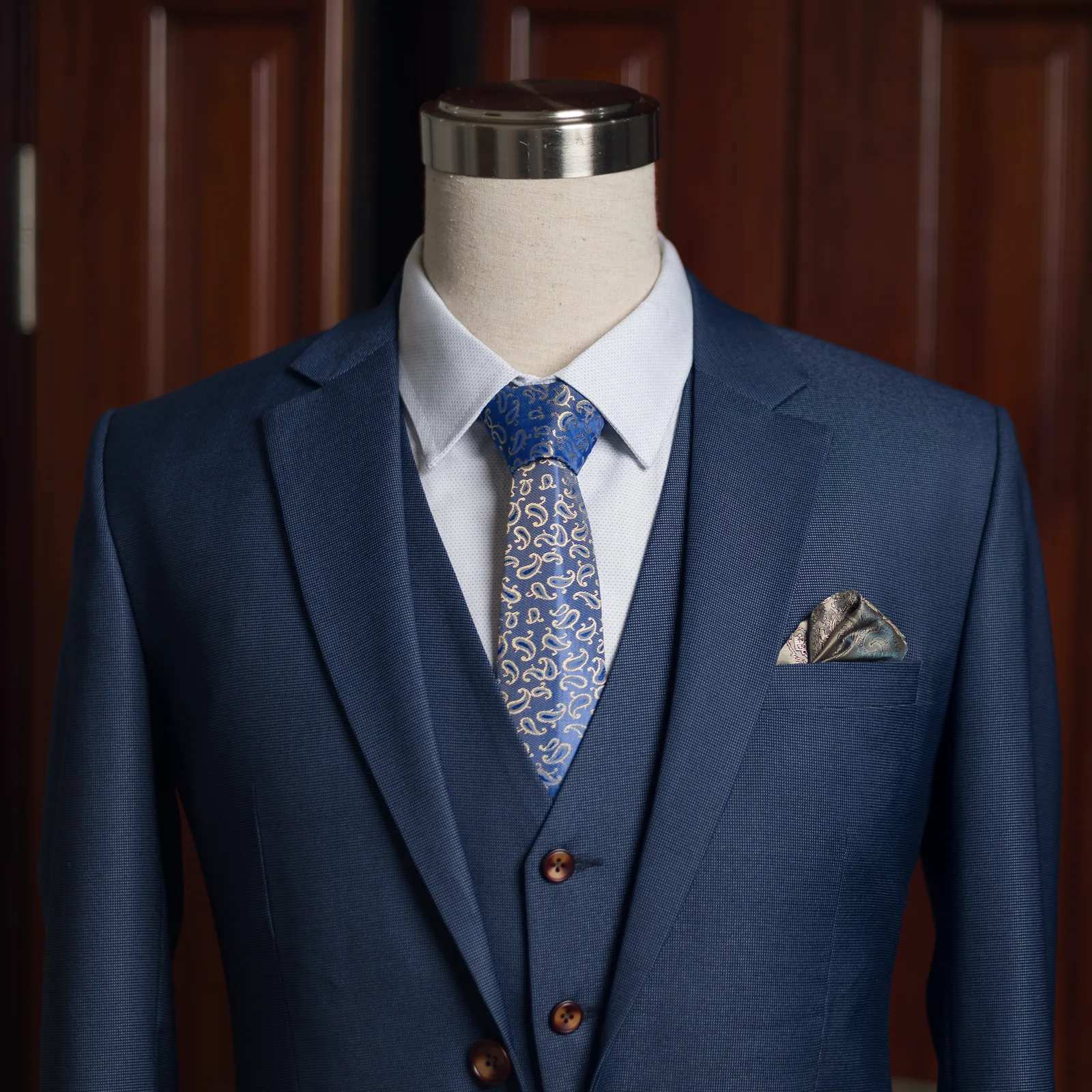
Understanding how a bespoke suit should fit is something that most clients learn gradually, through experience with what works and what does not. This guide is an attempt to shortcut that process — to give you the specific reference points that an experienced tailor uses when assessing a suit's fit, so that you can recognise good fit, identify problems, and communicate clearly with your tailor about what needs to change.
Fit is not purely objective. There is a range of acceptable outcomes at every measurement point, and personal preference — the desire for a closer or more relaxed silhouette — plays a legitimate role. But there is also a clear distinction between fit choices (intentional decisions about silhouette and proportion) and fit problems (unintentional outcomes that detract from the garment's appearance and comfort). This guide addresses both.
For context on the full commissioning process, our complete guide to commissioning a bespoke suit covers what to expect at each stage from consultation to finished garment.
The Shoulders: Where Every Suit Lives or Dies
The shoulder seam is the most important fit point in any jacket. It is also the most difficult to alter after construction — moving a shoulder seam requires essentially rebuilding the jacket from that point, which is expensive and sometimes not possible without visible changes to the garment's structure. Getting the shoulders right at the fitting stage is therefore more important than getting any other measurement exactly right.
The shoulder seam should sit precisely at the edge of the shoulder bone — the acromion, the bony point at the outer edge of each shoulder. Standing with your arm at your side, run your finger along the top of your shoulder until you feel the bony protrusion. The shoulder seam of the jacket should land at that point, neither extending beyond it (which creates a "spilling" shoulder that makes the jacket look too large) nor sitting inside it (which pulls across the upper chest and creates a pinched, restrictive feel across the back).
A correctly placed shoulder seam will appear to follow the natural slope of the shoulder without dramatic padding or roll. The sleeve should drop cleanly from the shoulder point, with no pulling or buckling in the upper sleeve fabric. When you raise your arms, there should be some restriction — a suit is not an athletic garment — but the restriction should feel like a limit of movement rather than an immediate pulling or tightening.
The Chest and Button Stance
The jacket chest should button cleanly without pulling. When buttoned, there should be no "X" shape of fabric tension radiating from the button — this is the clearest visual indicator of a jacket that is too tight across the chest. At the same time, there should not be excess fabric pooling at the lapels or creating horizontal folds across the chest; this indicates a jacket that is too large.
A practical test: pinch the fabric at the side seam at the widest point of the chest while the jacket is buttoned. You should be able to pinch approximately 2–3cm of fabric — enough ease for comfortable breathing and movement, not so much that the jacket appears baggy. Less than this and the jacket will pull under any arm movement; more and it will look ill-fitting from the front.
The button stance — the position of the buttons relative to the jacket body — is a style choice as much as a fit consideration, but it interacts with fit. A low button stance (buttons positioned low on the jacket) elongates the lapel and creates a more relaxed, continental appearance. A higher stance is more traditional British in character. The jacket should button at the waist naturally, without pulling; if the button position requires the jacket to be strained shut, the waist suppression needs adjustment.
Jacket Length: The Most Misunderstood Measurement
Jacket length is one of the most debated fit measurements in tailoring, and the standards have shifted considerably over the past fifty years. The traditional benchmark — that the jacket hem should cover the seat and fall at approximately the same level as the knuckle of the thumb when the arm hangs naturally — remains a reliable guide for most body proportions, but it is not absolute.
A jacket that is too short exposes the trouser waistband and creates an unbalanced silhouette, particularly from behind. A jacket that is too long looks old-fashioned on most modern frames and can visually shorten the leg. The length should balance the jacket against the trouser — the jacket covering the seat fully, the trousers providing a visually appropriate leg length below.
For clients with a short torso, a slightly shorter jacket length can help balance the proportions, giving more visual space to the trouser and leg. For clients with a long torso, a slightly longer jacket can provide better coverage without looking disproportionate. These are adjustments of a centimetre or two — the overall principle of covering the seat and reaching approximately the thumb knuckle remains the starting point.
Sleeve Length and the Shirt Cuff Reveal
Sleeve length is one of the most visible details of a well-fitted jacket, and one of the easiest to get wrong. The conventional standard is approximately 1.5–2cm of shirt cuff visible below the jacket sleeve when the arm hangs naturally. This reveal frames the shirt cuff, demonstrates the relationship between shirt and jacket, and provides a visual indicator that both garments fit properly.
Too much shirt cuff — more than 2.5–3cm — suggests either the jacket sleeves are too short or the shirt sleeves are too long. Too little reveal — less than 1cm — suggests the jacket sleeves are too long. The latter is more common in off-the-rack garments, which typically cut sleeves conservatively to avoid complaints; in a bespoke commission, it should be a non-issue.
The sleeve length should be measured with the shirt you intend to wear with the suit, as different shirts have different cuff dimensions and positions. When commissioning, wear a shirt with appropriate cuff positioning, or specify the intended reveal at the fitting stage so the tailor can set the sleeve length accordingly.
Trousers: Break, Rise, and the Seat
Trouser fit encompasses several distinct measurements, each of which can be adjusted independently and each of which affects the overall impression of the garment.
The break
The break refers to the amount of trouser leg that rests on the shoe when standing. A full break — where the trouser leg creases noticeably on the shoe — was the standard in formal British tailoring for much of the twentieth century. A half break — where the trouser front just touches the shoe with a slight crease — is the most common contemporary standard, providing a clean line without the shortened appearance of no break at all. No break — where the trouser hem is cut to just touch the top of the shoe without folding — is modern and slightly casual in character, and works best on slim trousers with a narrower leg. The choice is personal, but it should be intentional rather than accidental.
The rise
The rise is the measurement from the crotch seam to the waistband. A mid-rise trouser sits at the natural waist; a low-rise sits below it; a high-rise above. Current mainstream suiting is typically mid to slightly high rise, which tends to be more comfortable for extended wear and more flattering on a wide range of body types. Very low-rise trousers can cause the jacket to "gap" at the back, pulling away from the trouser waistband when the wearer sits or moves. In a bespoke commission, the rise should be set to the wearer's comfort preference while maintaining the relationship between jacket hem and trouser waistband.
The seat
The seat of the trouser should fit smoothly without horizontal creases pulling across the seat (too tight) or excess fabric creating a "saggy" appearance below the seat (too much fabric). The fit through the thighs should allow comfortable movement — you should be able to walk up stairs, sit down, and cross your legs without the fabric pulling tight across the thighs — while being clean enough not to bunch or flap at the sides.
Common Fit Mistakes and How to Spot Them
Several fit problems appear consistently enough to be worth describing specifically:
"X" marks at the button: Fabric pulling in an X shape from the front button when the jacket is buttoned. Indicates the chest is too tight. Needs to be let out at the side seams or, if there is no ease remaining, the jacket needs to be recut.
Shoulder "roping": A ridge or roll of fabric along the top of the sleeve head where it meets the shoulder seam. Usually indicates the sleeve is set too tightly or the sleeve head is too high. Requires adjustment to the sleeve setting.
Back collar gap: The collar of the jacket pulls away from the shirt collar at the back of the neck when the jacket is on. Often caused by a high or rounded back posture that the jacket hasn't accommodated. Can be adjusted by modifying the back neck curve of the jacket.
Jacket twisting: The jacket rotates slightly on the body — one lapel appears to sit slightly forward of the other, or the back seam veers to one side. Usually indicates asymmetry in the shoulders or upper back that the pattern hasn't addressed. A bespoke commission should identify and accommodate this in the pattern drafting.
Trouser twisting: Similar to jacket twisting, the trouser leg spirals forward or backward rather than hanging straight. Usually indicates that the knee position or the thigh volume hasn't been correctly positioned in the pattern.
For a detailed look at what to expect at the fitting stage and how to communicate fit concerns, our guide to what to expect at your first fitting in Hội An covers the practical process in detail. When you are ready to begin a commission with us, book your appointment at Be Li Tailor and bring any existing garments whose fit you find successful — they help us calibrate the silhouette you are looking for.
Frequently Asked Questions
How much room should a suit jacket have?
At the chest — the widest point of the jacket — there should be approximately 5–6cm of total ease (the difference between the chest measurement and the finished jacket chest measurement). In practical terms, you should be able to pinch approximately 2–3cm of fabric at the side seam when the jacket is buttoned. This provides enough ease for comfortable movement and breathing without the jacket looking overly loose. A suit jacket is not a close-fitting garment in the way that a sport coat might be, but it should not have enough excess to create folds or "pooling" of fabric at the chest.
What is the correct trouser break?
There is no single "correct" break — it is a style choice that should be made deliberately. A half break (a slight crease where the trouser front touches the shoe) is the most common and versatile contemporary standard and looks clean and proportionate on most body types. A full break reads as more traditional and formal. No break reads as modern and slightly casual, and works best with slim trouser cuts. Avoid having the trouser hem fall so low that it drags on the floor at the back, which is both impractical and visually untidy.
How tight should a suit jacket be across the chest?
The jacket should button comfortably without pulling. The clearest test is the absence of an "X" of fabric tension radiating from the button when the jacket is fastened. The jacket should close smoothly, with the lapels lying flat against the chest rather than splaying open. If the lapels bow outward when the jacket is buttoned, the chest is too tight. If the lapels roll or pucker and excess fabric forms horizontal folds, the jacket may be too large in the chest. The fit should feel easy and unrestrictive when standing, with some reduction in freedom of movement when reaching forward or up.
How do I know if my suit fits properly?
The primary indicators of a well-fitting suit are: the shoulder seam sits at the edge of the shoulder bone without extending beyond it; the jacket buttons without pulling; the back lies flat against the upper back without horizontal creases or a collar gap; the sleeves show approximately 1.5–2cm of shirt cuff below the jacket hem; the jacket hem covers the seat; and the trousers hang without twisting, pulling across the seat or thighs, or breaking at an unintended amount. When you move — walk, sit, reach — the suit should follow you without significant pulling or restriction at any specific point.
Visit the Studio
Be Li Tailor is at 635 Hai Bà Trưng, Hội An Ancient Town, open daily from 8am to 9pm. Whether you're arriving next week or planning ahead, book your appointment online or reach us on WhatsApp at +84 905 820 116. We keep every client's measurements on file — if you've visited before, your next commission starts where the last one ended.