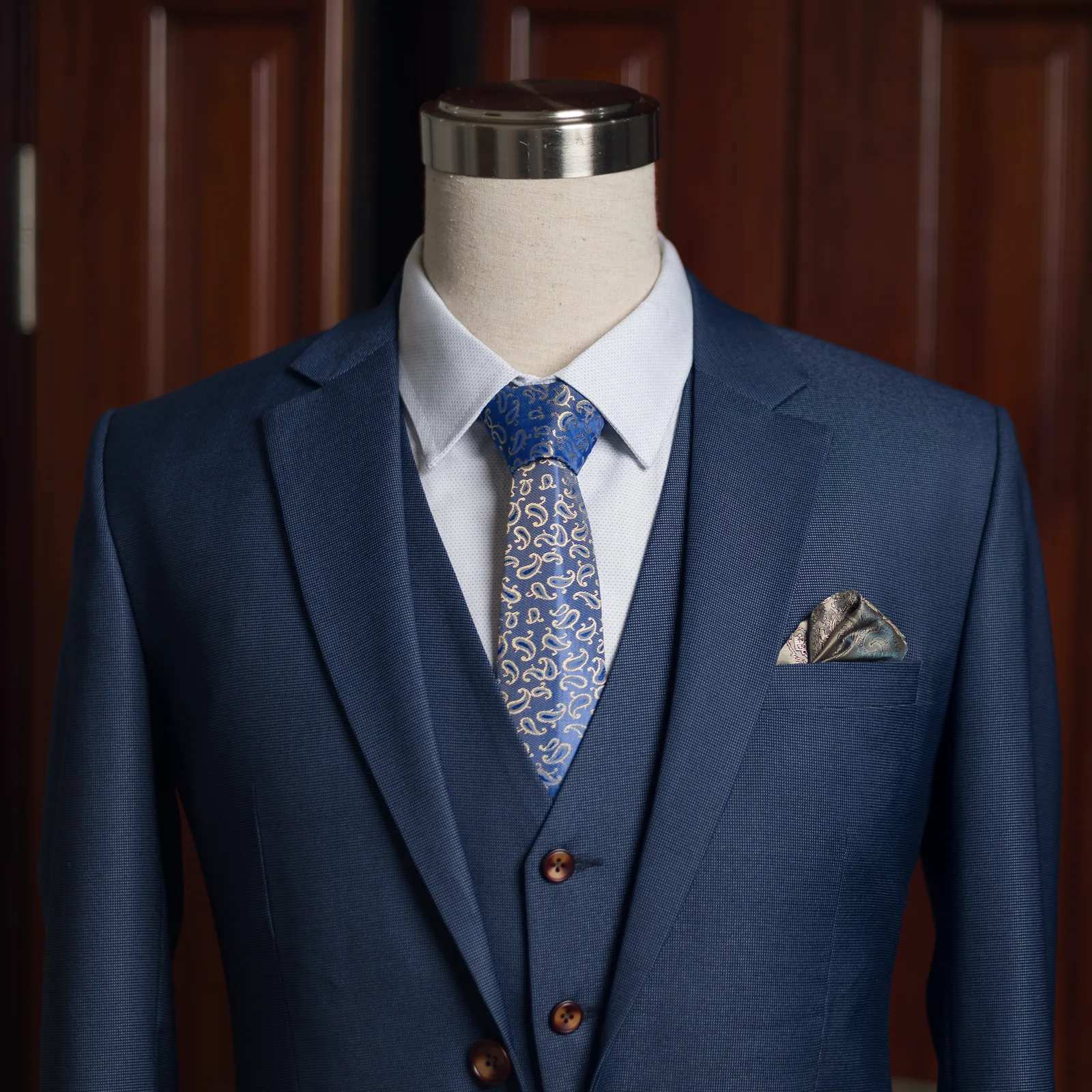
Knowing how to care for a bespoke suit is not complicated — but it does require a few deliberate habits that most people were never taught. A well-constructed bespoke suit, made from quality cloth with proper canvas and good finishing, can last thirty years or more. The same suit treated carelessly might begin to deteriorate within five. The difference is almost entirely maintenance.
The advice here applies to any quality suit — bespoke or made-to-measure — but it matters most with bespoke, because you've invested more and the reward for looking after it is proportionally greater. Wool suits and linen suits have different requirements in a few areas, which we'll note throughout.
Why a Bespoke Suit Rewards Good Care
A bespoke suit is built differently from a ready-to-wear equivalent. The canvas — the internal structure that gives a jacket its shape — is made from natural fibres in quality bespoke construction: horsehair, cotton, and linen, hand-stitched to float freely against the outer cloth. This floating construction means the jacket breathes, moulds to the body over time, and recovers its shape well between wears.
Fused construction, used in most ready-to-wear suits, bonds the interfacing directly to the cloth with adhesive. It's cheaper and faster to produce, but it can bubble, delaminate, and deteriorate in ways that can't be reversed. A bespoke canvas, by contrast, can be re-steamed, re-pressed, and restored by a skilled tailor even after years of wear.
Understanding this construction is part of why care matters. You're not just maintaining a piece of fabric — you're maintaining a built structure. Treat it accordingly.
Daily Habits: What to Do After Every Wear
The most important suit-care habit is the simplest: give it time to rest. Wool fibres absorb moisture — from your body, from the air, from perspiration — during a day's wear. That moisture relaxes the fibres and can cause the suit to feel limp or look slightly creased. Left to hang and ventilate overnight, the fibres reabsorb ambient moisture, the structure resets, and by morning the jacket looks substantially better.
After each wear:
- Empty all pockets. Weight in pockets — keys, phone, wallet — distorts the pocket welts and eventually the chest over time.
- Hang the jacket on a shaped wooden hanger immediately. Leave it to breathe for at least 24 hours before returning it to a garment bag or wardrobe.
- Brush the jacket lightly with a soft-bristled clothes brush, working in the direction of the cloth's nap. This removes surface dust, lint, and debris before they work into the fibres.
- Hang trousers either on a hanger with a bar — laid over rather than clipped — or on a trouser press if you own one. Clamp-style hangers leave pressure marks on the fabric.
Storage: Hangers, Bags, and What to Avoid
The hanger is not a minor detail. A jacket hung on a narrow wire hanger — the type that arrives from a dry cleaner — will develop shoulder distortion within weeks. The hanger must be wide enough to support the full breadth of the jacket's shoulder, filling the shoulder seam without overhang. Wooden suit hangers, typically 45–48cm wide, are correct for most jackets. Choose a contoured style rather than a flat bar.
Garment bags serve one purpose: protection from dust and light during long-term storage. They are not the right environment for daily or weekly storage, because they restrict airflow. If you're rotating a suit regularly, hang it openly in a ventilated wardrobe. Reserve the garment bag for suits worn less than once a month, or for travel.
A few things to avoid in storage:
- Plastic bags of any kind. They trap moisture and promote mildew in natural fibres.
- Overpacked wardrobes. Suits need space. If garments are pressed tightly together, they hold each other's creases and accumulate odours.
- Direct sunlight. Extended UV exposure fades cloth and weakens fibres over time.
- Damp environments. Humidity is the enemy of wool in particular. If you live in a humid climate, a cedar block or moisture absorber in the wardrobe helps significantly.
Cleaning: Dry Clean Less Than You Think
This is probably the most important piece of suit-care advice, and the most counterintuitive: dry cleaning should be a last resort, not a routine. The chemical solvents used in dry cleaning are effective at removing stains, but they also strip the natural oils from wool fibres over time, gradually making the cloth more brittle and prone to wear. Repeated dry cleaning is one of the primary reasons otherwise well-made suits deteriorate prematurely.
For routine maintenance, brushing and airing are almost always sufficient. Odours dissipate with ventilation. Light surface soil comes out with brushing. Perspiration — the most common reason people reach for dry cleaning — is neutralised almost entirely by hanging the suit in fresh air for a day or two.
Dry clean only when:
- There is a visible stain that brushing and airing cannot address
- The suit has been worn through a heavily polluted environment
- There is a persistent odour that ventilation has not resolved after several days
- The suit is going into long-term storage (once, not repeatedly)
When you do dry clean, choose a specialist who understands structured garments. Not all dry cleaners are equal — a poor press can flatten the roll of a lapel, distort the chest, or destroy the soft construction a bespoke tailor spent hours creating. Ask specifically that the jacket be hand-finished after cleaning rather than simply machine-pressed. To understand more about how the suit was originally built, our complete guide to bespoke suits covers construction in depth.
Pressing and Steaming: How to Do It Right
For day-to-day crease removal, a handheld garment steamer is the most useful tool you can own. Steam relaxes wool fibres without the direct heat contact of an iron, which means it removes light creases with minimal risk to the cloth or the canvas. Hold the steamer 5–8cm from the fabric, work in gentle passes, and let the garment hang to cool and reset before wearing.
If you're pressing with an iron — which requires more care — always use a press cloth between the iron and the fabric. Direct iron-to-fabric contact, especially on wool, can cause shine, a permanent flattening of the surface fibres that is very difficult to reverse. Use a damp cotton pressing cloth, medium heat, and minimal pressure. Never press directly over seams without a tailor's ham or rolled towel underneath — seam impressions pressing through to the face side are a common and avoidable mistake.
For the lapel, do not press it flat. The roll of a bespoke lapel — the soft curve from collar to button — is one of the defining qualities of the construction. If you flatten it with an iron, you're working against the structure. Steam the lapel gently, then roll it back to its natural position and allow it to set.
Travel: Packing a Suit Without Ruining It
The best approach for travelling with a suit depends on the length of the journey and what's available. For flights under three hours, a carry-on garment bag is ideal — the jacket hangs throughout and arrives in near-perfect condition. For longer journeys, or when a garment bag isn't practical, folding is necessary.
The most reliable folding method for a jacket: turn one shoulder inside out, then tuck the other shoulder inside it so the jacket is folded along the back seam with the outer cloth facing inward. This distributes any creasing across the lining rather than the face fabric. Lay it flat in the suitcase, ideally sandwiched between soft items that cushion without compressing. Hang and steam on arrival.
For a more detailed breakdown of packing methods, see our guide specifically on how a bespoke suit should fit — which also covers what to look for when you assess a garment after travel.
When to Take Your Suit to a Tailor
Even well-maintained suits benefit from periodic professional attention. A good tailor can:
- Re-press the chest and lapels to restore the original structure
- Replace worn buttonhole thread before it frays further
- Re-attach or replace lining panels that have begun to come away
- Let out or take in the waist if your body has changed
- Re-stitch the canvas if it has shifted or separated from the cloth
Annual professional pressing and inspection is worthwhile for any suit worn regularly. For suits worn less frequently, every two to three years is reasonable. These visits extend the suit's life significantly and keep it looking as it was made to look. Book an appointment with Be Li Tailor if you'd like us to assess a suit's condition — we're happy to advise on what needs attention and what doesn't.
Frequently Asked Questions
How often should a bespoke suit be dry-cleaned?
As infrequently as possible. For most wearers who brush and air their suit properly, once a year or less is sufficient — and many suits can go several years between dry cleans without problem. The chemicals in dry cleaning strip natural oils from wool fibres over time, so routine cleaning does more harm than good. Air the suit after each wear, brush it regularly, and dry clean only when there's a specific stain or odour that ventilation can't resolve.
What is the right hanger for a suit?
A wooden suit hanger, 45–48cm wide, with a contoured shoulder profile. The hanger should fill the shoulder without the tips extending beyond the seam. Wire hangers are too narrow and will distort the shoulder over time. Padded fabric hangers are generally too soft to support a structured jacket. A cedar wood hanger has the additional benefit of deterring moths in long-term storage.
How do I remove wrinkles from a suit jacket?
For light creases, hanging the jacket in a bathroom while running a hot shower (the steam in the air does the work without direct contact) or using a handheld garment steamer is usually sufficient. For deeper creases, press with a damp press cloth over the affected area at medium heat — never apply a hot iron directly to the cloth. Allow the jacket to hang and cool completely before wearing or putting it away.
Visit the Studio
Be Li Tailor is at 635 Hai Bà Trưng, Hội An Ancient Town, open daily from 8am to 9pm. Whether you're arriving next week or planning ahead, book your appointment online or reach us on WhatsApp at +84 905 820 116. We keep every client's measurements on file — if you've visited before, your next commission starts where the last one ended.