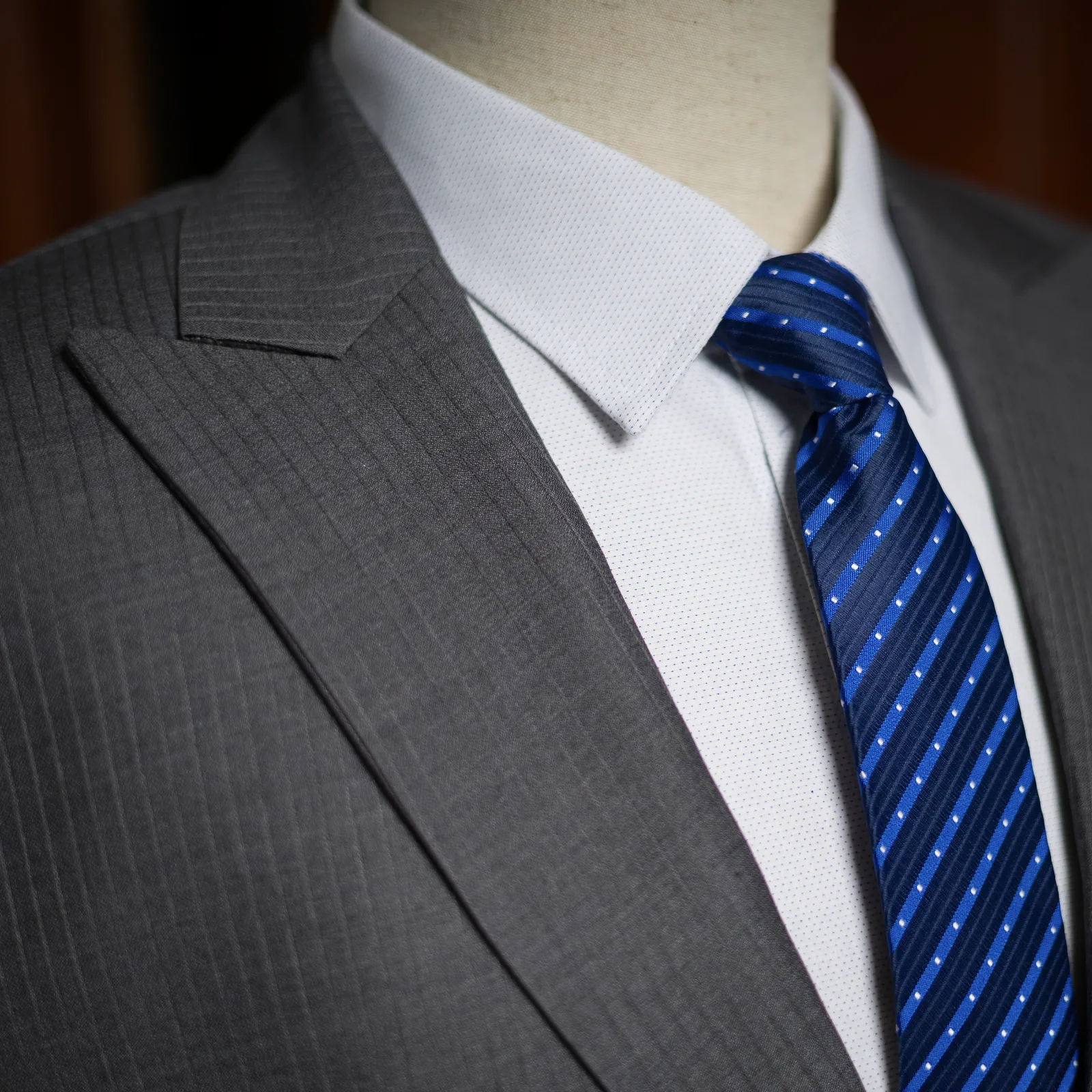
Knowing how to dress for a job interview suit is not about vanity. It is about understanding that interviews are high-stakes social interactions in which appearance communicates competence before a single word is spoken. Research consistently shows that judgements of capability, trustworthiness, and professionalism are formed within seconds of a first encounter. Your clothing is doing most of that work.
The good news is that dressing well for an interview is not complicated. It requires one thing above all else: fit. A suit that fits precisely signals that you pay attention to detail, that you take the occasion seriously, and — at some level — that you know who you are. Those are exactly the qualities every hiring manager is looking for.
Why Fit Is the Variable That Matters Most
An expensive suit that does not fit properly looks worse than an inexpensive suit that does. This is not a controversial position among tailors, stylists, or anyone who has spent time watching how people move in clothing. An off-the-rack suit designed to fit the statistical average will gap at the collar, pull across the shoulders, bunch at the waist, or hang too low in the seat. None of those things are invisible. They all communicate, unconsciously, that something is slightly wrong.
A bespoke suit, or a suit that has been properly altered, does none of that. It rests on the shoulder where the shoulder actually is. The jacket button fastens without straining. The trousers break cleanly over the shoe. When clothing fits, the wearer stops thinking about it — and that ease shows. You sit differently, stand differently, and project a confidence that has nothing to do with arrogance and everything to do with comfort in your own skin.
If you are commissioning a suit specifically for career occasions, our guide to how a bespoke suit should fit covers the technical benchmarks worth knowing before you go into a first fitting.
Industry by Industry: What to Wear Where
The correct level of formality varies significantly by sector, and misjudging it in either direction creates a problem. Overdressing for a creative agency suggests you have not done your research. Underdressing for a law firm suggests the same thing.
Finance, law, and professional services remain the most formal environments. A two-piece suit in navy or charcoal — the classic interview suit colours for good reason — with a white or pale blue shirt and a plain or subtly patterned tie is the correct choice. No question.
Corporate and management roles across most industries sit at smart business dress. A well-cut suit without a tie is increasingly acceptable, particularly in technology companies and marketing. The suit itself should still be conservative: no bold checks, no unusual colours.
Creative industries — advertising, design, media, architecture — expect you to show that you have taste. A suit remains appropriate, but you have more latitude with colour, texture, and styling. A linen or textured wool suit in a considered colour can read as sophisticated rather than unconventional.
Start-ups and tech are genuinely variable. Research the company's culture. If the founders are photographed in hoodies, arriving in a three-piece suit will feel incongruous. Smart trousers and a well-cut blazer often threads the needle.
Colour and Pattern: Playing It Right
For a job interview, the goal is to be remembered for your conversation, not your clothing. That means the suit should be present but not loud.
Navy is the safest choice for most situations. It reads as professional without being as severe as charcoal, and it flatters a wide range of skin tones. Charcoal is equally acceptable and carries a slightly more formal weight, making it the better option for law, finance, and government roles.
Mid-grey is a strong choice for less formal interviews. It is versatile, understated, and pairs well with almost any shirt colour. Avoid light grey for interviews — it tends to read as casual rather than professional.
Pattern should be used with caution. A subtle stripe is perfectly appropriate; a bold windowpane check is not wrong, but it is a choice that draws attention. For a first interview with a company you do not know well, plain cloth is the lower-risk route.
Shirt, Tie, and Accessories
A white poplin shirt with a semi-spread collar is the default for a reason: it works with everything and introduces no variables. A pale blue shirt is equally safe and slightly less stark. Both should be ironed, which sounds obvious but is often missed.
If wearing a tie, keep it silk, plain or with a simple repeating pattern, and tied with a half Windsor or four-in-hand. The tip should reach the trouser waistband. No novelty ties, no tie bars unless the rest of your outfit is very considered.
Watch: a leather-strapped dress watch in silver or gold is appropriate. A bulky sports watch is not wrong, but it introduces an element of informality. No watch is fine.
Cufflinks, if you wear French cuffs, should be small and understated. This is not the occasion for theatrical accessories.
If you are looking at the full range of options available for a bespoke wardrobe built around professional occasions, our menswear services cover the garments most worth commissioning.
Shoes: Often the Thing That Gives It Away
Experienced interviewers notice shoes. This is not a cliché — it is a practical observation. Shoes are the detail that is most often neglected and most clearly signals whether someone has thought through their entire presentation.
Oxford or Derby shoes in black or dark brown leather are the correct choice with a suit. They should be polished. Leather-soled shoes are a sign of quality; rubber soles are acceptable but read as less formal.
Chelsea boots work in many creative or less formal environments. Loafers can work, but they introduce a note of relaxedness that sits uncomfortably in formal interviews.
Trainers with a suit, however fashionable in some circles, are a risk in an interview setting. Unless you are certain the company's culture actively endorses it, the downside of getting it wrong outweighs the upside of looking current.
Socks should match the trouser, not the shoe, and should be long enough that no leg is visible when seated.
Frequently Asked Questions
Should I wear a suit to every job interview?
Not necessarily, but when in doubt, wear one. The risk of being slightly overdressed for an interview is far lower than the risk of being underdressed. A suit can always be softened — no tie, open collar, jacket over the arm when you arrive — but you cannot recover from arriving in casual clothing when the panel expected formal dress. Research the company first; if you genuinely cannot determine the expected dress code, default to a clean, well-fitted suit.
What colour suit is best for a job interview?
Navy or charcoal are the most reliable choices for professional interviews. Navy is slightly warmer and more versatile; charcoal carries more authority and is the stronger choice for finance, law, and senior roles. Mid-grey works well for less formal environments. Avoid black unless the role specifically calls for it — black suits can read as funereal rather than professional in interview settings.
Does it matter if my suit is off-the-rack for an interview?
The suit's origin matters less than how it fits. An off-the-rack suit that has been properly altered to your measurements will always outperform an expensive bespoke suit that has never been touched. If you are buying or wearing a ready-to-wear suit for an important interview, budget for a tailor visit. The shoulder, chest, and trouser length are the critical points. A bespoke suit removes all those variables from the start — which is precisely why it is worth commissioning if you have regular need for formal professional dress.
Visit the Studio
Be Li Tailor is at 635 Hai Bà Trưng, Hội An Ancient Town, open daily from 8am to 9pm. Whether you're arriving next week or planning ahead, book your appointment online or reach us on WhatsApp at +84 905 820 116. We keep every client's measurements on file — if you've visited before, your next commission starts where the last one ended.