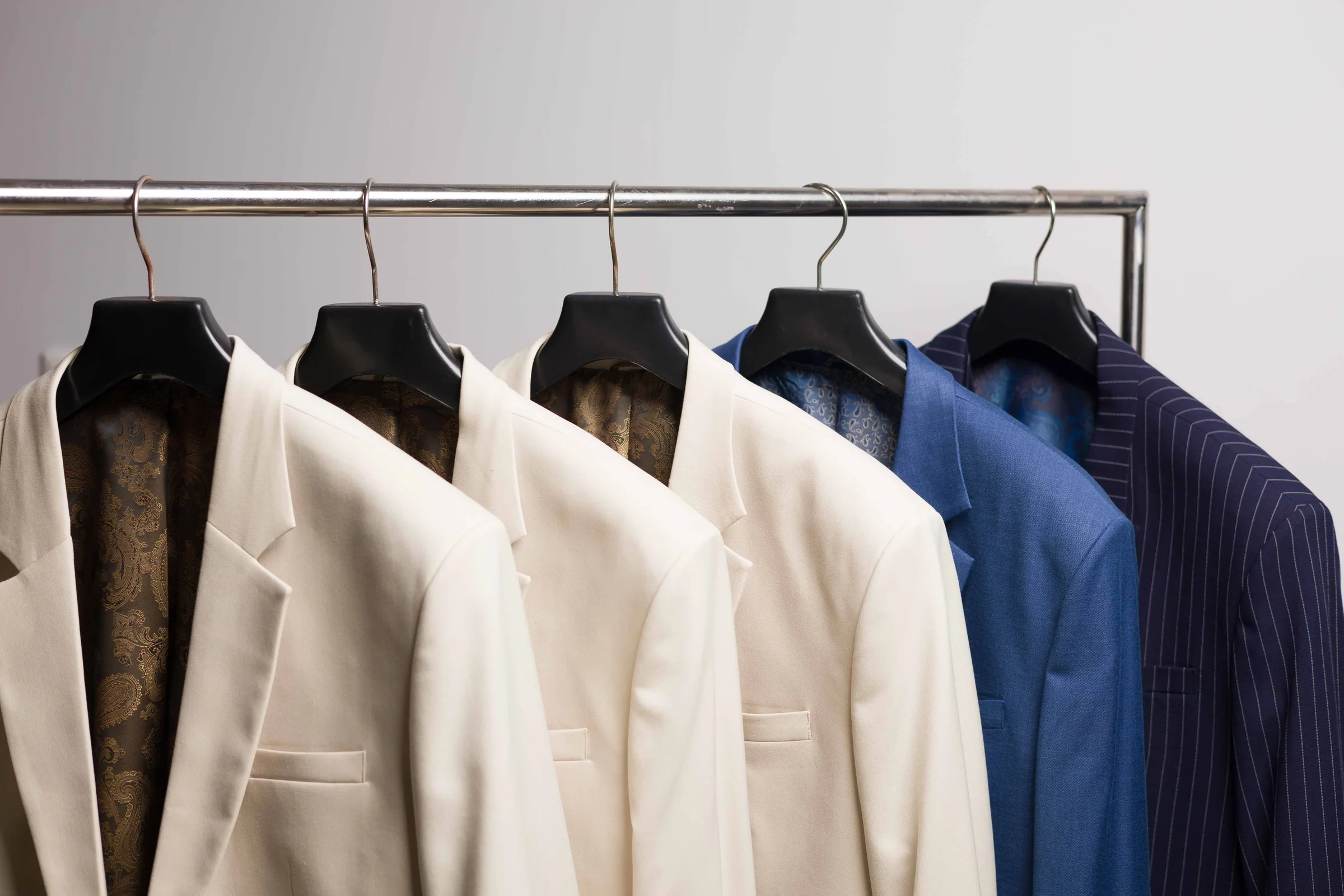
Knowing how to pack a suit in a suitcase without creasing it is one of those practical skills that separates confident travellers from those who arrive at their destination already planning an emergency iron. It doesn't require special equipment or expensive luggage — just a reliable technique applied consistently.
The methods below range from the simple inside-out fold (which works for most situations) to the more involved bundle method for multi-garment trips. Each has its place depending on the length of your journey, the type of suit you're travelling with, and what luggage you're using.
The Four Best Methods for Packing a Suit
There is no single universally correct way to pack a suit. The right method depends on four variables: the suit's fabric and construction, the length of the journey, whether you have access to a garment bag or carry-on space, and how much else you're travelling with. We'll cover all four methods, then give guidance on when to use each.
The Inside-Out Fold: Best for Most Jackets
This is the method recommended by most tailors and experienced travellers for good reason: it distributes any creasing across the lining rather than the face fabric of the jacket, and it works for both checked and carry-on luggage.
Step by step:
- Lay the jacket flat on a bed or table, face down.
- Take one shoulder and turn it inside out — invert the entire shoulder and arm of one side.
- Take the other shoulder and tuck it inside the first one, so the jacket is now folded along the back seam with the outer cloth facing inward and the lining on the outside.
- Fold the jacket in half lengthwise if needed for suitcase dimensions.
- Lay it flat on top of softer items in the suitcase, ensuring it doesn't get compressed.
The result is a jacket where most contact pressure falls on the lining, not the wool or whatever cloth the jacket is made from. On arrival, shake the jacket gently, hang it immediately, and give it a few hours to relax. Most creases will fall out on their own with moderate-weight fabrics like wool.
The Dry-Cleaning Bag Trick
This method is less about folding technique and more about reducing friction — and it works remarkably well. The principle: fabric slides more easily over smooth plastic than it does against itself or against other fabrics. Where the cloth would normally compress and crease against adjacent surfaces, the plastic bag creates a buffer that allows it to move slightly and resist hard set creases.
How to do it:
- Keep the thin plastic bag from your last dry-cleaning visit, or use any similar thin polythene bag.
- Lay the bag flat inside your suitcase.
- Fold the suit jacket using the inside-out method or simply in half along the back, then lay it on the plastic bag.
- Pull the bag up and over the jacket, or place a second bag on top so the jacket is sandwiched between plastic on both sides.
- Pack other items around but not on top of the jacket if possible.
This method is particularly useful for smooth-finished wools and trousers with a sharp front crease, where any pressure on a fold line creates a noticeable crease. It's also useful when packing a garment inside a checked suitcase where it will be under weight for hours.
The Bundle Method for Multiple Suits
If you're travelling with multiple suits or a significant wardrobe — for a longer trip, a wedding circuit, or a business tour — the bundle method allows you to pack several garments efficiently while minimising creasing on all of them.
The bundle method works by wrapping each garment around a central core object rather than folding them. Because the garments are curved rather than sharply folded, they don't develop hard crease lines. The core object — typically a toiletries bag or a soft roll of clothing — keeps everything in a gentle arc.
Basic bundle technique:
- Lay your most crease-prone garment flat first — typically the suit jacket, laid face down.
- Place the next garment on top, perpendicular or at a slight angle, sleeves extended.
- Continue layering, alternating directions and placing softer items in between.
- Place the core object in the centre of the stack.
- Working from the last item placed, fold each garment in turn around the core, wrapping the bundle inward.
This method takes practice but becomes intuitive quickly. It's the technique used by stylists and wardrobe supervisors who travel with large quantities of garments regularly. A full guide to the bundle method specifically is beyond the scope of this article, but the principle — curve rather than fold — is the key insight.
Carry-On vs. Checked Luggage: Which Is Safer?
For a suit, carry-on is almost always the safer choice — for two reasons. First, the garment is not compressed under weight for the duration of the flight. Checked luggage can shift, be stacked upon, or be compressed in ways you can't anticipate. Second, you avoid the risk of delayed or lost baggage with a garment you need immediately on arrival.
A carry-on garment bag — the flat, folding type that fits in the overhead locker — is the best possible option for short to medium-haul flights. The jacket hangs or folds once rather than multiple times, and remains separate from the rest of your luggage.
If you must check a suit, pack it in a rigid suitcase rather than a soft-sided bag, and position it on top of other items rather than underneath them. Fill the suitcase as fully as you can without overpacking — a half-empty suitcase allows items to shift and tumble, whereas a properly packed one keeps everything in place.
Our complete guide to caring for a bespoke suit covers storage and maintenance for suits at home and in transit in more detail.
What to Do When You Arrive
How you handle the suit on arrival matters as much as how you packed it. The moment you're in your accommodation:
- Unpack the suit immediately — don't leave it folded in the suitcase.
- Hang the jacket on a proper shaped hanger if one is available. If only wire hangers are in the wardrobe, find an alternative — the back of a door, the top of a door frame, a hook. Almost anything is better than a wire hanger.
- Hang the trousers by the waistband or lay them flat.
- Leave the suit to hang and breathe for a minimum of two hours before wearing. Most creases — particularly in wool — will relax significantly without any further intervention.
- For residual creasing, the bathroom steam method is reliable and equipment-free: hang the jacket in the bathroom and run a hot shower for five to ten minutes without getting the garment wet. The ambient steam relaxes the fibres. Alternatively, use the hotel iron with a damp cloth, or request a garment steamer from the front desk.
The fabric matters here. Wool recovers from travel creasing very well — it's one of the practical advantages of choosing a well-constructed wool suit for travel. Linen creases more readily but presses out easily with moisture and heat. Cotton holds creases more stubbornly. Synthetic blends vary.
If you regularly travel with tailored pieces and want a wardrobe built for it, our menswear range includes several travel-appropriate fabrics specifically chosen for their crease recovery and pack-ability. Book an appointment to discuss what would work for your travel schedule.
Frequently Asked Questions
What's the best way to pack a suit jacket?
The inside-out fold is the most reliable method for most situations: turn one shoulder inside out, tuck the other shoulder inside it so the jacket folds along the back seam with the lining on the outside, then lay it flat. This concentrates any pressure on the lining rather than the face fabric. Combine it with the dry-cleaning bag trick — sandwiching the jacket between thin plastic sheets — for longer journeys or checked luggage.
Should I fold or roll a suit for travel?
Fold, not roll. Rolling works well for casual cotton T-shirts and knits that don't have structured seams or a shaped canvas, but rolling a suit jacket compresses the chest canvas and creates circular crease patterns that are harder to press out than straight fold lines. The inside-out fold creates far fewer creases than any rolling technique.
Can I pack a linen suit in a suitcase?
Yes, but linen creases more readily than wool, so it requires a bit more care. Use the inside-out fold with the dry-cleaning bag trick, keep the jacket on top of other items in the suitcase rather than underneath them, and hang it immediately on arrival. Linen presses out quickly with a damp cloth and iron or a handheld steamer, so any residual creasing is easily resolved. The ease of pressing is one of linen's practical advantages as a travel fabric.
Visit the Studio
Be Li Tailor is at 635 Hai Bà Trưng, Hội An Ancient Town, open daily from 8am to 9pm. Whether you're arriving next week or planning ahead, book your appointment online or reach us on WhatsApp at +84 905 820 116. We keep every client's measurements on file — if you've visited before, your next commission starts where the last one ended.