No fabric generates more confusion in the tailoring conversation than silk. A silk tailoring guide is genuinely needed because the material is simultaneously overpraised and misapplied — clients often ask for it when another fabric would serve them better, and occasionally overlook it for applications where it is the most sensible choice. The key is understanding which role you are asking silk to perform.
Silk has been produced in Vietnam for centuries; the country has a long tradition of silk cultivation and weaving, particularly in regions close to Hội An. The fabric we work with comes from both domestic and imported sources, and the range in quality, weight, and weave construction is considerable. Getting silk right in a tailored garment starts with being honest about what it can and cannot do. For the full picture of all fabric categories in tropical conditions, see our complete tropical tailoring fabric guide.
What Makes Silk Different From Every Other Fabric
Silk is a protein fibre — specifically, it is the filament produced by silkworm larvae when forming their cocoons. Unlike the short fibres of cotton and wool, silk is a continuous long filament that can be unwound from the cocoon and wound into thread directly. This continuous filament structure is responsible for silk's most distinctive properties: its smooth, almost frictionless surface, its natural lustre, and its exceptional drape.
Silk's weight-to-strength ratio is extraordinary — it is stronger per unit of weight than steel wire, which is why very lightweight silk fabrics maintain their integrity even at momme weights of 8–12 (momme being the standard measurement unit for silk weight, roughly equivalent to grams per square metre). This allows silk to be woven into unusually lightweight, fluid fabrics that no other natural fibre can match.
The limitation is moisture management. Silk absorbs perspiration readily — up to 30% of its weight — but releases it slowly. This means silk worn next to the skin in warm conditions can develop a slightly damp, clingy quality that is uncomfortable and may leave visible marks. It is a beautiful fibre, but it is not a naturally thermoregulatory one in the way that wool is.
Silk for Linings: The Smart Use of a Luxury Fabric
The most consistently excellent application of silk in tailoring is as a lining fabric, and it is worth understanding why. The inside of a tailored jacket needs to accomplish several things: reduce friction between the shell fabric and the clothing worn underneath, protect the internal construction of the garment from wear and perspiration, and ideally contribute to the jacket's thermal comfort.
A silk lining does all of these things better than the bemberg (cupro) and polyester alternatives that are commonly used. The smooth, low-friction surface of silk allows the jacket to slip over a shirt or blouse without catching or pulling. Silk breathes better than polyester, meaning the lining does not trap heat against the wearer's back in the way that synthetic linings can. And the feel of silk against the inner arm and back — cool, smooth, lightweight — is noticeably more pleasant than alternatives.
The practical trade-off is cost and durability. Silk lining adds to the cost of a garment, and it is slightly more delicate than bemberg or polyester equivalents. For jackets that will see daily heavy use, bemberg is often a more practical choice. For special-occasion pieces and formal wear, silk lining is a worthwhile investment that contributes significantly to the overall luxury of the garment.
Many clients commissioning women's tailored jackets and evening wear choose silk lining as a considered detail — something that adds to the quality of the experience of wearing the garment even when invisible to others.
Silk as a Shell Fabric: When It Works
As the outer fabric of a garment, silk works well in specific contexts and not at all in others. The contexts where it genuinely excels are those where the garment hangs or drapes rather than being structured against the body, and where the occasion prioritises appearance over sustained comfort in movement.
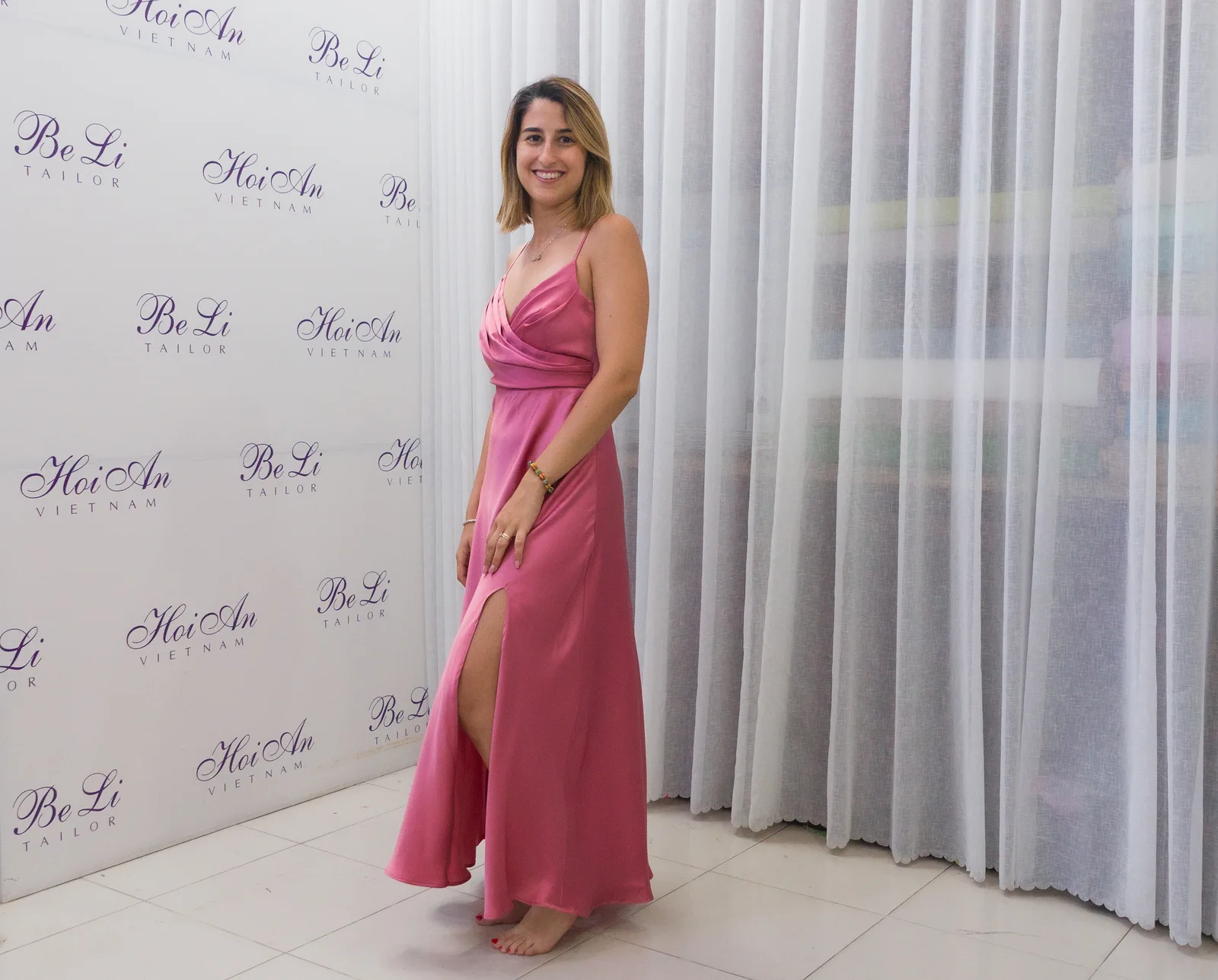
Silk blouses, loose tops, and fluid evening separates are natural applications. A 16 momme silk charmeuse blouse falls beautifully from the shoulders, catches light in a way no other fabric does, and produces a silhouette of relaxed elegance that is uniquely silk's. For this type of garment — worn to dinner, to an event, in a context where sustained physical activity is not expected — silk as a shell fabric is a genuinely excellent choice.
Evening dresses and special-occasion pieces are another strong silk application. The combination of lustre, drape, and the tactile quality of silk makes it appropriate for formal evening wear in a way that cotton and linen — however well executed — cannot replicate. For men's formal wear, silk is occasionally used for waistcoat fronts and bow ties, applications where the visual impact of the fabric is the point and the structural requirements are limited.
Where silk consistently underperforms as a shell fabric is in structured, tailored outerwear — jackets and suits. The moisture absorption issues noted above become significant in active wear. The fabric does not hold a crisp shape through a long day in humid conditions. And the pressing requirements — silk must be ironed at low temperature on the reverse side, with a pressing cloth — are more demanding than most garments in a working wardrobe should require.
Silk Blends: A More Practical Approach
Silk blends offer a route to many of silk's aesthetic properties with substantially reduced care requirements and improved practical performance. The most useful blends for tailoring purposes are silk-wool, silk-cotton, and silk-linen.
Silk-wool blends — typically 10–20% silk added to a fine wool base — improve the drape and add a subtle lustre to the wool without significantly compromising its breathability or structural properties. Many premium tropical suiting fabrics use this construction, and the result is a fabric that behaves like a fine wool but has a slightly more refined visual quality. This is one of the genuinely recommended approaches to formal tropical suiting.
Silk-cotton blends are useful for lighter garments — shirts, blouses, summer dresses — where the cotton provides structure and ease of care while the silk adds softness and a degree of lustre. A 30% silk, 70% cotton voile is a genuinely beautiful blouse or dress fabric that launders more easily than pure silk.
Silk-linen blends are perhaps the most intriguing combination. Linen's natural texture and breathability combine with silk's drape and lustre in a way that can produce very beautiful fabric, particularly for women's tailoring. The blend moderates linen's tendency to crease while adding a richness of surface that plain linen lacks. For a detailed comparison of linen-based options, our article on linen, cotton, and blends covers the full picture.
Caring for Silk Garments Long-Term
Silk requires more careful handling than most other tailoring fabrics, and setting up good care habits from the start preserves the garment significantly longer than treating it casually.
For unstructured silk garments — blouses, loose dresses, scarves — hand-washing in cool water with a gentle, pH-neutral detergent is usually appropriate. Never wring silk; excess water should be removed by rolling the garment gently in a clean towel. Hang to dry away from direct sunlight, which degrades silk fibres and fades colour over time.
For structured silk garments with interlinings — a jacket, a formal dress — dry cleaning is the safer route. The interlining may behave differently to the silk shell under washing, and the risk of distorting the garment's structure is difficult to manage at home.
Ironing silk requires a low heat setting and a pressing cloth between the iron and the fabric surface. High heat will permanently damage silk, creating a characteristic glazed or burnt appearance on the surface. Iron on the reverse side where possible.
Store silk away from direct light and in a breathable garment bag rather than sealed plastic. In humid tropical climates, check silk garments periodically for any signs of mildew — the protein fibre is more susceptible to mould than synthetic alternatives.
Frequently Asked Questions
Is silk good for suits?
As a primary shell fabric, silk is generally not recommended for structured suits worn in active tropical conditions. It absorbs perspiration and releases it slowly, can feel damp in sustained heat, and does not hold a pressed shape through a long day. It works better for special-occasion suits worn briefly and cared for carefully. Silk-wool blends — where silk represents 10–20% of the fabric — are a practical alternative, adding silk's drape and lustre to a wool base while maintaining the wool's structural and moisture-wicking properties.
What is a silk lining and why does it matter?
A silk lining is the interior fabric of a tailored jacket, replacing the more common bemberg (cupro) or polyester alternatives. Silk lining provides a lower-friction surface that allows the jacket to move freely over clothing worn underneath, breathes better than synthetic options, and feels noticeably cooler and more pleasant against the skin. It is a detail that contributes significantly to the experience of wearing the garment, even though it is invisible from the outside. The trade-off is cost — silk lining adds to the overall price of the garment — and slightly reduced durability compared to synthetic alternatives.
Can you wash silk tailored garments?
Unstructured silk garments — blouses, loose tops, dresses without interlinings — can usually be hand-washed in cool water with a gentle detergent. Structured silk garments with interlinings, such as jackets and formal dresses, should be dry-cleaned to avoid distorting the construction. Never machine-wash silk on a standard cycle, wring the fabric, or use hot water. Ironing requires a cool setting and pressing cloth on the reverse side of the fabric. With appropriate care, a well-made silk garment will maintain its quality for many years.
Visit the Studio
Be Li Tailor is at 635 Hai Bà Trưng, Hội An Ancient Town, open daily from 8am to 9pm. Whether you're arriving next week or planning ahead, book your appointment online or reach us on WhatsApp at +84 905 820 116. We keep every client's measurements on file — if you've visited before, your next commission starts where the last one ended.