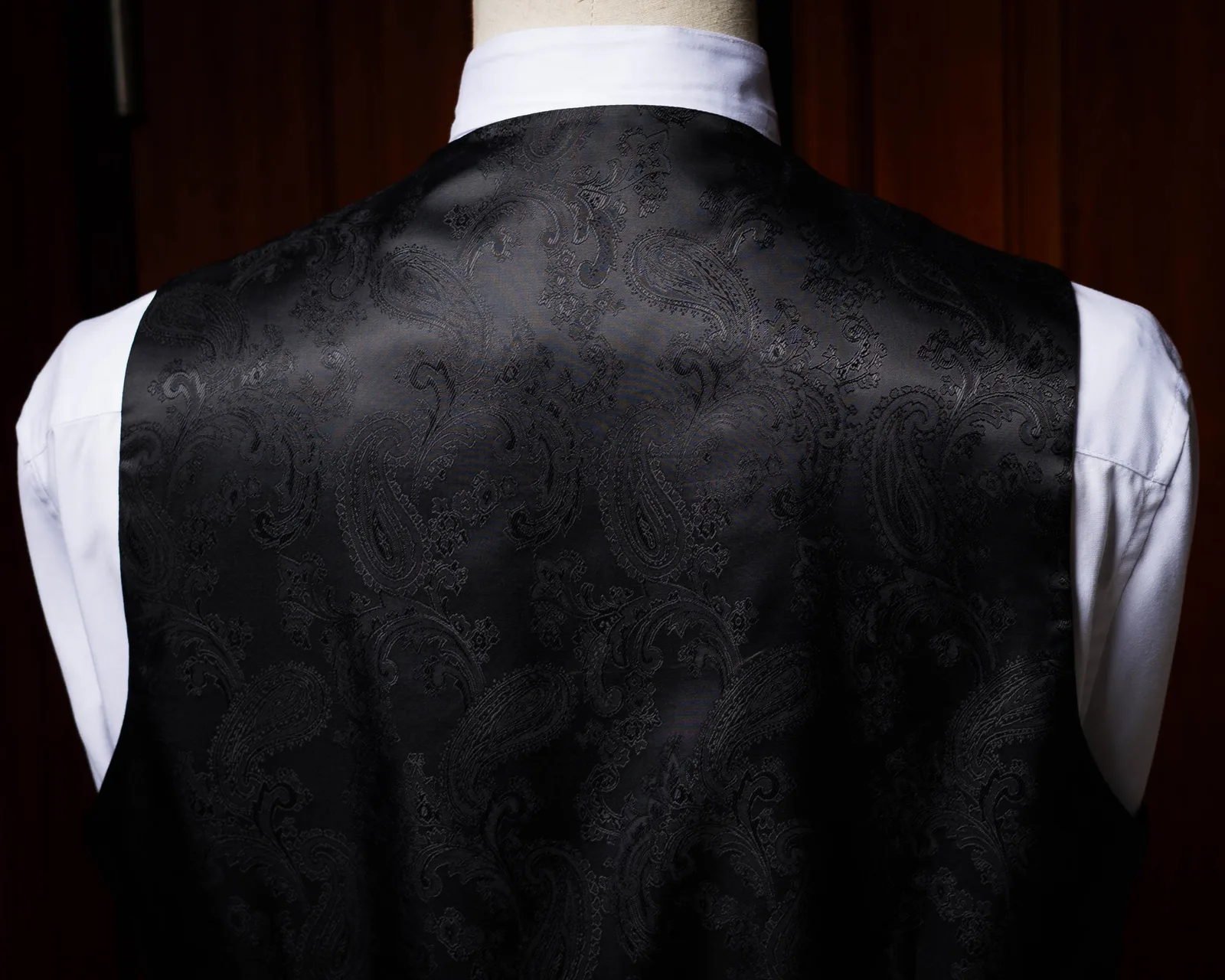
Black tie is one of the few dress codes where the rules are genuinely useful. They exist not to restrict but to create a uniform standard — so that when every man in the room is wearing a dinner suit, the differences between them are not about formality but about fit, fabric, and considered detail. Getting it right is not complicated. Getting it wrong is surprisingly easy.
A bespoke tuxedo is one of the most rewarding garments a man can commission. Unlike a business suit, which must work in a dozen different contexts, a dinner suit has a single purpose. Every decision — lapel shape, fabric weight, trouser stripe — can be optimised for that one context without compromise. Here is how to make those decisions well.
Black Tie vs. White Tie: Know the Difference
Black tie and white tie are not interchangeable. White tie — the most formal dress code in existence — calls for a black tailcoat, white waistcoat, white bow tie, and matching formal trousers. It appears at state banquets, royal functions, and a handful of prestigious annual events. Most people will encounter it once or twice in a lifetime, if at all.
Black tie — what most invitations mean when they say "formal" — calls for a dinner jacket (the tuxedo), formal trousers with a single silk stripe, a white dress shirt, a black bow tie, and black patent or highly polished leather shoes. It is the standard for gala dinners, award ceremonies, cruises, and formal weddings that request it explicitly.
There is also a newer convention called "black tie optional" or "creative black tie," which permits a dark suit in place of a dinner jacket. In these contexts, a well-cut dark navy or charcoal suit is perfectly acceptable — but a proper dinner suit will always look more considered.
This guide focuses on black tie — specifically on commissioning a dinner jacket and matching trousers that will serve you for decades.
The Three Lapel Options: Peak, Shawl, and Notch
The lapel defines the visual character of a dinner jacket more than any other single element. There are three options, each with distinct associations.
The Peak Lapel
The peak lapel points upward at the gorge line — the angular, assertive shape that gives a jacket a powerful, structured silhouette. On a dinner jacket, a peak lapel faced in satin or grosgrain creates an immediate visual impact. It is the most formal of the three options, the most flattering on narrow-shouldered frames, and the best choice for men who want their dinner jacket to look distinctly different from a business suit. A peak lapel faced in grosgrain silk — as opposed to the more common satin — has a more subtle sheen that many experienced dressers prefer.
The Shawl Lapel
The shawl lapel is a single continuous curve running from the collar to the front edge of the jacket — no notch, no point. It is the traditional lapel for a dinner jacket, particularly in a midnight navy or ivory. The shawl reads as more relaxed than the peak — it is the lapel of the gentleman at leisure rather than the formal occasion — but it is no less correct. A wide shawl lapel in a velvet dinner jacket is one of the most elegant things a man can wear to a formal event.
The Notch Lapel
The notch lapel is standard on business suits and is, technically, acceptable on a dinner jacket. In practice, it reads as less considered. A notch-lapelled dinner jacket can look as though someone has simply made a suit in black with satin facing — because that is essentially what it is. If you are commissioning a dinner jacket, choose either peak or shawl. The notch should be reserved for business suits.
Lapel width is a further variable. Standard business suits have lapels between 7.5cm and 9cm. A dinner jacket's lapels typically run slightly wider — 9cm to 11cm — which adds visual weight appropriate to a formal context. Narrower lapels read as contemporary; wider lapels are more classical.
Fabric for a Tuxedo: Wool, Barathea, and Velvet
The dinner jacket fabric determines the overall register of the garment — how formal it reads, how well it travels, and how it performs in different temperatures.
Barathea Wool
Barathea is the traditional cloth for dinner jackets: a fine broken-twill weave in worsted wool that produces a densely smooth, slightly matte surface with a characteristic pebbled texture. A good barathea — in a super 100s or 110s wool — is firm enough to hold structure, fine enough to drape elegantly, and durable enough to press and re-press over years of use. In black, it reads as deeply formal. In midnight navy, it is slightly softer and arguably more flattering under artificial lighting, where pure black can absorb light and flatten the silhouette.
Velvet
A velvet dinner jacket is the choice of the man who knows exactly what he is doing. In midnight navy, deep burgundy, or bottle green, it reads as confident and considered rather than ostentatious. The pile of velvet creates depth and movement under light — it is one of the most photographically striking fabrics in tailoring. A cotton velvet is heavier and more casual; a silk-cotton velvet is lighter, more lustrous, and more appropriate for a formal dinner jacket. Velvet is not ideal in high-humidity environments — it can crush with moisture — so for a tropical event, a fine barathea or lightweight crepe wool is usually the more practical choice.
Lightweight Tropical Wool
For events in hot climates — which describes most of Southeast Asia's formal calendar — a fine tropical wool in 120s or higher is worth considering. A tropical weave uses a looser construction that promotes airflow without sacrificing the clean surface appearance of the jacket. In black or midnight navy, a tropical weight dinner jacket looks identical to a heavier cloth at a distance but performs dramatically better in 28-degree heat.
The Trouser Stripe: Satin and Grosgrain
Black tie trousers carry a single stripe of silk down the outer seam of each leg — the visual element that distinguishes a dinner suit from a business suit at a glance. There are two choices: satin and grosgrain.
Satin stripe is the most common — a smooth, high-sheen silk ribbon typically 3cm to 4cm wide. It reflects light and creates a clear visual contrast against the wool trouser fabric. Grosgrain is ribbed rather than smooth, with a more matte finish and a slightly quieter appearance. Both are correct; the choice often comes down to which facing you have used on the lapel — matching the lapel facing to the trouser stripe creates a coherent visual language.
Dinner trousers should not have a crease pressed down the front leg — this is a business suit convention and looks incorrect on formal evening wear. They should also not have cuffs (turn-ups) — again, a day wear detail. The trouser should break cleanly at the top of the shoe with a very slight drape.
Accessories That Complete the Look
A dinner suit worn with the wrong accessories is not a complete dinner suit. The key pieces:
- Bow tie: A self-tie bow tie in black silk — satin or grosgrain — is the only correct choice. Pre-tied and clip-on bow ties are recognisable at distance and undermine the effort of the rest of the garment. Learning to tie a bow tie takes ten minutes and is worth doing once.
- Dress shirt: A white shirt in fine cotton with a stiff bib front (marcella or piqué weave) and a turndown collar. French cuffs and mother-of-pearl or jet studs are the traditional finish. A pleated front bib is slightly more casual than a flat marcella bib.
- Waistcoat or cummerbund: A low-cut dinner jacket waistcoat in matching silk or a black silk cummerbund worn with pleats facing upward. The cummerbund is American in origin and more casual; a waistcoat is more formal. Both are correct for black tie.
- Shoes: Black patent leather Oxford or opera pump. Highly polished black calf leather is acceptable. Brown leather, suede, and coloured shoes are not.
- Pocket square: White linen or white silk, folded flat. Not the coordinated pocket square of a business suit — white, flat, simple.
Commissioning a Tuxedo in Hội An
A bespoke dinner suit commissioned in Hội An offers the same quality of construction and fabric as those made in major tailoring cities, at a fraction of the price. The process at Be Li Tailor follows the same methodology as our bespoke suit guide — a consultation and measurement appointment, pattern-making, first fitting, alterations, and collection. For a dinner suit, we allow the same timeline as a business suit: four to five days minimum for a clean result.
Because a dinner jacket is typically worn to high-visibility events, the details matter more than they do for everyday wear. We recommend choosing a fabric from our barathea selection or, for events in warmer climates, a fine tropical wool. For the lapel, most of our clients who commission dinner jackets choose either a shawl or peak — and almost all of them are glad they did not opt for notch.
If you are commissioning a dinner suit for a wedding — whether as the groom, a guest, or a wedding party member — our weddings page has additional guidance. For the full range of menswear commissions, including the two-piece vs three-piece comparison that may be relevant if you're weighing a dinner suit against a formal business suit, the answers are all in our journal. When you're ready, book your appointment and we will guide you through every decision.
Frequently Asked Questions
What lapel is best for a tuxedo?
A shawl lapel or peak lapel — both faced in satin or grosgrain — are the traditional and most appropriate choices for a dinner jacket. The shawl lapel is the more classical option, particularly on single-breasted dinner jackets. The peak lapel is more structured and formal. Avoid the notch lapel on a dinner jacket; it reads as a business suit in formal fabric rather than a genuine dinner suit.
Is a dinner jacket the same as a tuxedo?
Yes — "tuxedo" is the American term; "dinner jacket" is used in British and Australian English. Both refer to the black or midnight navy jacket worn for black tie occasions. The full ensemble — jacket, matching trousers with silk stripe, dress shirt, and bow tie — is collectively called a tuxedo or dinner suit depending on where you are.
Can you wear a tuxedo to a wedding?
Yes, if the dress code calls for it. A black tie or formal wedding invitation explicitly expects a dinner suit. For a smart-casual or lounge suit wedding, a dinner jacket would be overdressed. If you are the groom and want black tie, your guests should be informed clearly — wearing a tuxedo when guests arrive in business suits creates an unintended contrast. For more on wedding attire planning, see our weddings page.
Visit the Studio
Be Li Tailor is at 635 Hai Bà Trưng, Hội An Ancient Town, open daily from 8am to 9pm. Whether you're arriving next week or planning ahead, book your appointment online or reach us on WhatsApp at +84 905 820 116. We keep every client's measurements on file — if you've visited before, your next commission starts where the last one ended.