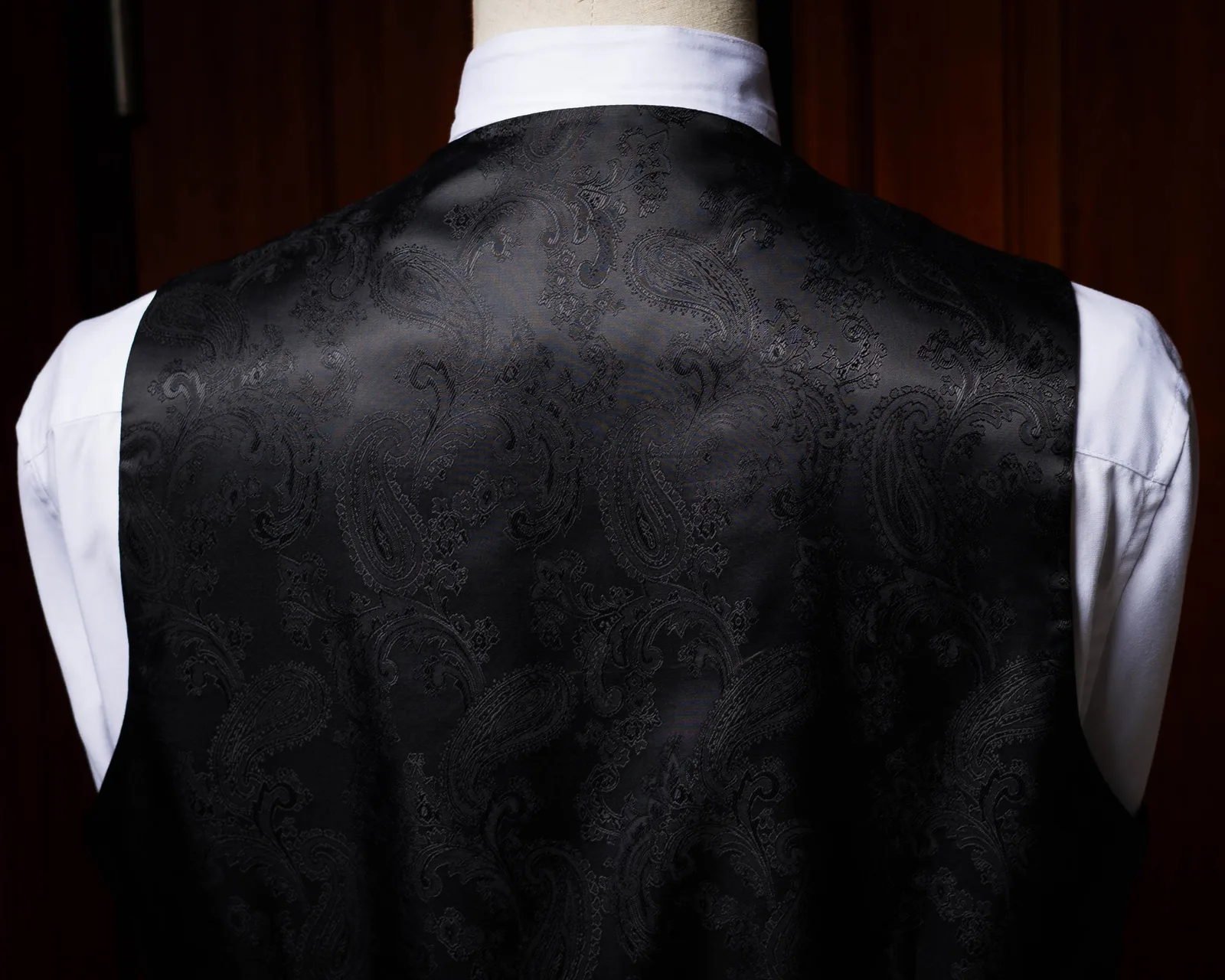
Understanding what to wear to a black tie event removes a significant amount of anxiety from formal dressing. The dress code is specific, but not as inflexible as people often assume — and once you understand its logic, it becomes straightforward to navigate both the traditional requirements and the acceptable variations.
Black tie is an evening dress code, typically applying to events starting at or after 6pm. It signals a level of formality below white tie (which is rarely encountered outside royal courts and state dinners) and above lounge suit or business formal. The anchor garment for men is the tuxedo. For women, the range is considerably wider. This guide covers both.
What Black Tie Actually Means
Black tie is a 19th-century creation, developed as a less formal alternative to white tie for evening entertainments. Its defining characteristics have remained remarkably stable: a dark jacket with silk or satin facings, matching dark trousers with a silk or satin stripe down the outer seam, and a bow tie. Everything else — shirt, cummerbund or waistcoat, shoes, accessories — flows logically from these foundations.
The important thing to understand is that black tie is a system. Every element connects to the others. The silk lapel facings on the jacket are echoed by the silk stripe on the trousers and the silk of the bow tie. The absence of breast pocket square is intentional — a handkerchief interferes with the clean visual line of the lapel. The no-buttons-visible principle (covered by the shirt placket, cummerbund, or waistcoat) creates a continuous dark vertical line. Once you see the internal logic, the rules stop feeling arbitrary.
The Tuxedo: The Non-Negotiable Anchor
The tuxedo — also called a dinner jacket or DJ in British English — is the one genuinely non-negotiable element. Everything else has alternatives; the tuxedo does not. It is defined by its silk or satin faced lapels, which distinguish it visually from a standard suit jacket.
Colour
Midnight navy and black are both correct. Midnight navy — a very dark navy that reads as almost-black under artificial light — has been the preference of many well-dressed men for decades, as it has slightly more visual interest than pure black and a warmer tone that suits most complexions. Black is equally correct and remains the majority choice. Ivory or white dinner jackets are appropriate for tropical settings or summer formal events but are not universally correct for all black tie occasions.
Lapel style
Peak lapels and shawl collars are both traditional and correct. The shawl collar — a continuous curved lapel with no notch — is perhaps the most formal and has the longest history. Peak lapels are equally accepted and slightly more versatile. Notch lapels, which are standard on business suits, are not technically correct on a dinner jacket — though they appear on cheaper tuxedo options and are rarely challenged in practice.
Single vs. double-breasted
Single-breasted dinner jackets with one or two buttons are standard. Double-breasted dinner jackets — particularly in midnight navy with peak lapels — have a strong tradition and a distinctive elegance but require the jacket to be kept buttoned throughout the evening. For a full guide to tuxedo construction and style options, see our dedicated guide on tuxedo lapels, fabric, and black tie.
Shirt, Studs, and the Bow Tie
The dress shirt
A white dress shirt is correct. Cream or ivory is acceptable at some occasions; pale blue is a minor deviation but widely worn. The shirt should have a stiff, formal front — either a bib front (marcella or piqué) or a plain front with a pleated bib. The collar should be either a wing collar or a turndown collar. Wing collars are more traditional and pair well with a butterfly bow tie; turndown collars are slightly less formal and pair with either butterfly or pointed-end bow ties.
The shirt placket should be concealed — covered by the bib front, the cummerbund, or a waistcoat. This is why dress shirts have hidden or fly fronts, and why wearing an ordinary business shirt with a dinner jacket always looks slightly wrong.
Studs and cufflinks
Dress shirts use shirt studs in place of buttons on the placket — typically mother-of-pearl, onyx, or gold. Matching cufflinks are expected. This is one of the pleasures of black tie: the opportunity to wear pieces of jewellery that have no other context. Keep the metals consistent (all gold or all silver) and the overall effect clean.
The bow tie
A self-tied bow tie in black silk or silk-like fabric is correct. Pre-tied bow ties are technically acceptable but immediately recognisable as such, which matters in formal settings. Learning to tie a bow tie takes ten minutes and a bathroom mirror. Black is traditional; midnight navy (matching the jacket, if navy) is elegant. Ivory or white bow ties pair with an ivory dinner jacket. A traditional butterfly shape or a slightly slimmer pointed-end shape are both correct.
Cummerbund or waistcoat?
Either covers the waistband and shirt gap that appears between jacket and trouser. A cummerbund — a pleated silk band worn around the waist — is the more common American choice. A low-cut waistcoat (waistcoat with no lapels, cut to a deep V) is the British preference. Both are correct. The cummerbund should be worn with the pleats facing upward.
Shoes and Accessories
Black patent leather Oxford shoes are the traditional choice and remain correct. Black leather cap-toe Oxfords with a high shine are an acceptable and somewhat more versatile alternative. Opera pumps — low-cut black shoes with a grosgrain ribbon — are the most formal option and still worn at the highest levels of black tie.
Black socks. Not navy, not patterned — black, in silk or fine merino.
No pocket square in the breast pocket of a dinner jacket. The silk lapel facing creates a visual statement; adding a pocket square introduces visual competition and breaks the intended line. This is one of the rules that most people ignore, but it remains the correct position.
What Women Wear to Black Tie Events
The dress code for women at black tie events is considerably more flexible than for men. The expectation is floor-length formal attire — a full-length evening gown being the most traditional interpretation — but midi-length and even formal separates (a tailored evening trouser and an elegant top) are widely worn and accepted at most contemporary black tie occasions.
Colour is entirely open. Fabric should be evening-appropriate — silk, satin, chiffon, velvet, structured lace. Heavily casual fabrics — cotton, denim, casual jersey — are out of step regardless of cut.
A well-fitted evening suit or formal trouser suit is a strong option that is often more practical, more comfortable, and equally as sophisticated as a gown. If you're considering commissioning a formal piece for an event, our bespoke suit guide covers the construction choices that define a quality formal garment.
Common Black Tie Mistakes
- Wearing a regular suit. A dark suit is not black tie, regardless of how formal it looks. The dress code has specific visual markers — silk lapels in particular — that distinguish it from business formal.
- A clip-on or pre-tied bow tie that's visibly lopsided. If you're going to wear a pre-tied bow tie, at least ensure it sits level.
- The wrong shirt. A regular business shirt with a dinner jacket breaks the visual logic of the outfit immediately. Invest in a proper dress shirt.
- Brown shoes. There is no correct brown shoe for black tie. Black only.
- A pocket square in a dinner jacket. As noted above — resist the instinct.
- A lounge suit tie instead of a bow tie. The necktie has no place in a black tie ensemble. A bow tie is not optional.
If you're planning to commission a tuxedo ahead of a significant event, book an appointment to discuss fabric, construction, and timing. A bespoke dinner jacket, fitted to your body rather than adjusted from a rack, makes a visible difference at the level of formality where details are noticed.
Frequently Asked Questions
Is a dark suit acceptable for black tie?
Technically, no. Black tie requires a dinner jacket with silk or satin lapel facings — a dark suit, however formal, doesn't satisfy the dress code. In practice, at less formal events or those hosted by friends, a dark suit is rarely challenged. But if the invitation says black tie, a dinner jacket is the correct response. The visual distinction matters, particularly to hosts and other well-dressed guests.
Can you wear a coloured bow tie to a black tie event?
Black is correct and conventional. Midnight navy is acceptable and elegant if your dinner jacket is also navy. Beyond that — burgundy, printed silk, novelty patterns — you're departing from the dress code and making a deliberate statement. At some events (particularly creative industry functions or those where "black tie optional" is used) this reads as intentional personality. At genuinely formal events, it can read as not knowing the rules. Read the event before deciding.
What shoes do you wear with a tuxedo?
Black patent leather Oxford shoes are the most formal and most traditional choice. Black leather cap-toe Oxfords with a high shine are an acceptable alternative that works across more contexts. Opera pumps (grosgrain ribbon, low-cut) are the most formal but rarely seen outside the highest levels of black tie. All are correct; avoid anything in brown, suede, or with visible broguing — these belong to less formal dress codes.
Visit the Studio
Be Li Tailor is at 635 Hai Bà Trưng, Hội An Ancient Town, open daily from 8am to 9pm. Whether you're arriving next week or planning ahead, book your appointment online or reach us on WhatsApp at +84 905 820 116. We keep every client's measurements on file — if you've visited before, your next commission starts where the last one ended.