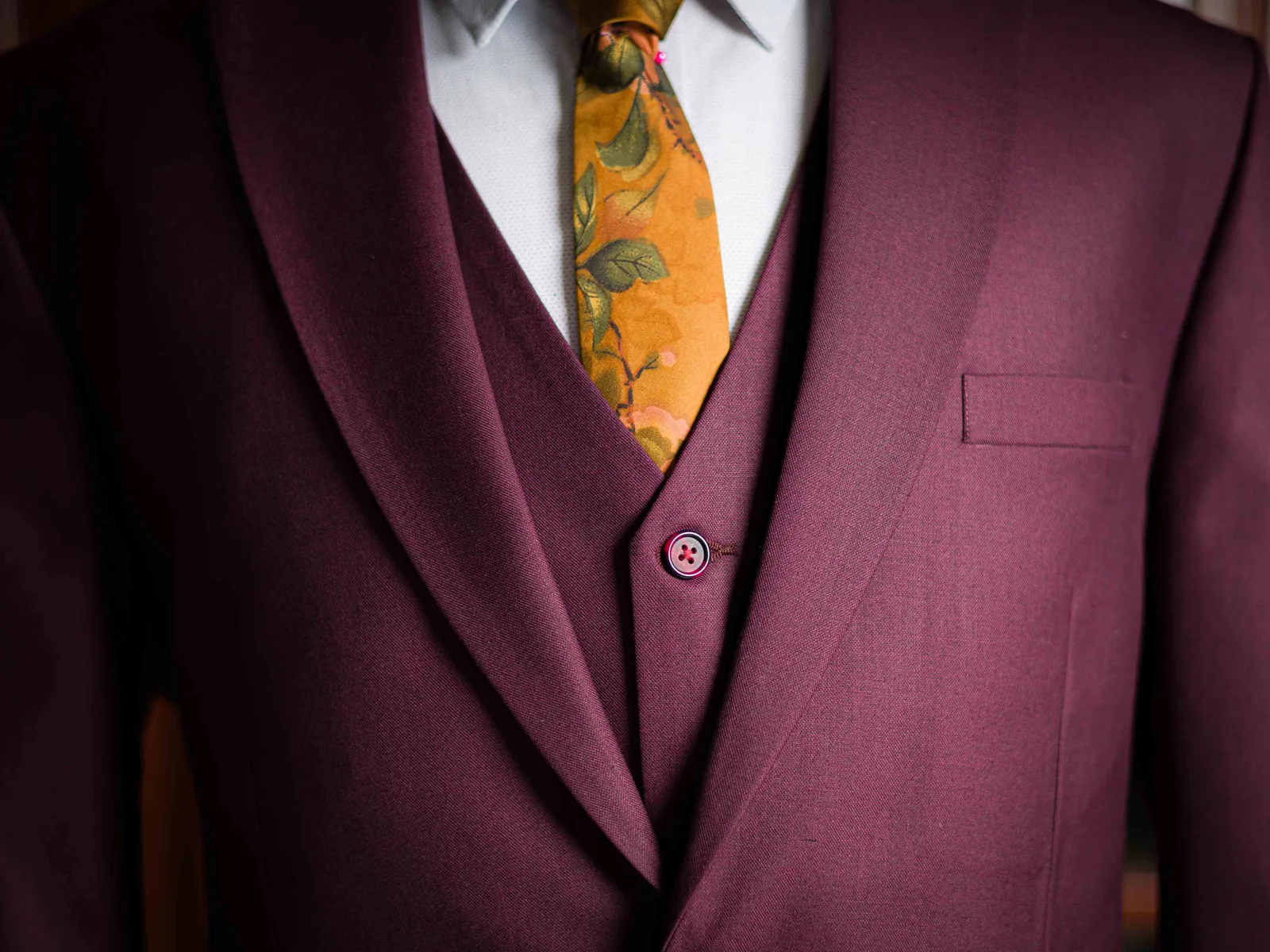
The need to care for a wool suit in a tropical climate is not a paradox — lightweight wool is one of the most practical choices for warm, humid environments, provided you understand how to maintain it in those conditions. Many of the problems people experience with wool suits in the tropics come not from the fabric itself but from applying storage and care habits designed for cool, dry climates.
Wool's natural properties — its breathability, its ability to absorb and release moisture without feeling damp, its elasticity — make it genuinely well-suited to tropical dressing when the weight is right. A Super 100s or 120s wool at 180–220g/m² worn in a well-air-conditioned environment is often more comfortable and better-looking by the end of the day than a synthetic or cotton alternative. The challenge is what happens when you're not in the air conditioning — and how you store and maintain the suit between wears.
How Humidity Affects Wool
Wool fibre has a natural structure that allows it to absorb atmospheric moisture without becoming saturated. In low humidity, the fibre contracts slightly. In high humidity, it relaxes and absorbs moisture from the air. This is the source of wool's natural crease recovery — the fibres relax when humid and reset when they dry.
In a tropical climate, this constant moisture absorption and release cycle is more pronounced. The practical effects are: the suit will feel slightly heavier in very humid conditions; creases will relax faster than in a dry climate (an advantage); and if the suit is stored damp — either from perspiration or ambient humidity — it becomes susceptible to mildew and the fibres can weaken over time.
The two primary enemies of wool in a humid climate are sustained moisture without airflow and moths, which are more active in warmer temperatures. Both are manageable with the right habits. Our guide to caring for a bespoke suit covers general suit maintenance; here we focus specifically on the adjustments required for tropical conditions.
Ventilation: The Single Most Important Step
In a temperate climate, hanging a suit to air for a few hours after wearing is recommended. In a tropical climate, it is non-negotiable. The volume of moisture the suit absorbs during a day's wear — from perspiration alone, not counting ambient humidity — is significantly greater in warm conditions, and that moisture needs to be given time and airflow to dissipate before the suit goes back into a closed space.
After each wear:
- Hang the jacket and trousers on a shaped wooden hanger in the most ventilated part of the room — near a fan, under a ceiling fan, or in a well-aired corridor. A gentle current of air accelerates drying dramatically.
- Leave for a minimum of 24 hours before storing. In very humid conditions, 48 hours is better.
- Do not hang the suit directly outside in humid air or near an open window during rain — you want moving dry air, not humid air.
- If you have air conditioning, a room maintained at moderate humidity (45–55% relative humidity) is ideal for garment storage.
This is not overly cautious — it's the standard practice of anyone who has maintained quality garments in Singapore, Hong Kong, Vietnam, or similar climates for any length of time. For more on why lightweight wool is well-suited to warm climates despite common assumptions, see our guide to wool in hot climates.
Cleaning in a Humid Environment
The general rule — dry clean as infrequently as possible — applies equally in the tropics. What changes is the frequency of the other cleaning methods.
Brushing becomes more important in humid conditions, not less. Surface moisture, dust, and organic matter that cling to wool fibres are more prevalent in humid air, and regular brushing removes them before they have time to work into the fibre or attract insects. Use a natural-bristle clothes brush after each wear, working in the direction of the nap.
Spot cleaning should be addressed promptly. Perspiration stains, if left on wool in warm, humid conditions, can set into the fibre and become difficult to remove. If you notice a stain or heavy perspiration marking, address it with a damp cloth and mild detergent before it has time to dry and set. This avoids the need for a full dry clean.
For the suit that is worn regularly in a tropical climate, a professional dry clean once or twice a year — to a specialist who handles structured garments — is appropriate. More frequent than that risks stripping the fibre. Less frequent risks accumulation that brushing can no longer address. The exact frequency depends on how often you wear it and the conditions you wear it in.
Storage: Moth Prevention and Moisture Control
Moth damage is the most serious long-term risk for wool stored in a warm climate. Moths are more active above roughly 20°C and thrive in undisturbed, enclosed spaces with humidity above 50%. A wardrobe in a tropical city where suits sit unworn for several weeks at a time is a near-ideal environment for them if no precautions are taken.
Effective moth deterrents for tropical storage:
- Cedar. Cedar wood contains natural oils that moths find repellent. Cedar balls, blocks, or hangers placed in the wardrobe are effective and add no chemical risk to the fabric. They need to be refreshed — lightly sanded to release the oils — every few months, or replaced annually.
- Lavender. Sachets of dried lavender work similarly and are gentler on delicate cloth. Replace every season.
- Regular inspection. Take suits out, shake them, brush them, and inspect for early signs of moth activity — small holes, larvae, or casings — every month if the garment is not being worn regularly. Caught early, moth damage can be repaired by a skilled tailor. Caught late, it cannot.
- Avoid storage in sealed plastic. Plastic traps moisture and creates exactly the warm, damp, undisturbed conditions moths and mildew prefer. Use breathable cotton garment bags instead.
Moisture control in the wardrobe itself is also worth addressing. Small silica gel sachets placed in the wardrobe absorb excess moisture from the air and are inexpensive and widely available. Replace them when they're saturated (many change colour when exhausted). In very humid conditions, a dehumidifier in the wardrobe room or a small electric wardrobe dehumidifier is the most effective solution.
For a full guide to choosing fabrics suited to the tropics, our tropical tailoring fabric guide covers the range of options and how they compare in warm-climate conditions.
When to Brush vs. When to Steam
Both brushing and steaming are essential maintenance tools, and they serve different purposes:
Brush after every wear, and whenever you take the suit out of storage. Brushing removes surface dust, debris, and loose fibres that attract moths and can work into the weave over time. It also raises the nap of the cloth slightly, restoring a freshness that compressed or flattened cloth loses. A few strokes in the direction of the cloth's nap is all that's needed.
Steam to remove creases and refresh the drape of the cloth. In a humid climate, light creasing from a day's wear often relaxes naturally overnight — wool's inherent resilience means many creases disappear without intervention if the suit is hung properly. When steaming is needed, use a handheld garment steamer held 5–8cm from the cloth, or hang the suit in the bathroom during a hot shower. Do not apply excessive steam to a suit that is already damp from the day's humidity — let it air and dry first, then steam if needed.
Do not iron wool directly. Direct iron contact on wool, particularly finer grades, causes shine — a permanent flattening of the surface fibres that makes the cloth look worn. Always use a damp press cloth between the iron and the fabric. For our range of wool suits suited to warm climates, visit the menswear section of the site.
Frequently Asked Questions
Does humidity damage a wool suit?
Sustained humidity without airflow can damage wool over time — it creates conditions for mildew growth and weakens fibres gradually. However, wool's natural ability to absorb and release moisture without becoming saturated means it handles moderate humidity well when ventilated properly. The key is to never store a wool suit in a closed space while it's still holding moisture from a day's wear. Allow at least 24 hours of open-air hanging before returning it to the wardrobe.
How do I store a suit in a humid country?
Store in a well-ventilated wardrobe with moisture control — silica gel sachets or a small wardrobe dehumidifier reduce ambient humidity significantly. Use breathable cotton garment bags rather than plastic. Place cedar blocks or lavender sachets in the wardrobe as moth deterrents. Never store the suit compressed in a bag or drawer. Inspect monthly for early signs of moth activity or mildew, particularly on suits that are worn infrequently.
How do I prevent moths in wool garments?
Cedar blocks, cedar hangers, and lavender sachets placed in the wardrobe are the most practical deterrents and carry no risk to the cloth. Regular inspection and movement of garments — moths prefer undisturbed environments — is equally important. Ensure garments are clean before storage, as moths are attracted to organic material including perspiration and food residue. In very high-risk environments, consider a professional mothproofing treatment applied by a dry cleaner.
Visit the Studio
Be Li Tailor is at 635 Hai Bà Trưng, Hội An Ancient Town, open daily from 8am to 9pm. Whether you're arriving next week or planning ahead, book your appointment online or reach us on WhatsApp at +84 905 820 116. We keep every client's measurements on file — if you've visited before, your next commission starts where the last one ended.