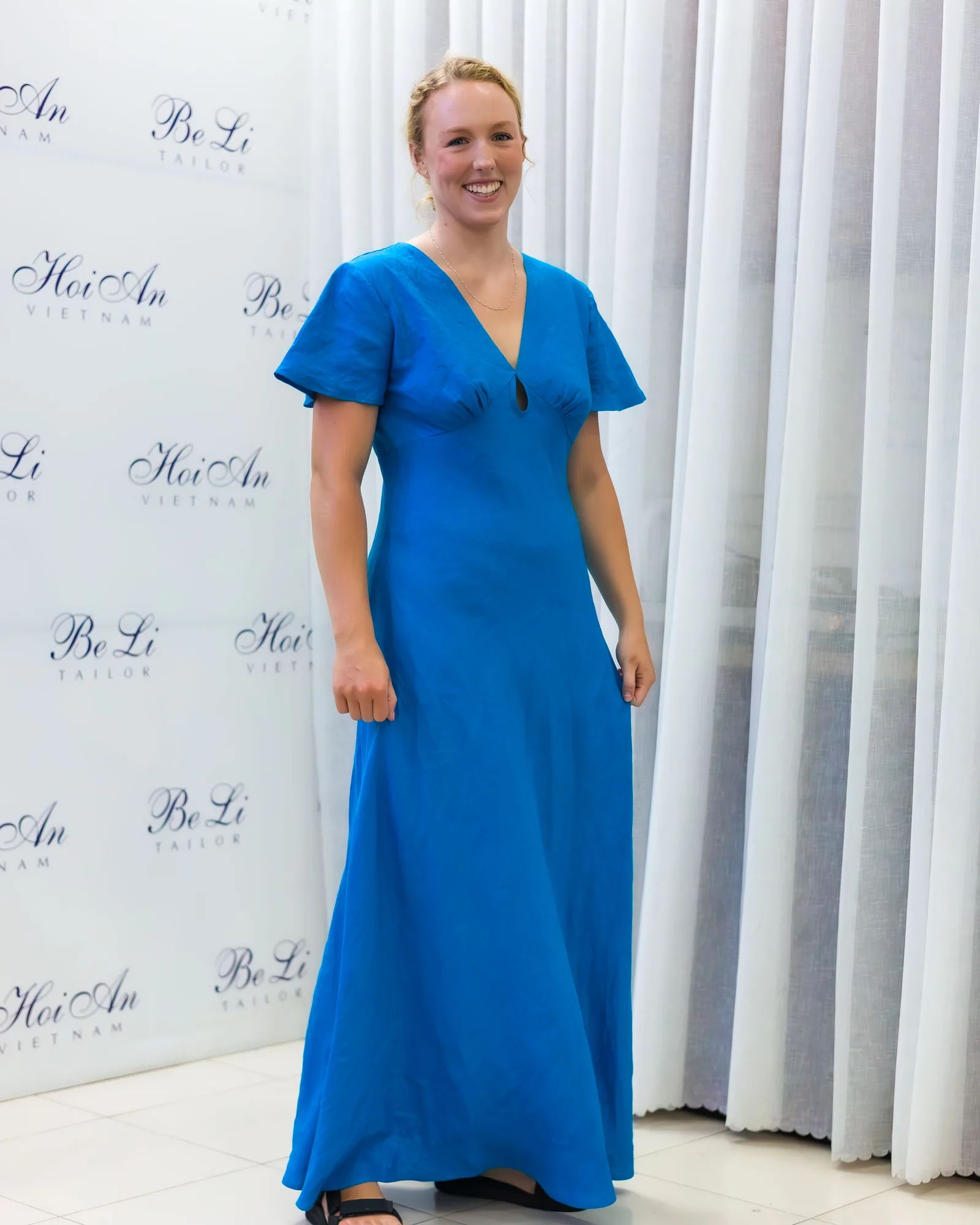
A linen dress made to measure in Hội An is, for many clients, the single most satisfying commission they make. It sounds modest — linen, a dress — but a well-fitted, properly constructed linen dress in the right weight and colour is a garment that earns consistent use. It travels well, washes easily, ages beautifully, and fits in a way that off-the-rack linen simply never does. At Be Li Tailor, linen dresses are among our most frequently commissioned pieces, for good reason.
This guide covers what makes linen the ideal fabric for a custom tropical dress, how to choose the right weight and weave, which silhouettes translate well, what the fitting process involves, and how the fabric behaves after months of wear.
Why Linen Is the Ideal Fabric for a Custom Tropical Dress
Linen is made from the fibres of the flax plant, and it has properties that almost no other fabric can match for warm-weather wear. It absorbs moisture quickly and releases it efficiently — which is why you feel cooler in linen than in cotton when temperatures rise. It is significantly more breathable than most synthetic fabrics, and it softens with washing rather than degrading. A well-made linen dress, properly cared for, will look and feel better after fifty washes than it did when new.
The reason so many people have a complicated relationship with linen — "it wrinkles too easily" being the most common complaint — is almost always a fabric quality or garment construction issue. Cheap linen wrinkles aggressively and looks dishevelled. Good-quality linen wrinkles gently and looks relaxed. The difference is significant, and it's something we discuss at every linen consultation. Our guide comparing linen, cotton, and blends covers the quality differences in more detail.
For Hội An specifically, linen is the obvious choice. The climate is warm and humid for most of the year, and linen handles both better than its alternatives. It doesn't trap heat against the body the way polyester does, and it doesn't dampen and cling the way some cottons do. It simply breathes.
Choosing Your Linen: Weight, Weave, and Colour
Not all linen is the same. The weight, weave, and quality of the fabric determines how it drapes, how much it wrinkles, and how it looks after repeated washing.
Weight
Lightweight linen (below 130gsm) is used for shirts and delicate summer pieces. It drapes softly but has less body. Medium-weight linen (130–180gsm) is the standard choice for dresses — it has enough structure to hold a silhouette while remaining breathable and comfortable. Heavy-weight linen (above 180gsm) is used for structured jackets and trousers; it would be inappropriate for a summer dress.
For most casual to smart casual dresses, a medium-weight Irish or Belgian linen is our recommendation. It holds its shape through the day, wrinkles gracefully rather than aggressively, and washes and dries quickly.
Weave
A plain weave linen has a clean, even surface. It's the most versatile and the most appropriate for most dress styles. A slubbed linen — where the weave deliberately incorporates irregularities — has a more textural, artisanal quality. It reads as slightly more casual and works well for relaxed styles. An evenweave (woven so the horizontal and vertical threads are balanced) gives the smoothest surface and works well for more formal linen pieces.
Colour
Natural linen colours — ecru, oat, sand, pale grey — are classics for a reason. They photograph well, work with most wardrobes, and don't fade unevenly. Deeper, richer colours (deep navy, terracotta, sage) work well in linen and give more versatility across seasons. We advise against very pale colours in lightweight linen, as they can become translucent after washing. We'll show you the fabric in natural light at your consultation so you can judge exactly.
Silhouette Options for a Linen Dress
Linen is a fabric with inherent character — it doesn't drape like silk, it doesn't stretch like jersey. The silhouettes that work best with linen are those that work with its natural structure rather than against it.
- Shift dress: The simplest and most forgiving silhouette. A well-cut linen shift in the right length is one of the most wearable garments in any wardrobe.
- A-line: Fitted through the bodice with a gentle flare from the waist. Flattering on most body types and gives air circulation through the skirt.
- Wrap style: Works in medium-weight linen with a slight drape. Adjustable fit makes it practical for travel.
- Shirt dress: Button-through, typically with a collar. Linen's natural structure holds the collar and placket well.
- Maxi or midi column: Fitted through the body to a long hem. Works in heavier-weight linen. Looks intentional at dinner.
For first-time linen commissions, we often suggest starting with a style that has some ease in the silhouette — A-line or shift — rather than a very fitted column. The ease allows the fabric to breathe and prevents the dress from showing every wrinkle as the day progresses. Our complete guide to custom dresses covers how we discuss silhouette options at the consultation.
What to Expect From the Fitting Process
A linen dress typically requires two fittings. The first is a basting fitting — the dress is assembled loosely so we can check the overall proportions, the fit through the shoulders and bodice, and the length. We'll make adjustments at this stage to the structure of the garment. The second fitting is with the garment pressed and finished, where we check that the alterations from the first fitting have been incorporated correctly and address any fine-tuning.
Linen is relatively easy to work with in terms of fitting — it holds its shape during the process, and adjustments are straightforward. A simple shift or A-line in linen can typically be completed in three to four days from consultation to collection. Allow four to five days for a more complex style or if you want additional fittings for certainty.
We pre-wash all linen fabric before cutting. This accounts for any shrinkage in the fabric before the garment is made, so the dress you collect fits the same as it will after you wash it. It's a step some tailors skip and clients regret. Book your consultation online to discuss your brief in advance of your arrival.
How Linen Wears and Ages Over Time
One of linen's underappreciated qualities is how it ages. Unlike synthetic fabrics, which degrade with washing, or cotton, which can become stiff or thin over time, good-quality linen becomes softer and more supple with each wash. After a season of regular wear, a linen dress has a worn-in quality that is genuinely appealing and that cannot be reproduced in a new garment.
Linen does wrinkle. This is not a defect — it is a characteristic of the fibre. In a well-cut garment, particularly one with some ease in the silhouette, the wrinkles are soft and natural rather than aggressive. If you absolutely cannot tolerate creasing, a linen-cotton or linen-silk blend will give you more resistance to wrinkling while retaining most of linen's breathability advantages. Our tropical fabric guide includes a section on blend options.
Care is simple: machine wash cold, hang to dry, and press while still slightly damp if you want a crisper result. Most linen dresses can be washed dozens of times without any loss of quality — which is more than can be said for most garments at any price point.
Explore the full range of Be Li Tailor womenswear and come in with a brief, a photograph, or simply the knowledge that you want a linen dress made properly for the first time.
Frequently Asked Questions
Does a linen dress wrinkle badly?
All linen wrinkles to some degree — it's a characteristic of the fibre, not a defect. Good-quality medium-weight linen in a relaxed silhouette wrinkles gently and looks deliberately casual rather than dishevelled. Very lightweight linen or cheap linen wrinkles more aggressively. If wrinkling concerns you, a linen-cotton or linen-silk blend offers more resistance while retaining most of linen's breathability. We'll show you both options and advise honestly on what will work for your style.
How do you wash a custom linen dress?
Machine wash cold on a gentle cycle, or hand wash. Use a mild detergent. Hang to dry — do not tumble dry, as it can shrink linen and stress the seams. Press while slightly damp with a medium-hot iron for a crisper result, or hang and allow to air-dry naturally for a more relaxed look. We pre-wash all fabric before cutting, so your dress is already preshrunk when you collect it.
What styles work best in linen?
Linen's natural structure and slight stiffness works best in silhouettes that don't require a lot of drape — shift dresses, A-line cuts, shirt dresses, and structured maxi styles all translate well. Wrap styles work in medium-weight linen with a good drape. Very fluid or bias-cut styles are better served by silk or silk blends. We'll recommend the most appropriate silhouette for your body and brief at the consultation.
Visit the Studio
Be Li Tailor is at 635 Hai Bà Trưng, Hội An Ancient Town, open daily from 8am to 9pm. Whether you're arriving next week or planning ahead, book your appointment online or reach us on WhatsApp at +84 905 820 116. We keep every client's measurements on file — if you've visited before, your next commission starts where the last one ended.